
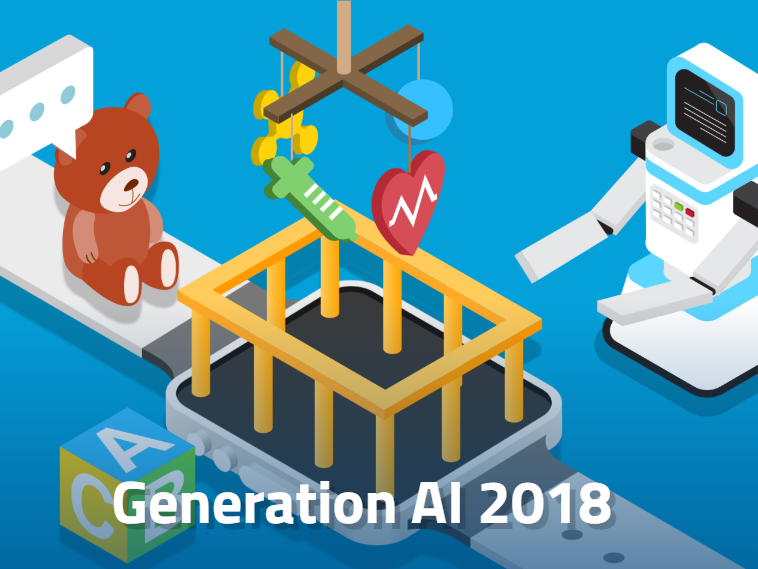
The Institute of Electrical and Electronic Engineers’ (IEEE) second annual study of Millennial parents has found that Millennials from western countries are more sceptical about the power of AI and robotics in healthcare.
IEEE’s report aimed to predict the role of healthcare-related artificial intelligence (AI) technologies in the lives of Generation Alpha children, currently aged eight and younger. To do this, they surveyed 2,000 millennial parents, aged 20–36 years-old, from five of the biggest economies in the world – the US, UK, India, China and Brazil – and asked them how they thought AI would impact their children’s lives.
Go deeper with GlobalData


Discover B2B Marketing That Performs
Combine business intelligence and editorial excellence to reach engaged professionals across 36 leading media platforms.
More than half of all the global respondents said they would have “a great deal of” trust in AI diagnoses and treatments for their sick child. However, parents from Asia were consistently more trusting of AI in all the scenarios given to the participants.
When asked how they would feel about AI chatbots diagnosing their sick children in the future, 83% of the parents from India and 85% of the parents from China said that they were very likely to allow this to happen whereas only 48% of US parents and 50% of UK parents felt the same way.
With regards to AI-powered robots operating on their children, 78% of the parents from India and 82% of the parents from China said they were very likely to allow this and 60% of the parents in Brazil agreed. However, this scenario was again less popular with Western participants, as 55% of UK and US parents said it was not likely that they would let this happen.
Despite the scepticism, doctors using data from AI to make life-or-death health decisions regarding their Generation Alpha children was largely supported by all of the parents. UK parents were the most likely to disagree to this, with 25% saying they would not want this to happen. Only 5% of the parents from India and 6% of the parents from China said they would also disagree with this practice.
US Tariffs are shifting - will you react or anticipate?
Don’t let policy changes catch you off guard. Stay proactive with real-time data and expert analysis.
By GlobalDataThe millennials were also positive about seeing AI technologies eradicate cancer in the lifetime of Generation Alpha. Parents from China and India were the most positive with over 80% of those participants believing this would be very likely. The UK was again the most sceptical with 49% of participants claiming this was not likely.
With this range of data, IEEE is now questioning whether the current AI revolution could be a waste of money if citizens from certain countries are not yet ready to embrace it. Governments and private companies around the world are currently investing billions of pounds into AI research, including the UK government, which recently announced plans to increase the use of data and AI to transform the diagnosis of chronic diseases.



