
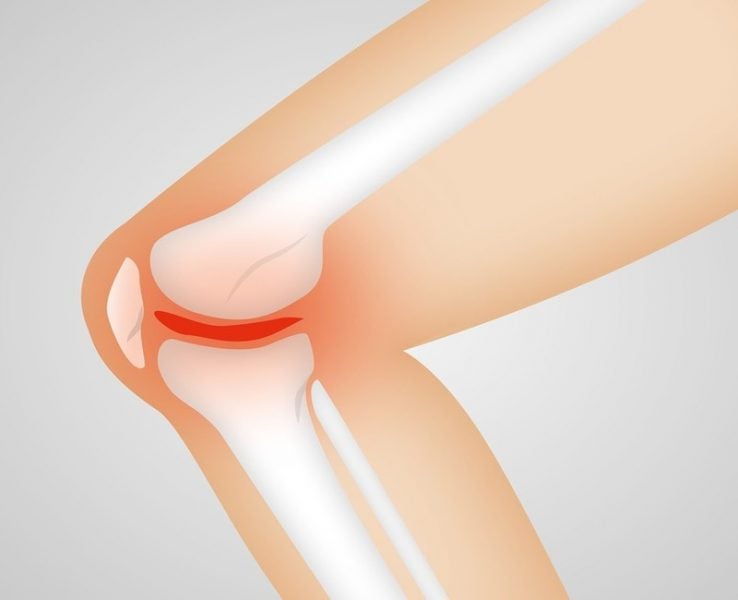
A research team from Imperial College London has created a mini MRI scanner with the potential to enable quick and accurate diagnosis of knee injuries.
Designed to fit around a patient’s leg, the new device is said to use ‘magic angle’ effect to help detect knee conditions such as anterior cruciate ligament injuries.
Go deeper with GlobalData


Discover B2B Marketing That Performs
Combine business intelligence and editorial excellence to reach engaged professionals across 36 leading media platforms.
Components of the knee joints are unclear in existing MRI scans, noted Imperial College London’s MSK Lab researcher and radiographer Dr Karyn Chappell.
Chappell said: “Knee injuries affect millions of people – and MRI scans are crucial to diagnosing the problem, leading to quick and effective treatment. However we currently face two problems: connective tissue in the knee is unclear on MRI scans, and people are waiting a long time for a scan.”
To address such challenges, the researchers leveraged the magic angle effect in the new device.
The team noted that this approach allows easy orientation of the magnetic field, which is not possible with existing, expensive hospital MRI scanners.

US Tariffs are shifting - will you react or anticipate?
Don’t let policy changes catch you off guard. Stay proactive with real-time data and expert analysis.
By GlobalDataChappell added: “Previously the magic angle phenomenon was thought of as a problem, as it could mean medical staff mistakenly thinking the knee is injured.
“However, I realised that if we took a number of scans around the knee, we could use the signal produced by the magic angle effect to build a clear picture of the knee structures.”
When tested in a proof-of-concept study involving animal knee joints, a prototype of the mini MRI scanner was observed to facilitate the accurate identification of ligament and tendon damage.
The team intends to further their research, which was funded by the National Institute for Health Research, into human trials as well as to other joints such as ankles, wrists and elbows.
It is expected that the device’s small size would allow use in local clinics and GP surgeries.



