
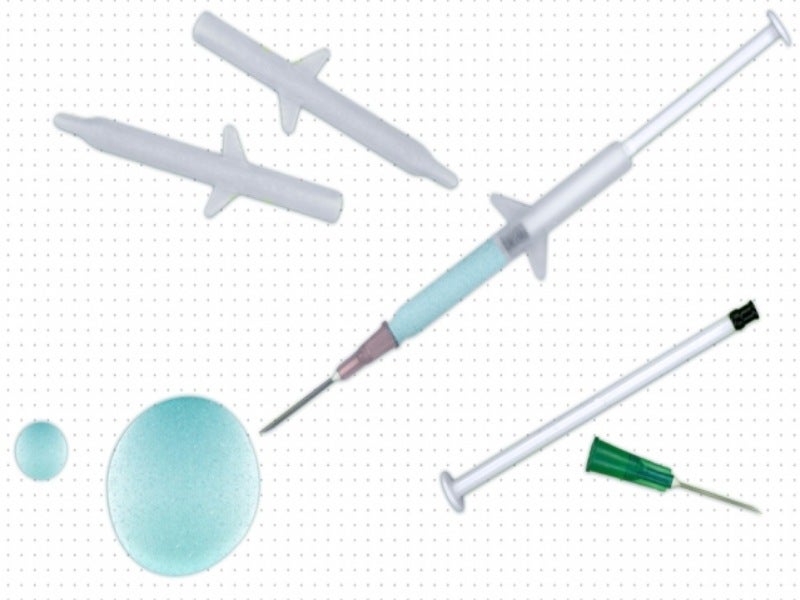
Researchers at the Massachusetts Institute of Technology (MIT) in the US have developed a computational model to improve the injectability of microparticles and prevent clogging during injections.
The model determines an optimal design for injectability by analysing a variety of factors such as the size and shape of the particles, particle concentration in the solution, viscosity of the solution and needle size.
Go deeper with GlobalData


Discover B2B Marketing That Performs
Combine business intelligence and editorial excellence to reach engaged professionals across 36 leading media platforms.
Microparticles, which range in size from 1 to 1,000 microns, are used to deliver multiple doses of a drug or vaccine at once. However, they are considered difficult to inject due to their tendency to get clogged in typical syringes.
The model developed by the MIT researchers was found to achieve a six-fold increase in the percentage of microparticles they can inject successfully.
The researchers expect to use the model to develop and test microparticles that could be used to deliver cancer immunotherapy drugs, among other potential applications.
They are currently working on designing optimised systems for delivering cancer immunotherapy drugs, which can help stimulate an immune response that destroys tumour cells.

US Tariffs are shifting - will you react or anticipate?
Don’t let policy changes catch you off guard. Stay proactive with real-time data and expert analysis.
By GlobalDataMIT graduate student and the paper’s lead author Morteza Sarmadi said: “Injectability is a major factor in how successful a drug will be, but little attention has been paid to trying to improve administration techniques.
“We hope that our work can improve the clinical translation of the novel and advanced controlled-release drug formulations.”
MIT’s David H Koch Institute professor Robert Langer and Koch Institute for Integrative Cancer Research scientist Ana Jaklenec are the senior authors of the study.
The research was funded by the Bill and Melinda Gates Foundation, the Koch Institute Support Grant from the National Cancer Institute and a National Institutes of Health Ruth L Kirschestein National Research Service Award.



