
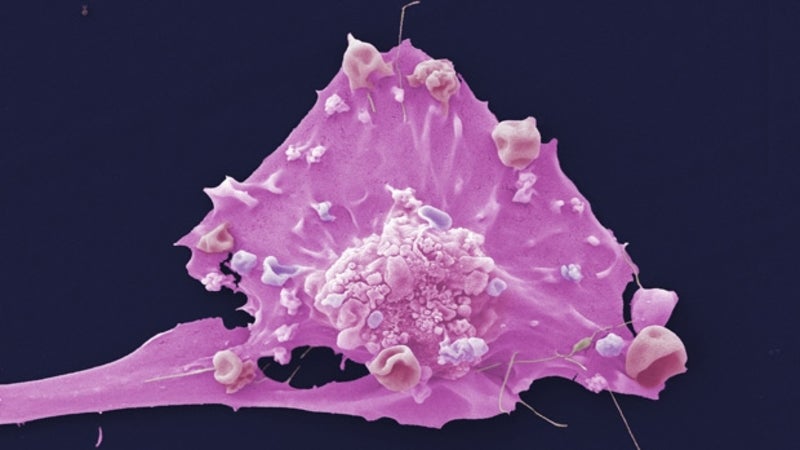
A study has revealed that understanding the genetic and molecular structure of individual breast tumours could provide information on cancer progression and recurrence.
Funded by Cancer Research UK, the study was conducted by scientists from the University of Cambridge and professor Christina Curtis from Stanford University.
Go deeper with GlobalData


Discover B2B Marketing That Performs
Combine business intelligence and editorial excellence to reach engaged professionals across 36 leading media platforms.
The researchers analysed genetic change patterns in the tumours of approximately 2,000 breast cancer patients, tracking their progress over 20 years. Collected data was used to develop a statistical tool to help doctors predict the likelihood of recurrence after treatment. This new approach is expected to facilitate customised treatments in the future.
Cancer Research UK Cambridge Institute lead researcher Carlos Caldas said: “Treatments for breast cancer have improved dramatically in recent years, but unfortunately for some women, their breast cancer returns and spreads, becoming incurable. For some, this can be many years later but it’s been impossible to accurately predict who is at risk of recurrence and who is all clear.
“In this study, we’ve delved deeper into breast cancer molecular subtypes, so we can more accurately identify who might be at risk of relapsing and uncover new ways of treating them.”
The research group previously found that breast cancer could be classified into one of 11 different molecular subgroups. These have unique clinical trajectories that cannot be predicted using common factors such as tumour size and stage of growth alone.

US Tariffs are shifting - will you react or anticipate?
Don’t let policy changes catch you off guard. Stay proactive with real-time data and expert analysis.
By GlobalDataThe new model showed that the behaviour of molecular subgroups could vary greatly if cancer redevelops.
Cancer Research UK chief scientist Karen Vousden said: “This study provides some valuable new insights into how we might identify women whose breast cancer is likely to return.
“We’re still a way off being able to offer this type of detailed molecular testing to all women and we need more research to understand how we can tailor treatments to a patient’s individual tumour biology. But this is incredibly encouraging progress.”
For future clinical trials, the researchers plan to enrol patients with varying tumour structures.



