
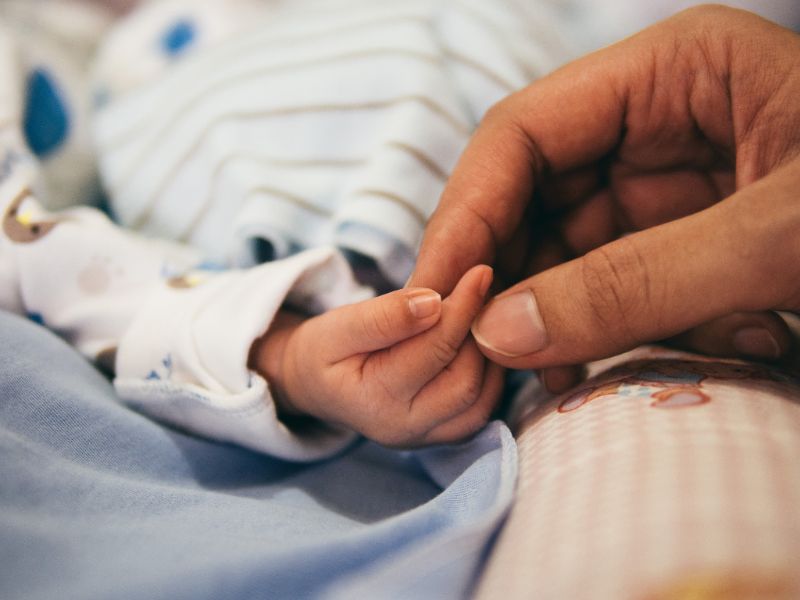
University of Strathclyde researchers are studying a non-invasive, skin-based approach to monitor the blood chemistry of premature and sick babies to avoid invasive blood tests.
Babies born early or sick require monitoring of electrolytes levels in their bodies, including glucose, lactate, sodium and potassium.
Go deeper with GlobalData


Discover B2B Marketing That Performs
Combine business intelligence and editorial excellence to reach engaged professionals across 36 leading media platforms.
Existing measurement techniques involve stick blood tests or taking blood from a vein, which is considered stressful and is associated with risk of blood depletion.
To address this, Strathclyde researchers aim to accurately measure glucose and lactate levels by using a skin-based approach. Researchers at the neonatal unit of the Royal Hospital for Children, Glasgow are currently evaluating the procedure in a clinical trial.
The trial is being carried out using laboratory equipment. Researchers are also working on a miniaturised, wireless system, which, if successful, will be devised as a wireless patch sensor.
University of Strathclyde biomedical engineering professor Patricia Connolly said: “At the moment, the blood chemistry on the babies is measured by taking a blood sample through a heel prick capillary or through a vein, which needs to be performed regularly.
US Tariffs are shifting - will you react or anticipate?
Don’t let policy changes catch you off guard. Stay proactive with real-time data and expert analysis.
By GlobalData“Our technology is aimed at removing the need for that because many of these molecules and ions will also come through the skin. Instead of actually having to take blood, our trial is using a skin patch that will collect glucose and lactate.
“We can collect the levels in a special type of gel electrode, and the levels are also compared to the level of glucose in the blood samples that are still being routinely taken by medical staff.”
The skin sensor is expected to extract molecules and ions across the skin to identify their flow. The captured data can be sent to a mobile phone device using Bluetooth.
Designed for stomach application, the patch will take a real-time reading in 30 seconds. However, it will need to be changed every 24 hours.
Researchers expect the skin patch to be cost-effective for manufacturing. There may also be potential for future application in adults.
Strathclyde spin-out company Ohmedics will be responsible for the commercialisation of any future technology.



