
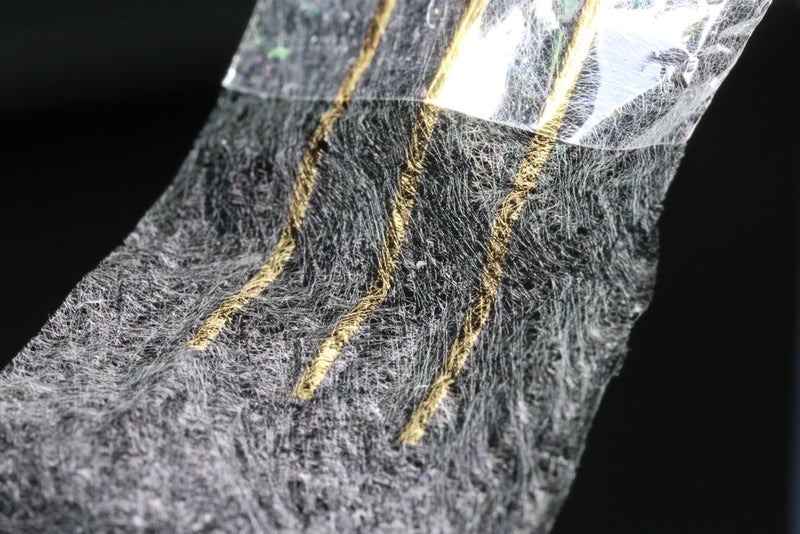
A University of Tokyo research team has partnered with Tokyo Women’s Medical University and RIKEN in Japan to develop a soft nanomesh sensor that could monitor beating cardiac cells.
Sensor probes are commonly used to study cardiomyocytes in action. However, these devices are said to hinder the cells’ natural movement and in turn impact the accuracy of observations.
Go deeper with GlobalData


Discover B2B Marketing That Performs
Combine business intelligence and editorial excellence to reach engaged professionals across 36 leading media platforms.
Researchers noted that the new nanosensor is used along with a flexible substrate or base in order to mitigate its affect on the behaviour of the heart cells.
University of Tokyo researcher Sunghoon Lee said: “Our nanomesh sensor frees researchers to study cardiomyocytes and other cell cultures in a way more faithful to how they are in nature. The key is to use the sensor in conjunction with a flexible substrate, or base, for the cells to grow on.”
The team used fibrin gel as a base to culture healthy cardiomyocytes extracted from human stem cells at Tokyo Women’s Medical University.
Meanwhile, the sensors probes and communication wires were made using ultrafine polyurethane strands coated in parylene and gold.
Multiple probes can be used to visualise propagation of signals that result from and stimulate the heart cells to beat. These signals are considered critical for evaluating the effect of drugs on the heart.
Lee added: “Drug samples need to get to the cell sample and a solid sensor would either poorly distribute the drug or prevent it reaching the sample altogether. So the porous nature of the nanomesh sensor was intentional and a driving force behind the whole idea.
“Whether it’s for drug research, heart monitors or to reduce animal testing, I can’t wait to see this device produced and used in the field.”
Researchers expect the nanosensor to enable the study of other cells, organs and medicines, as well as future embedded medical devices.



