
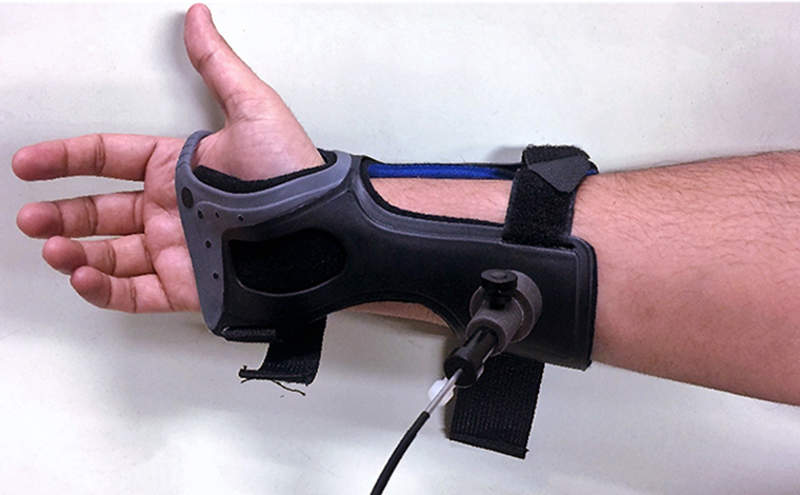
A research team from the University of Missouri (MU) School of Medicine and the Massachusetts Institute of Technology (MIT) have validated the accuracy of a non-invasive glucose test that does not require blood to be drawn with needles or a finger prick.
Initial results demonstrated that the non-invasive blood glucose monitoring technology is similar in effectiveness to a finger prick test.
Go deeper with GlobalData


Discover B2B Marketing That Performs
Combine business intelligence and editorial excellence to reach engaged professionals across 36 leading media platforms.
Developed by MIT researchers, the new technology uses a Raman spectroscopy technique to analyse the skin’s chemical composition and extract the amount of glucose out of other skin compartments.
The device comprises a fiberoptic cable connected to a wristband which passes laser light onto the skin. This detects various components such as fat tissue, protein, collagen and glucose molecules.
A shift in glucose-related wavelengths in the blood results in a unique molecular fingerprint that can be used to determine the glucose levels.
The study involved measurement of blood glucose levels in 20 healthy, non-diabetic adults before drinking a glucose-rich beverage.
US Tariffs are shifting - will you react or anticipate?
Don’t let policy changes catch you off guard. Stay proactive with real-time data and expert analysis.
By GlobalDataThese readings were again taken in intervals over the next 160 minutes using spectroscopy, IV blood test and a finger prick.
When compared, the spectroscopy prediction of glucose values was as accurate as the finger prick test.
MIT Laser Biomedical Research Center research scientist Jeon Woong Kang said: “We know that handheld skin prick tests are not always accurate and may be uncomfortable for patients. The gold standard is IV blood testing, but frequent blood draws may not be an option for many patients.
“We were pleased to find that our initial results show Raman spectroscopy can measure glucose levels that are comparable to the finger stick devices.”
Currently, the researchers are planning to further refine the non-invasive glucose test into a continuous monitoring sensor for use in clinical care settings.
Additional studies will also be conducted to assess the accuracy of the approach in diabetes patients.



