
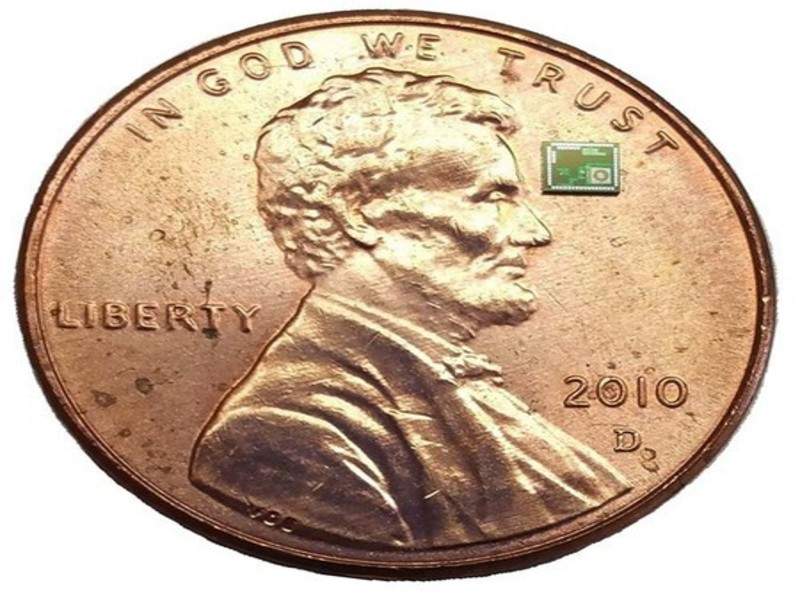

Researchers at the California Institute of Technology (Caltech) in the US have developed the prototype of a miniature device that can be inserted and tracked in smart pills to diagnose and treat diseases.
Based on magnetic resonance imaging (MRI) principles, the new 'addressable transmitters operated as magnetic spins' (ATOMS) are silicon chip devices that allow accurate identification within the body.
Go deeper with GlobalData


Discover B2B Marketing That Performs
Combine business intelligence and editorial excellence to reach engaged professionals across 36 leading media platforms.
Integrated with sensors, resonators and wireless transmission technology that simulate magnetic resonance properties of atoms, the microdevices can be located using magnetic fields.
Lead researcher professor Azita Emami said: "We wanted to make this chip very small with low power consumption, and that comes with a lot of engineering challenges.
"We had to carefully balance the size of the device with how much power it consumes and how well its location can be pinpointed."
The devices are intended to monitor the gastrointestinal tract, blood or brain through the measurement of various factors such as pH, temperature, pressure and sugar concentrations that are relayed to doctors.

US Tariffs are shifting - will you react or anticipate?
Don’t let policy changes catch you off guard. Stay proactive with real-time data and expert analysis.
By GlobalDataIt is expected that the devices can also be instructed to release drugs within the body.
According to co-researcher Mikhail Shapiro, the location of all the ATOMS chips can be identified even during the presence of several devices in the body.
Tested and validated in mice, the final prototype of the microdevice has a surface area of 1.4mm², which is 250 times smaller than a penny currency coin.
For wirelessly tracking the chip's location, the ATOMS device features a magnetic field sensor, integrated antennas, a wireless powering device, and a circuit to adjust its radio frequency signal based on the magnetic field strength.
Image: The ATOMS device next to a penny. Photo: courtesy of Shapiro and Emami Labs/Caltech.



