
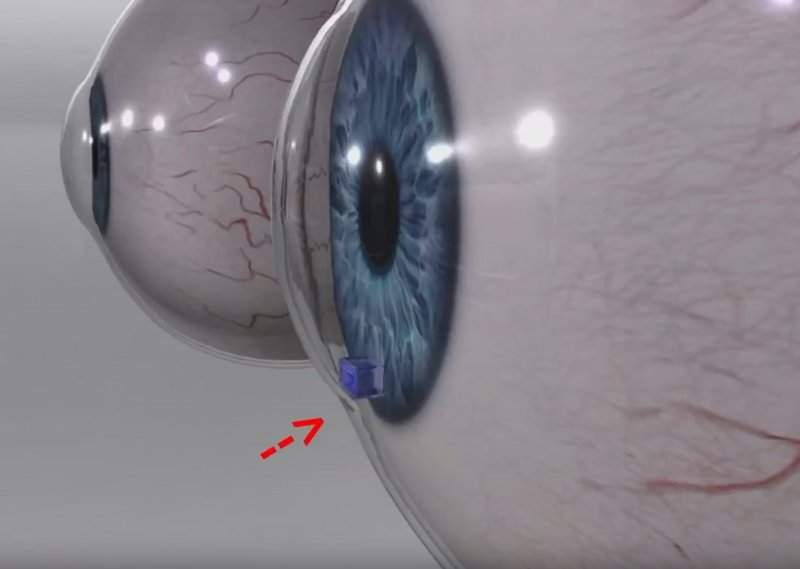

A professor from the Florida International University (FIU) in the US has designed a device to enable patients with high-risk glaucoma to monitor their disease, anywhere and anytime.
Designed by School of Computing and Information Sciences within the College of Engineering and Computing director and Ryder professor SS Iyengar, the device is the size of a small electronic chip and is surgically implanted in the eye between the iris and the cornea.
Go deeper with GlobalData


Discover B2B Marketing That Performs
Combine business intelligence and editorial excellence to reach engaged professionals across 36 leading media platforms.
Glaucoma is an ocular ailment characterised with increased intraocular pressure causing damage to the optic nerve, it can lead to blindness if left untreated.
The device enables patients to track their intraocular pressure, once a week or more if necessary, by simply looking in the mirror.
The device changes its colour denoting change in eye pressure, alerting the person to seek necessary medical aid to avoid retinal damage.
It also eliminates the need to consult an ophthalmologist to take a pressure reading and is particularly useful for patients residing in remote villages who cannot easily reach a doctor or an ophthalmologist.
US Tariffs are shifting - will you react or anticipate?
Don’t let policy changes catch you off guard. Stay proactive with real-time data and expert analysis.
By GlobalDataDiscovery Lab research coordinator and adjunct faculty Jerry Miller said: “In rural communities where there are no doctors, people are going blind.
“If there is no alternative to traveling for a day to get help, most people will not do it.”
Additionally, the device does not need any battery or power supply, making the device cost-prohibitive.
Iyengar said: “I wanted something low-cost so everyone can afford it.
“It is a great device for developing countries.
“It can cost patients as little as $15 to $20 once mass produced.”
Iyengar is planning to conduct studies of the new device and then offer it as contact lenses.
Image: Device used for monitoring. Photo: courtesy of Florida International University (FIU).



