

The National Institutes of Health (NIH) in the US has granted 13 two-year awards of approximately $15m per year to develop three-dimensional (3D) microphysiological system platforms called tissue chips that will model human disease.
Intended to cover the first phase of a five-year programme, the NIH grant awardees include various organisations such as Brigham and Women’s Hospital, Columbia University, Harvard University, and the University of California.
Go deeper with GlobalData


Discover B2B Marketing That Performs
Combine business intelligence and editorial excellence to reach engaged professionals across 36 leading media platforms.
Launched in 2012 by the NIH National Centre for Advancing Translational Sciences (NCATS), the tissue chip programme aims to develop the platforms for testing drug safety and toxicity through a quick and effective approach.
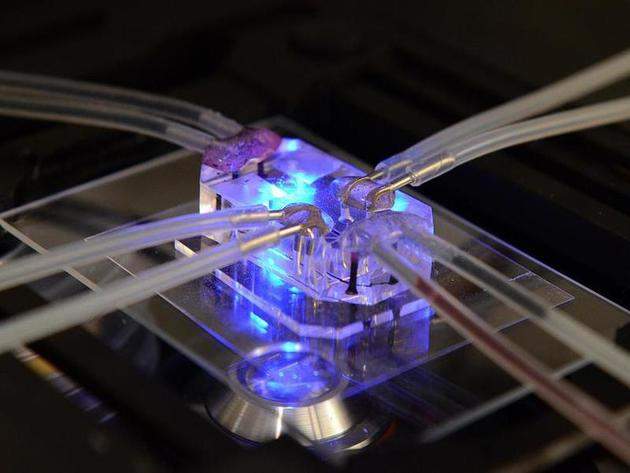
The tissue chips are designed to support living cells and human tissues while imitating the biological functions of human organs and systems.
It is expected that the research will allow better insights into disease mechanisms and enable accurate prediction of patient response to specific drugs.
As the chips can be used to create a human body-on-a-chip, investigational drugs and therapeutic agents can be evaluated across the entire body before proceeding to clinical trials.

US Tariffs are shifting - will you react or anticipate?
Don’t let policy changes catch you off guard. Stay proactive with real-time data and expert analysis.
By GlobalDataNCATS director Christopher Austin said: “The goal is for these tissue chips to provide more accurate platforms to understand diseases, and to be more predictive of the human response to drugs than current research models, thereby improving the success rate of candidate drugs in human clinical trials.”
The new Tissue Chip for Disease Modelling and Efficacy Testing awards will be used to study numerous common and rare diseases, including rheumatoid arthritis, arrhythmogenic cardiomyopathy, as well as human influenza A viral infection.
The second phase of the programme will involve collaboration between researchers and pharmaceutical firms to further assess the validated disease models for evaluation of drug efficacy.
Image: This lung-on-a-chip serves as an accurate model of human lungs to test for drug safety and efficacy. Photo: courtesy of Wyss Institute for Biologically Inspired Engineering, Harvard University, Massachusetts, US.



