

Researchers at Stanford University School of Medicine in California, US have developed a blood test to offer an inexpensive way to manage lung cancer.
The test can detect genetic profiles of tumour cells sifted from the bloodstream which can thereby emerge as an important tool for the clinic and the lab.
Go deeper with GlobalData


Discover B2B Marketing That Performs
Combine business intelligence and editorial excellence to reach engaged professionals across 36 leading media platforms.
The new development is expected to provide better information on the next chemotherapy or targeted therapy to use when tumours starts resisting previous drugs; and secondly show new ways to study progression of tumours.
The prodecure involves drawing blood from lung cancer patients and then attaching antibodies to circulating tumour cells (CTC).
After labeling the cancer cells, the researchers use magnetic nanoparticles which fuse with the antibodies labeling the cancer cells.
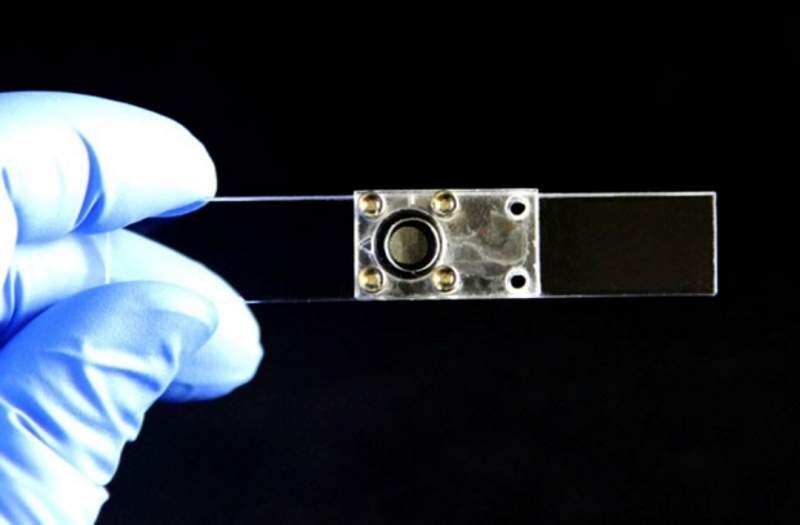
The researchers then use a device called a magnetic sifter, or MagSifter which is an electromagnetic sieve that can be turned on to pull the nanoparticle-labeled CTCs from the blood sample and allows the rest of the blood to flow through the sifter.

US Tariffs are shifting - will you react or anticipate?
Don’t let policy changes catch you off guard. Stay proactive with real-time data and expert analysis.
By GlobalDataThe CTCs derived from the blood are then deposited into a flat array of tiny wells, each large enough to accommodate only one cell and readies the cell to undergo genetic analysis.
Stanford University School of Medicine radiology department chairman Sanjiv Gambhir said: “This work fits well into our bigger vision of using blood-based diagnostics to detect and manage disease, including cancer.
“By being able to characterise single CTCs, we believe cancer management, including predicting response to therapy, will be much better optimised.”
The technique developed by the researchers can enable to probe into mutations in three or four genes in low-quantity blood samples and can be completed in lesser time and in an inexpensive way.
Image: A MagSifter chip fastened to an acrylic holder. Photo: courtesy of Seung-min Park.



