
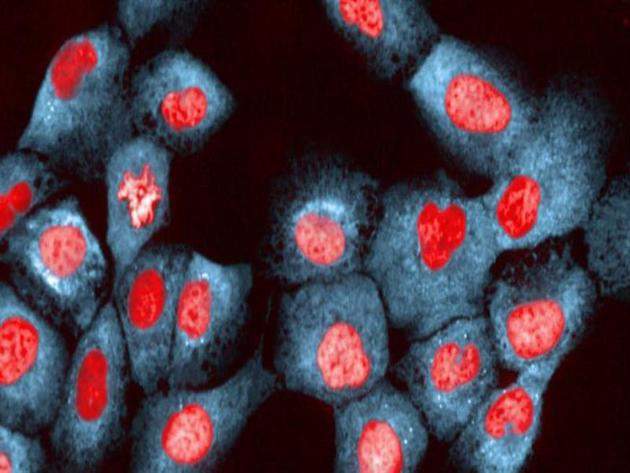

The Institute of Cancer Research (ICR) in the UK has developed a new computer-based test to identify women who are at high risk of breast cancer relapse within ten years of diagnosis.
Researchers detected immune cell hotspots in and around tumours. Following analysis of tissue samples from 1,178 oestrogen receptor-positive breast cancer patients, the team found that a higher amount of these hotspots indicated the enhanced potential for disease relapse.
Go deeper with GlobalData


Discover B2B Marketing That Performs
Combine business intelligence and editorial excellence to reach engaged professionals across 36 leading media platforms.
The researchers created a completely automated computer tool to analyse the samples collected as part of a clinical trial at The Royal Marsden NHS Foundation Trust and other hospitals in the UK. This device was used to compare two hormone therapies that can help stop cancer recurring post surgery.
It was observed that the chance of relapse within ten years of starting treatment increased by 25% if immune cells clustered into hotspots, compared to when cells were evenly dispersed.
The researchers also found that the risk of relapse within five years was 23% higher in patients with the hotspots.
ICR chief executive professor Paul Workman said: “This ingenious new computer-based test automatically analyses breast cancer samples, revealing patterns impossible to detect under the microscope with the human eye.

US Tariffs are shifting - will you react or anticipate?
Don’t let policy changes catch you off guard. Stay proactive with real-time data and expert analysis.
By GlobalData“What this study also tells us is that the immune system probably has a key role to play in how breast cancer responds to hormone treatment.
“Measuring the immune response to cancer could be important in future to help identify patients who could benefit from immunotherapy.”
Intended to monitor and provide preventive treatment, the test is designed to precisely assess the cancer relapse risk in individual patients.
The researchers earlier analysed tumour samples from oestrogen receptor-negative breast cancer, and found that clustering of immune cells had in fact the opposite effect, with hotspots linked to a lower relapse risk.
Image: Testing of immune hotspots can predict breast cancer relapse. Photo: courtesy of The Institute of Cancer Research.



