
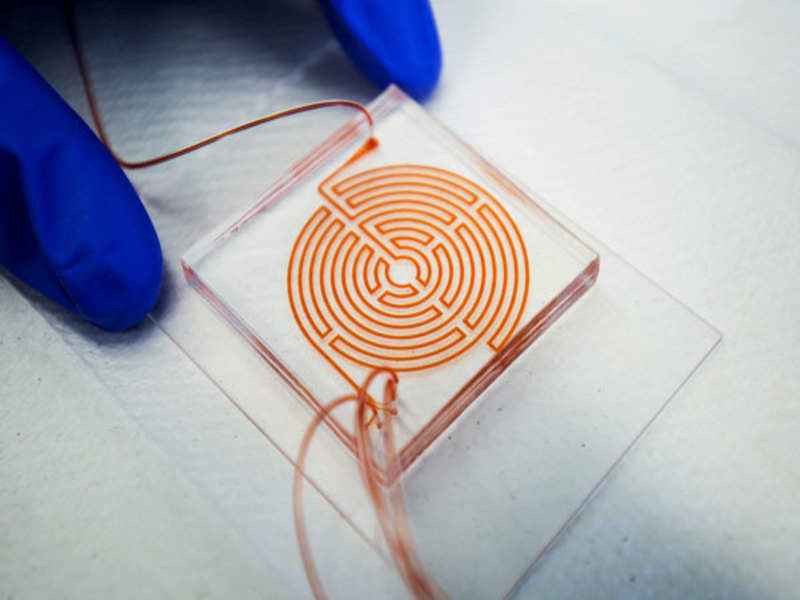

The University of Michigan in the US has developed a new chip fitted with labyrinth-shaped hydrodynamic fluid channels to separate circulating cancer cells for better analysis.
The isolation of tumour cells is expected to allow customised treatment, monitoring of genetic changes, and identification of aggressive cells that might spread the disease.
Go deeper with GlobalData


Discover B2B Marketing That Performs
Combine business intelligence and editorial excellence to reach engaged professionals across 36 leading media platforms.
Existing standard chips with spiral-shaped channels are said to result in contamination of the cancer cells with numerous other blood cells.
The labyrinth model divides the contents of the blood based on the cell sizes and leads to accumulation of smaller white and red blood cells in separate parts of the channel.
The new shape also enables researchers to fit 60cm of the channel on a chip that could otherwise hold only 10cm of a spiral layout.
The blood flow in the chip is fast and minimises the amount of white blood cells contaminating the cancer cell sample by running it through a second labyrinth chip within five minutes.

US Tariffs are shifting - will you react or anticipate?
Don’t let policy changes catch you off guard. Stay proactive with real-time data and expert analysis.
By GlobalDataLater, the team used genetic profiling to analyse and identify cells with active genes that might result in cancer stem cells.
Michigan Medicine oncology professor Max Wicha said: "We think that this may be a way to monitor patients in clinical trials.
"Rather than just counting the cells, by capturing them, we can perform molecular analysis so know what we can target with treatments."
Wicha co-developed the new chip in partnership with the University of Michigan chemical engineering associate professor Sunitha Nagrath.
The researchers tested the chip with blood samples from pancreatic and late-stage breast cancer patients.
In a clinical trial for breast cancer patients, the labyrinth chip is being used to isolate cancer cells, which are expected to be present in the blood during treatment.
Image: The labyrinth chip could one day help doctors look for aggressive, stem-like cancer cells in blood. Photo: courtesy of Michigan Engineering Communications and Marketing.



