

Researchers at the University of Pennsylvania (UPenn) Institute for Regenerative Medicine (IRM) in the US, have developed a new blood test for the early detection of pancreatic cancer.
Led by IRM director Dr Ken Zaret and Mayo Clinic’s Dr Gloria Petersen, the research resulted in the identification of two biomarkers, protein thrombospondin-2 (THBS2) and CA19-9.
Go deeper with GlobalData


Discover B2B Marketing That Performs
Combine business intelligence and editorial excellence to reach engaged professionals across 36 leading media platforms.
The team genetically reprogrammed cells of late-stage human pancreatic ductal adenocarcinoma (PADC) to a stem cell-like state, which allowed the cells to repeat human PDAC progression, leading to a discovery of secreted candidate markers of early-stage pancreatic cancer.
Under a multi-phase study, THBS2 was validated in 746 cancer and control human plasma samples using an enzyme-linked immunosorbent assay (ELISA).
The results showed that THBS2 plasma concentrations were consistent across the Phase I discovery study, Phase IIa validation study and the Phase IIb validation study.
Furthermore, the plasma concentration of the biomarker allowed differentiation among all stages of PDAC tumours.
US Tariffs are shifting - will you react or anticipate?
Don’t let policy changes catch you off guard. Stay proactive with real-time data and expert analysis.
By GlobalDataWhen combined with CA19-9, the plasma concentrations of both the biomarkers demonstrated improved ability to discriminate PDAC from pancreatitis.
In the Phase IIb study, the THBS2 and CA19-9 combination showed 98% specificity and 87% sensitivity for PDAC, while a blood marker panel with the biomarkers indicated improved detection of high-risk PDAC patients.
The results were validated in 197 pancreatic cancer patients, 140 healthy volunteers, and 200 subjects with non-cancer pancreatic disorders, reported News.xinhuanet.com.
Dr Zaret was quoted by the news agency as saying: "Positive results for THBS2 or CA19-9 concentrations in the blood consistently and correctly identified all stages of the cancer.
"Notably, THBS2 concentrations combined with CA19-9 identified early stages better than any other known method."
The simple and inexpensive blood test is expected to aid higher risk individuals by increasing the chances for development of required treatment for the disease.
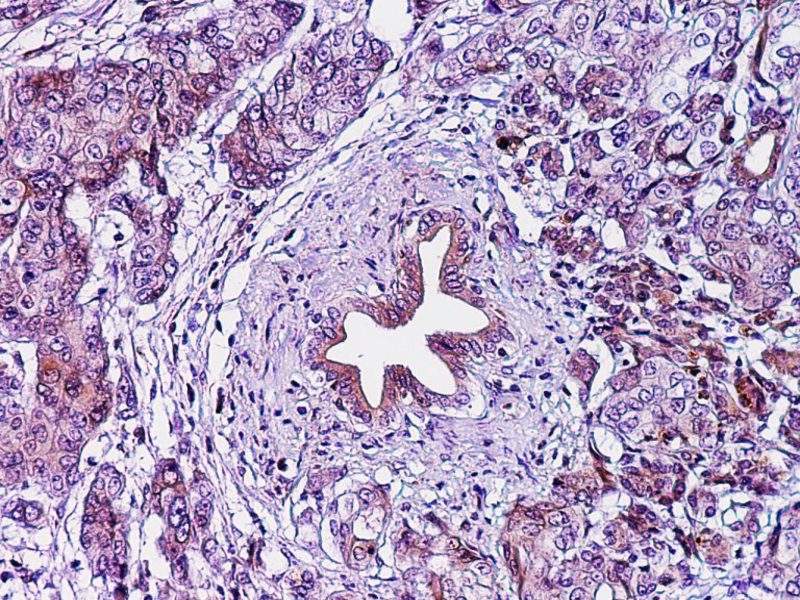
Image: Section of human PDAC. Photo: courtesy of the University of Pennsylvania, US.



