
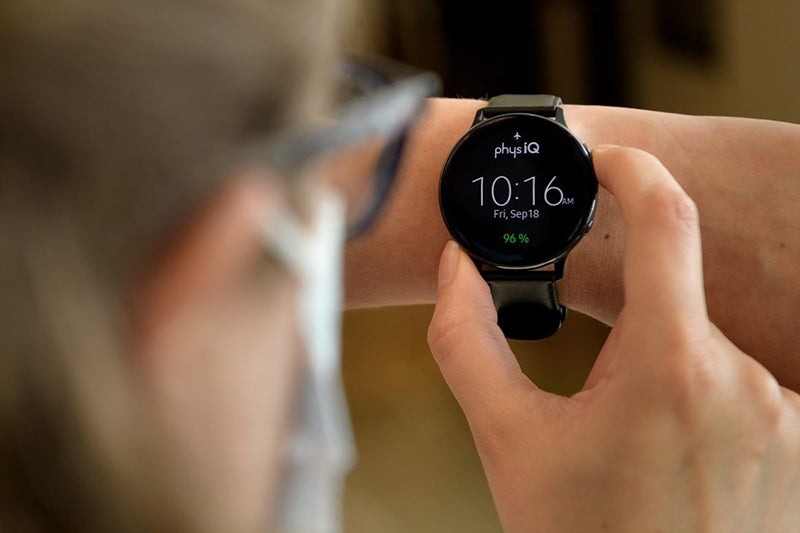
Digital medicine firm physIQ has collaborated with Purdue University for the development of a smartwatch-based algorithm to detect early viral infection signs, including signs of Covid-19.
As part of the partnership, physIQ will be responsible for the commercialisation of the algorithm. Purdue University biomedical engineering associate professor Craig Goergen led the research.
Go deeper with GlobalData


Discover B2B Marketing That Performs
Combine business intelligence and editorial excellence to reach engaged professionals across 36 leading media platforms.
The research involved a study, which was conducted on 100 subjects, including Purdue students and staff, to determine whether wearing a smartwatch to gather data was practical and user-friendly.
A Samsung Galaxy smartwatch with a pre-loaded physIQ app was provided to the subjects for gathering data, along with US Food and Drug Administration (FDA)-cleared adhesive chest-based biosensors to measure heart rate, respiration rate and heart rate variability.
Using physIQ’s Cloud-based accelerateIQ platform, Goergen’s lab evaluated the data obtained from the app, which collects physiological data from patients remotely.
Goergen said: “Infections can happen at any time, making the continuously tracked data available through an individual’s smartwatches uniquely suited to identify the earliest signs of illness.
“In particular, knowledge of a person’s usual heart rate and respiratory during sleep and activity over long periods of time is especially valuable for detecting subtle changes from normal.”
physIQ stated that the partnership with Purdue University advances the expansion of other smartwatch-based health care monitoring applications.
physIQ chief science officer Stephan Wegerich said: “The algorithms for enabling early detection are built off physiological features derived from the biosensor data collected by the smartwatches.
“Generating accurate and robust physiological features forms the input to subsequent viral detection algorithms.
“This requires the development of sophisticated signal processing and machine learning algorithms. Combined, these make the most out of smartwatch biosensor data, which is a big part of our collaboration with Purdue.”



