
Researchers from the University of Toronto have developed a portable, reconfigurable lab-on-a-chip diagnostic platform that can gauge the level of immunity to vaccine-preventable diseases among vulnerable populations.
The Measles-Rubella Box (MR Box) can test human blood samples for the presence of antibodies against measles and rubella in just 35 minutes. It was found to offer 86% accuracy for measles samples and 91% for rubella samples.
Go deeper with GlobalData


Discover B2B Marketing That Performs
Combine business intelligence and editorial excellence to reach engaged professionals across 36 leading media platforms.
The results, published in the journal Science Translational Medicine, show the platform’s potential to help identify populations susceptible to epidemics in remote or under-resourced locations.
“Our platform is inexpensive, fast and flexible—there’s nothing like it out there,” said lead author Darius Rackus.
“We see it as a powerful tool for public health workers on the front lines, who have no access to health records, or may be dealing with humanitarian emergencies.”
The chips are made using low-cost fabrication techniques, such as ink-jet and 3D printing, and the droplets are controlled by applying electrical signals to different electrodes.
“For the first time taking digital microfluidics out of the lab, this is a phenomenal result,” said co-author Julian Lamanna.
“In future, with simple statistical analyses, our point-of-care system could be used to monitor the levels of immunity within dynamic populations, helping prevent outbreaks before they happen.”
Each year, measles causes an estimated 134,000 deaths and rubella results in an estimated 100,000 children born with birth defects such as deafness.
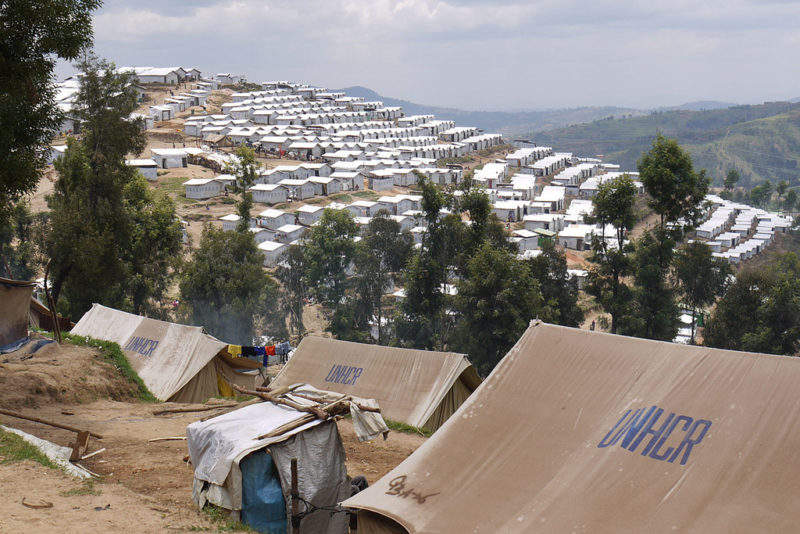
The research team believes that the device could be used effectively in displaced populations, such as refugees, who are more susceptible to vaccine-preventable diseases. Existing tests require access to infrastructure, such as centralised laboratories and cold storage and transportation, making them difficult to conduct in remote settings.
The device was tested in the field by gathering blood samples from 144 children and caregivers in a refugee camp in Kenya and comparing their results to reference tests.
They found that while it wasn’t as accurate as laboratory conditions, it provided a useful indicator in a much shorter period of time.
“If you could distribute these devices at airports or points of entry around the world, they could become a powerful tool for disease surveillance and monitoring,” added Rackus. “They also have the potential to significantly reduce the burden on expensive and sophisticated diagnostic labs that currently do all these epidemiological tests.”
The researchers are also developing new chips to test for different markers and diseases, including zika and malaria.



