
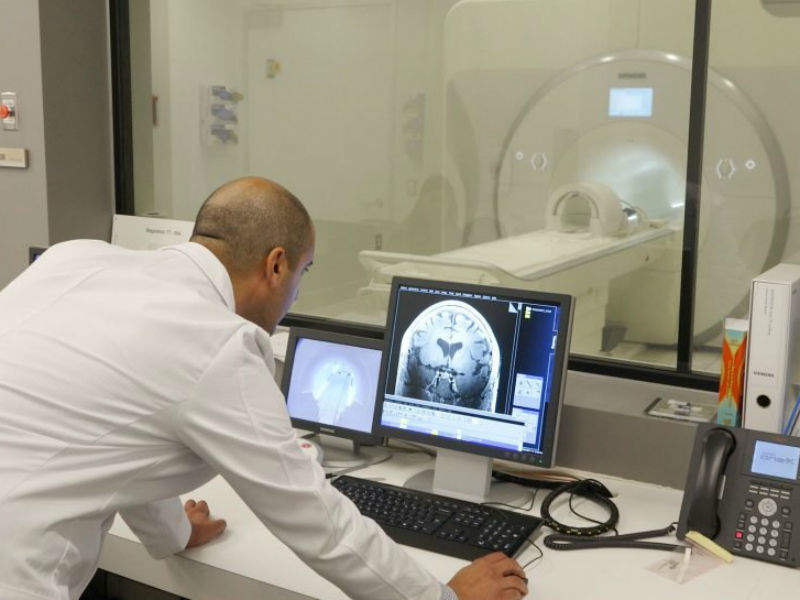
An ultrahigh field 7 Tesla (T) MRI scanner has been able to detect a brain tumour in a patient whose previous scans revealed no abnormalities.
US medical student Reem Itani was diagnosed with a negative tumour when she began to show symptoms of Cushing’s disease and doctors ordered an MRI scan. They hoped to confirm the diagnosis by identifying a tumour in her pituitary gland, but her initial scans in a 1.5T MRI scanner revealed no abnormalities. Despite this, the patient’s other symptoms still indicated Cushing’s disease so the doctors diagnosed her with a negative tumour, meaning they still suspected one was there even though the scanner did not identify it.
Go deeper with GlobalData


Discover B2B Marketing That Performs
Combine business intelligence and editorial excellence to reach engaged professionals across 36 leading media platforms.
Cushing’s disease has a specific set of symptoms which include weight gain, skin bruising, hair loss, and in women, irregular or missed periods. Over time sufferers tend to develop high blood pressure, diabetes, and frequent infections. If left untreated the disease can be fatal.
Between 30% to 40% of Cushing’s patients are faced with the problem of their tumours being too small to register on a standard MRI scanner. This means that they cannot receive an official diagnosis without undergoing another, more invasive procedure, known as inferior petrosal sinus sampling (IPSS). IPSS involves the sampling a patient’s adrenocorticotropic hormone (ACTH) levels from the veins that drain the pituitary gland.
Itani wanted an alternative solution to get a complete diagnosis and asked her former professor Gabriel Zada, a neurosurgeon and associate professor of neurosurgery at the Keck School of Medicine of USC, for help.
Unsatisfied with Itani’s negative tumour diagnosis, Zada and his colleague John Carmichael of the USC Pituitary Center sought the assistance of Meng Law, director of neuroradiology and professor of neurology at the Mark and Mary Stevens Neuroimaging and Informatics Institute.
US Tariffs are shifting - will you react or anticipate?
Don’t let policy changes catch you off guard. Stay proactive with real-time data and expert analysis.
By GlobalDataThey decided to test out the institute’s new ultrahigh field 7TMRI scanner on Itani and were able to successfully image and localise her tumour with the scan. The 7T MRI scanner uses a more powerful magnet than other models to produce clearer images.
Law said: “This is the first time a 7T has been used to scan a Cushing’s patient in the US, and we’re very excited about the results. The new technology has the potential to replace the standard method of diagnosis, which is much more invasive.”
Itani’s case was published in the Journal of Neurosurgery.



