
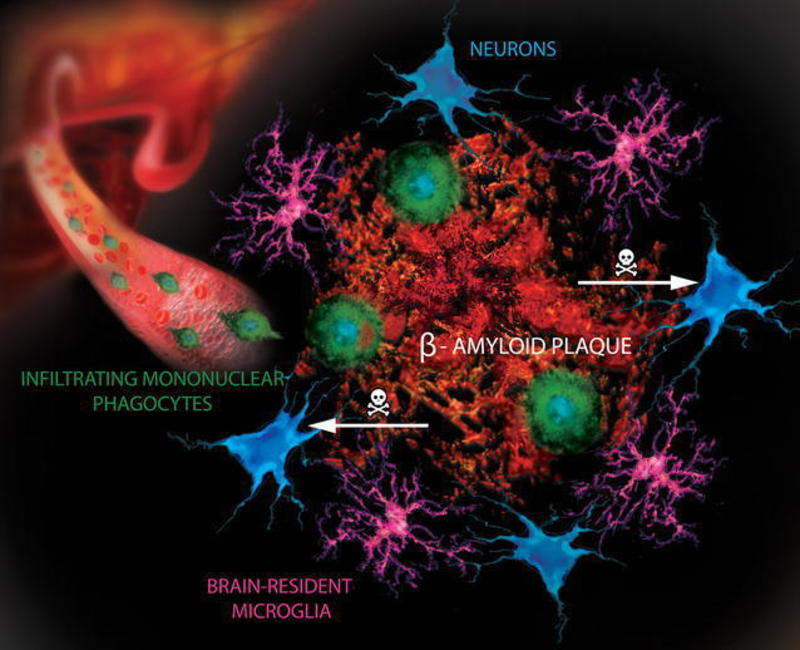
Japanese and Australian researchers have partnered to develop a new cost-effective and minimally invasive blood test for the early detection of Alzheimer’s disease.
Led by the Florey Institute of Neuroscience and Mental Health, and University of Melbourne professor Colin Masters, the research aimed at identifying the presence of beta-amyloid buildup in the brain.
Go deeper with GlobalData


Discover B2B Marketing That Performs
Combine business intelligence and editorial excellence to reach engaged professionals across 36 leading media platforms.
The buildup is considered one of the critical markers of the disease as it begins approximately 30 years before the display of dementia symptoms such as memory loss and cognitive decline.
Results from the analysis of the blood samples from patients in a large study at the Japanese National Center for Geriatrics and Gerontology (NCGG) showed that the new test can identify the peptide with 90% accuracy.
The researchers subsequently validated these results against patient samples obtained from the Australian Imaging, Biomarker and Lifestyle Study of Ageing (AIBL).
NCGG Research Institute director-general Katsuhiko Yanagisawa said: “Our study demonstrates the high accuracy, reliability, and reproducibility of this blood test, as it was successfully validated in two independent large datasets from Japan and Australia.”
The new method, which can be performed with a tiny blood sample, is expected to provide an alternative for existing beta-amyloid tests such as brain scans or spinal fluid analysis, which are said to be expensive, invasive, and sparsely available.
Professor Masters said: “This new test has the potential to eventually disrupt the expensive and invasive scanning and spinal fluid technologies. In the first instance, however, it will be an invaluable tool in increasing the speed of screening potential patients for new drug trials.
“New drugs are urgently required, and the only way to do that is to speed up the whole process.
“Due to the long timespans involved, pharmaceutical companies require accurate predictions of who is most at risk.”



