
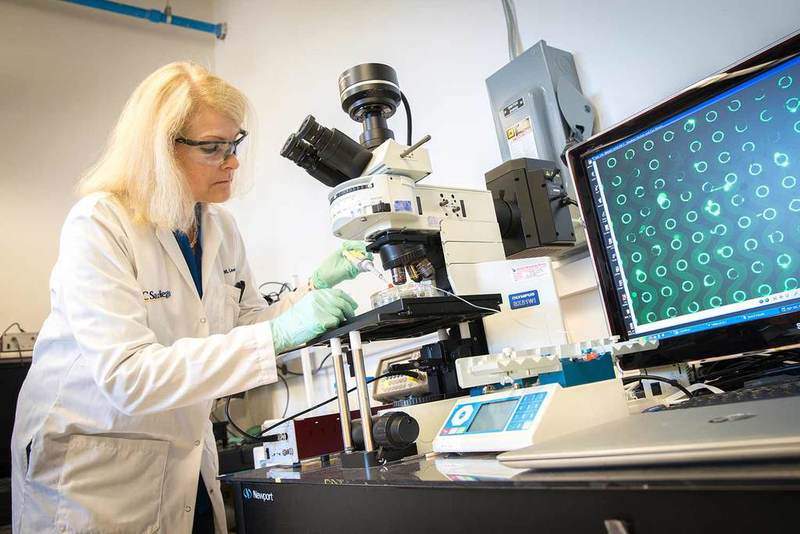
Researchers at the University of California, San Diego (UC San Diego) have developed a new blood test for early detection of pancreatic cancer in order to increase the chances of curative therapy.
The test is designed to quickly analyse a drop of blood for the cancer’s biomarkers, glypican-1 and CD63. It is claimed to deliver results within one hour.
Go deeper with GlobalData


Discover B2B Marketing That Performs
Combine business intelligence and editorial excellence to reach engaged professionals across 36 leading media platforms.
Usually, blood tests for pancreatic cancer involve the collection of biological structures called exosomes that are released from all cells in the body. These structures consist of proteins and genetic material that may act as biomarkers for identifying cancers.
However, exosomes are fragile and are considered hard to extract from blood, and existing isolation techniques are time-consuming and require pre-treated samples.
On the contrary, the new test employs an electronic chip-based system to directly extract exosomes from blood in minutes, which are then fluorescently labelled to flag the biomarkers.
UC San Diego Jacobs School of Engineering emeritus professor Michael Heller said: “The innovation of this work is that it essentially combines all the complex, lengthy steps of sample preparation, exosome isolation and final assay interpretation required by other platforms into one seamless ‘sample-to-answer’ device.
US Tariffs are shifting - will you react or anticipate?
Don’t let policy changes catch you off guard. Stay proactive with real-time data and expert analysis.
By GlobalData“We’ve developed a prototype platform that has the potential to translate into a handheld, rapid and relatively inexpensive point of care testing device for pancreatic cancer.”
The researchers expect the test to serve as a primary screening source to detect patients who would later need more expensive and invasive methods such as CT scan, MRI or endoscopy for diagnosis.
When tested on a group of 31 patients, the chip was able to differentiate the blood samples of 20 patients who had pancreatic cancer from those without the cancer.
The researchers are further working on refining the test to detect biomarkers even during early stages of the disease, for screening larger samples, and those from high-risk patients.



