
Roche has launched new SARS-CoV-2 research use only laboratory test to help monitor emerging mutations of coronavirus.
The new cobas SARS-CoV-2 Variant Set 1 test can detect and differentiate the mutations found in SARS-CoV-2 variants including B.1.1.7, B.1.351 and P.1.
Go deeper with GlobalData

Discover B2B Marketing That Performs
Combine business intelligence and editorial excellence to reach engaged professionals across 36 leading media platforms.
The B.1.1.7 variant has a large number of mutations and was first reported in the UK in December.
B.1.351, which arose from B.1.1.7, was reported in South Africa during the same month. The P.1 variant was found in Brazil.
Cobas SARS-CoV-2 Variant Set 1 test can be used to track the potential impact on therapeutics, vaccines and public health interventions.
The accurate detection of mutations helps to estimate the spread of the circulating variants associated with increased human-to-human transmission.
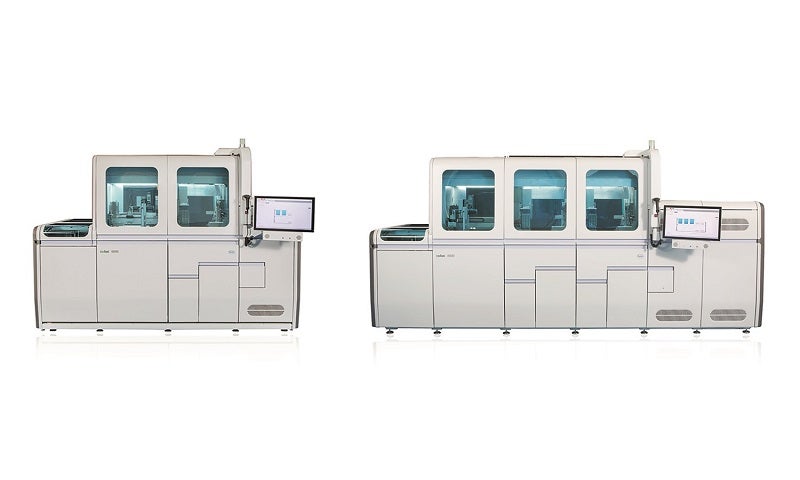
The test runs on the widely used high-throughput cobas 6800/8800 systems. In addition to reducing testing complexity, it helps to provide crucial insight for healthcare systems to take appropriate measures to fight Covid-19.
It has a pre-optimised assay design, ready-to-use test cassettes and predefined software parameters and enables laboratories to cut down testing complexity.
Roche Diagnostics CEO Thomas Schinecker said: “Viruses naturally evolve over time. While most mutations do not have a clinical impact, some variants need to be tracked carefully as they seem to spread more easily and quickly.
“Continued surveillance is essential for public health. Our latest solution provides laboratories a fast and efficient way to investigate these variants found in infected individuals and the potential impact on existing therapies, vaccines and tests.”
The company has also confirmed that its existing diagnostic tests to detect SARS-CoV-2 infections remain accurate and effective in detecting active infections.



