
Researchers have found that 3D in-situ printing of bone-regenerating scaffolds has been shown to improve the delivery of regenerative and reconstructive biomedical devices for the proper and rapid healing of bone fractures.
The research was led by Dr Venu Varanasi with the Bone-Muscle Group at the University of Texas at Arlington College of Nursing and Health Innovation, and conducted, in collaboration with the University of Texas at Arlington College of Engineering, Texas A&M University College of Engineering, and College of Dentistry.
Go deeper with GlobalData


Discover B2B Marketing That Performs
Combine business intelligence and editorial excellence to reach engaged professionals across 36 leading media platforms.
Varanasi said: “Our goal is to heal the defect or fracture site rapidly as if nothing ever happened. We want to develop these methods and materials so that someday we can treat certain types of bone defects like they are dental fillings.
“Principally, these become out-patient procedures where the patient goes home to heal with the support of their loved ones and with reduced medical expenses owed to extended hospital stays.”
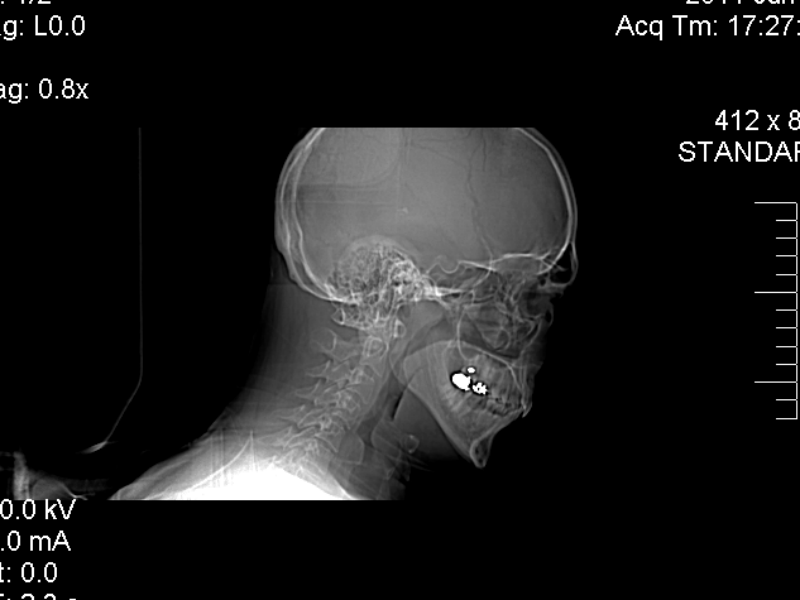
Severe traumatic injuries to the cranium are challenging to heal due to the large missing bone volume. Metal or plastic implants are commonly used but they can take a long time to be customised for fit. This can lead to multiple revision surgeries if the defect is not properly healed. In addition, the tissue that adjoins the implant can heal improperly. For the effective treatment of these defects and injuries, researchers have been working to reduce the time and improve the accuracy of implantable bone scaffold substitutes.
The efficacy of bone scaffold substitutes is limited by the rate of bone formation, scaffold-defect mismatch and scaffold displacement during implantation. However, additive in-situ 3D printing can overcome these limitations by printing scaffolds that conform to the dimensions of the defect site.
Dr Varanasi added: “In our laboratory we tested several nanobiosilica-based 3D scaffolds with adequate 3D printing properties to potentially improve implantability and rapid bone healing capability.
“We hypothesised that these scaffolds formed the intended porosity and chemistry for bone and vascular healing.”
Varanasi’s lab used a human periosteum cell culture model and a rat cranial defect animal model to illustrate the efficacy of this scaffold and live 3D printing method for potential clinical translation.
The biosilica-biopolymer scaffold was prepared by mixing Laponite (Lp) with methacrylated gelatin (MAG). Sucrose was used to increase viscosity and reduce gelation of the printing ink. IRGACURE 2529 was used as a crosslinking agent. During printing, crosslinking was initiated by UV light at the tip of the printer nozzle and scaffolds were in-situ 3D printed directly into calvaria bone defects using varied Laponite concentration to determine optimal bone density and chemical structure.
The scaffolds were fabricated into a mesh design with dimensions matching that of formed defects and after four weeks, cranial bone samples were extracted. Evaluation by micro-CT showed that nearly 55% of the bone defect was healed after four weeks for higher Lp- rich-MAG scaffolds versus lower Lp-containing MAG scaffolds.
Empty control defects only had 11% of the defect filled with bone after four weeks. Histological staining showed that the scaffolds recruited cells into their structure to regenerate the intra-bony layers needed to initiate the healing process.
The cells from within the initial haematoma become incorporated into the scaffold structure, giving the operator flexibility to use the printed scaffold as a structural support that stimulates healing.
The researchers hope that the emerging technology will be ready to treat patients in clinics as soon as possible.



