
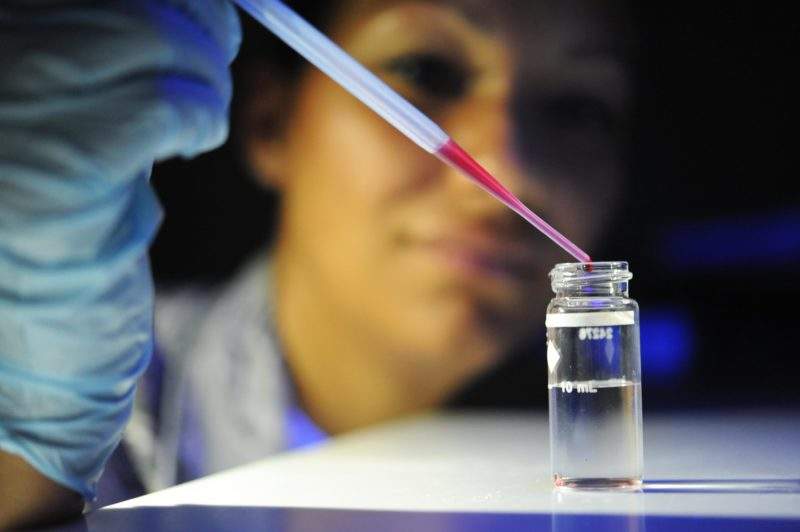
Researchers at Glasgow University have developed a stretchy, wearable sensor that monitors the pH of the wearer’s sweat in real time in contact with the skin.
Developed using funding from the European Commission and the Engineering and Physical Sciences Research Council (EPSRC), the device was described in the report ‘Stretchable Wireless System for Sweat pH Monitoring’ published in Biosensors and Bioelectrics.
Go deeper with GlobalData


Discover B2B Marketing That Performs
Combine business intelligence and editorial excellence to reach engaged professionals across 36 leading media platforms.
The sensor features a pair of serpentine-shaped interconnecting pieces that can stretch, allowing the sensor to grow by up to 53% in length and still function; testing showed it can be stretched by 30% 500 times and still operate. Made from a graphite-polyurethane composite and measuring just a single square centimetre, the sensor can wirelessly transmit data to an accompanying smartphone app called SenseAble, as long as the sensor is under 20% strain. This will allow users to track their pH levels in real time, and without the need for painful and awkward blood tests.
“Sensor-laden wearable systems that are capable of providing continuous measurement of key physiological parameters coupled with data storage, drug delivery and feedback therapy have attracted huge interest,” the researchers said in the report.
The researchers believe that the sensor’s small size, flexibility and simple data transmission set it apart from other wearables, which can be bulky and inconvenient, and require a lot of power to transfer data using Bluetooth.
While the sensor can only measure pH at present, the team are eager to apply the technology to other characteristics of the body.
US Tariffs are shifting - will you react or anticipate?
Don’t let policy changes catch you off guard. Stay proactive with real-time data and expert analysis.
By GlobalData“Now that we’ve demonstrated that our stretchable system can be used to monitor pH levels, we’ve already begun additional research to expand the capabilities of the sensor and make it a more complete diagnostic system,” said project leader Professor Ravinder Dahiya.
“We’re planning to add sensors capable of measuring glucose, ammonia and urea, for example, and ultimately we’d like to see a system ready for market in the next few years.”



