
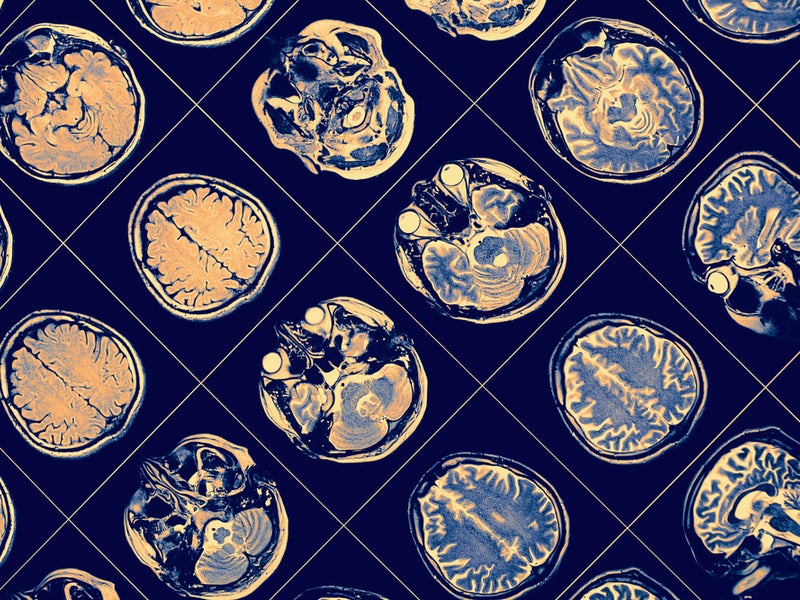
Non-invasive brain stimulation may help speed up and improve vision recovery for cortically blind patients following a stroke or similar brain injury.
Academics from the University of Rochester collaborated with researchers at the Italian Institute of Technology to study how brain stimulation could impact visual perceptual learning and retention in both healthy individuals and those with brain damage. The results of their study have been published in the Journal of Neuroscience.
Go deeper with GlobalData


Discover B2B Marketing That Performs
Combine business intelligence and editorial excellence to reach engaged professionals across 36 leading media platforms.
Participants in the study were divided into sub-groups and asked to complete a computer-based visual processing task which measured their motion perception. This is what enables people to see movement and avoid or interact with moving objects.
The participants were shown clouds of dots and asked to determine which way they moved across the screen, with each sub-group given a different type of brain stimulation involving a non-invasive electrical current applied over the visual cortex.
A type of stimulation known as transcranial random noise stimulation (tRNS) significantly improved participants’ motion integration thresholds when they performed the task. All groups got better with practice, but the tRNS group improved twice as much and was able to learn the motion task more successfully than other groups.
When participants were re-tested six months later the participants in the tRNS group were found to have retained what they had learned and were still able to perform better on the motion task than other groups.
The researchers said it is unclear why exactly tRNS has this impact on the brain.
University of Rochester professor of brain and cognitive sciences Duje Tadin said: “It appears that tRNS helps put the brain in a more plastic state, which makes it more amendable to training-induced change, or learning. What we hope to learn with future work is why this happens.”
The team then extended its research to include patients who had suffered a stroke or other traumatic brain injury which had affected their visual cortex and rendered them partially blind.
These patients were subject to tRNS while using an eye-training system designed to assist stroke patients with recovering vision. This consisted of a set of exercises designed to stimulate the undamaged portions of the visual cortical system, through which the undamaged areas learn to process visual information that would normally be processed by the damaged parts.
The patients experienced an improvement in visual processing and function after ten days. Re-learning visual perception lost due to neurological damage typically requires months of training.
University of Rochester professor in ophthalmology Krystel Huxlin said: “This fast improvement is something we’ve never seen in this patient population.”
This two-pronged approach of eye-training and tRNS could lead to more efficient therapies to treat brain damage-associated sight loss in the future.



