
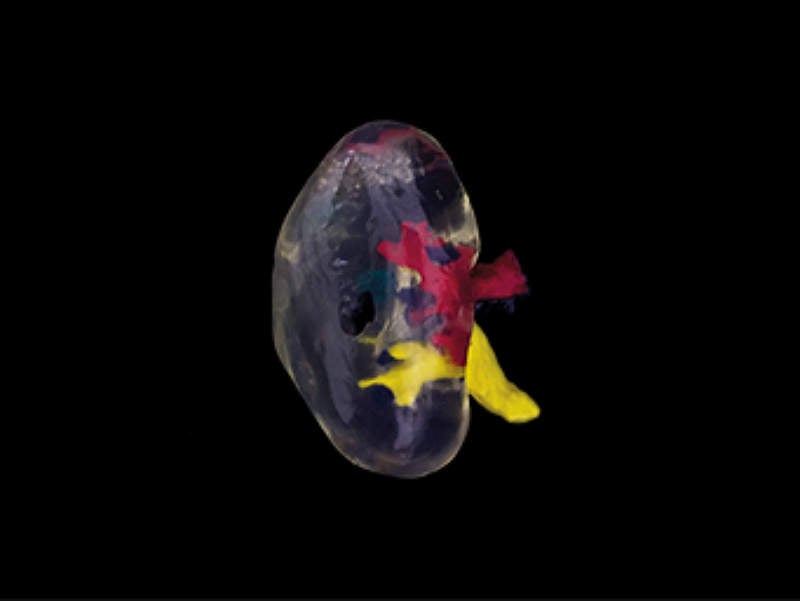
Surgeons in Belfast have performed a complex and lifesaving kidney transplant using a 3D printed model of a kidney. The patient, 22-year-old young mother Pauline Fenton, was saved after surgeons used a 3D replica of her donor’s kidney to practice the operation which had numerous complications.
The operation is the first described case of the complete removal of a Bosniak 2F renal cyst from a donor kidney without the requirement of revision surgery.
Go deeper with GlobalData


Discover B2B Marketing That Performs
Combine business intelligence and editorial excellence to reach engaged professionals across 36 leading media platforms.
Ms Fenton, from Northern Ireland, had end-stage kidney disease and was completely dependent on dialysis. Although her father, William Fenton, was confirmed to be a suitable living donor, his blood group was incompatible, which meant the surgery would be complicated.
The discovery of a potentially cancerous cyst on the donor kidney heightened the complexity of the operation, as the cyst would require treatment first. Surgeons at Belfast City Hospital consequently tried the innovative technique of 3D printing a model of Mr Fenton’s donor kidney.
The model kidney helped surgeons to assess the size and placement of the tumour and cyst so the team could plan the removal and prepare for the transplant. They printed the replica of the kidney from the donor’s CT scans ensuring the detail would be as precise as possible.
Consultant transplant surgeon Tim Brown said: “In this case, our donor’s kidney was the best possible option for his daughter’s life saving transplant, so we had to ensure precise and complete excision of the cyst to retrieve maximum healthy tissue for transplantation.”

US Tariffs are shifting - will you react or anticipate?
Don’t let policy changes catch you off guard. Stay proactive with real-time data and expert analysis.
By GlobalData“As surgeons, we are highly trained and skilled at what we do, but by having a 3D print of the patient’s anatomy in my hand, I get an extra level of understanding that just isn’t possible with 2D or 3D images on screen. In this case, I could plan the surgery in detail, considering the best approach, as well as the potential problems, before stepping into the operating theatre.”
Harnessing this new technology could not only save more lives but would also be financially beneficial to a range of health services. The average cost of keeping a patient on dialysis in the UK is over £30,000 a year, compared with £5,000 a year for post-transplant management.
Daniel Crawford, founder of Belfast company axial3D who produced the 3D model, said: “We are delighted to hear that both father and daughter are doing well after their recent operation. Improving patient outcome is at the heart of what we do. It is vital that our amazing surgeons have access to the best and most innovative solutions to support them in planning for very complex procedures.
“We believe in today’s economy, where cost saving and efficiency is at the forefront of the NHS agenda, 3D printing offers an exciting opportunity for hospitals to reduce costs, elevate care, and most importantly, improve patient outcomes.”
3D printing is likely to be used in more surgeries in Northern Ireland as it is now available on the NHS.



