
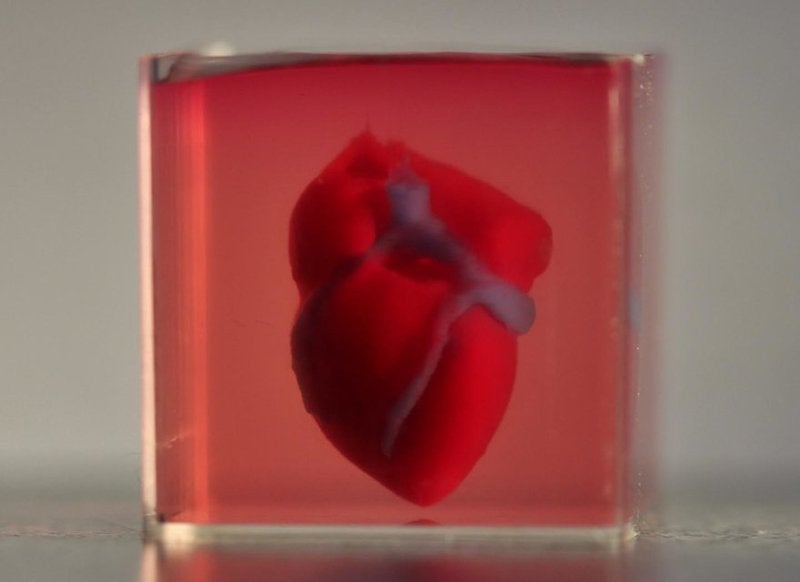
Researchers from Tel Aviv University (TAU) in Israel have used 3D printing to create a heart that uses a single donor’s cells and biological materials as the bioink.
This technology is expected to provide a personalised approach to implantations and help mitigate the risk of implant rejection in the future.
Go deeper with GlobalData


Discover B2B Marketing That Performs
Combine business intelligence and editorial excellence to reach engaged professionals across 36 leading media platforms.
About the size of a rabbit’s heart, the printed organ matches the vasculature structure of the donor’s immunological, cellular, biochemical and anatomical properties.
TAU School of Molecular Cell Biology and Biotechnology professor Tal Dvir said: “People have managed to 3D-print the structure of a heart in the past, but not with cells or with blood vessels.
“Our results demonstrate the potential of our approach for engineering personalised tissue and organ replacement in the future.”
To create the heart, the researchers performed a biopsy of the donor’s fatty tissue, which was then separated into cellular and acellular material.

US Tariffs are shifting - will you react or anticipate?
Don’t let policy changes catch you off guard. Stay proactive with real-time data and expert analysis.
By GlobalDataThe cellular material was reprogrammed to turn into stem cells. The extracellular matrix was processed into a personalised hydrogel and mixed back with the stem cells, which were then differentiated into cardiac and endothelial cells.
Using this solution, the researchers built cardiac patches with blood vessels that were compatible with the patient’s immune system.
Dvir added: “The biocompatibility of engineered materials is crucial to eliminating the risk of implant rejection, which jeopardises the success of such treatments.
“Here, we can report a simple approach to 3D-printed thick, vascularised and perfusable cardiac tissues that completely match the immunological, cellular, biochemical and anatomical properties of the patient.”
The team is currently planning to culture the hearts in the lab. Although the cells are capable of contracting, they need to be taught to work together to pump blood effectively before testing in animal models.
Findings from the research have been published in the Advanced Science journal.



