
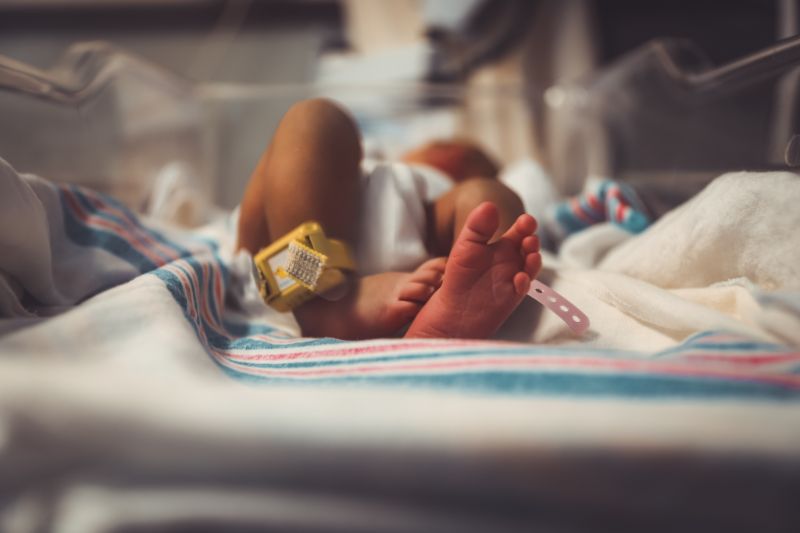
University of South Australia (UniSA) scientists have studied non-contact technology for the monitoring of premature babies in neonatal units.
The new computer vision technology is designed to safely track an infant’s heart and respiratory rates.
Go deeper with GlobalData


Discover B2B Marketing That Performs
Combine business intelligence and editorial excellence to reach engaged professionals across 36 leading media platforms.
It involves the use of high-resolution cameras to film the babies while advanced signal processing techniques extract vital physiological data.
These signal processing techniques are said to identify even subtle colour changes and movement that are not visible to the human eye.
UniSA neonatal critical care specialist Kim Gibson said: “Our computer vision system captures subtle signals in a pre-term baby, such as invisible skin colour variations that can be amplified to measure cardiac activity.
“We can also apply algorithms to magnify movement to give nursing staff a clear picture of what is going on with pre-term infants.”
US Tariffs are shifting - will you react or anticipate?
Don’t let policy changes catch you off guard. Stay proactive with real-time data and expert analysis.
By GlobalDataThe computer vision technology has been evaluated in a clinical study for monitoring ten premature babies at Flinders Medical Centre Neonatal Unit.
For the study, researchers chose babies who are prone to bradycardia and apnea, which can only be monitored using an electrocardiogram and adhesive electrodes.
The team noted that these electrocardiogram electrodes are costly and could damage the babies’ skin, making them susceptible to infection.
Gibson added: “An unexpected finding was that our system was able to accurately detect apnea when the ECG monitor did not.”
While additional research is required, the preliminary findings are believed to indicate the use of the technology in monitoring the health of premature babies, mainly in case of scarce resources and high infection risk.
Last July, UniSA partnered with the University of Adelaide to create dragonfly-inspired medical implants intended to reduce the risk of post-surgery infection in orthopaedic patients.



