
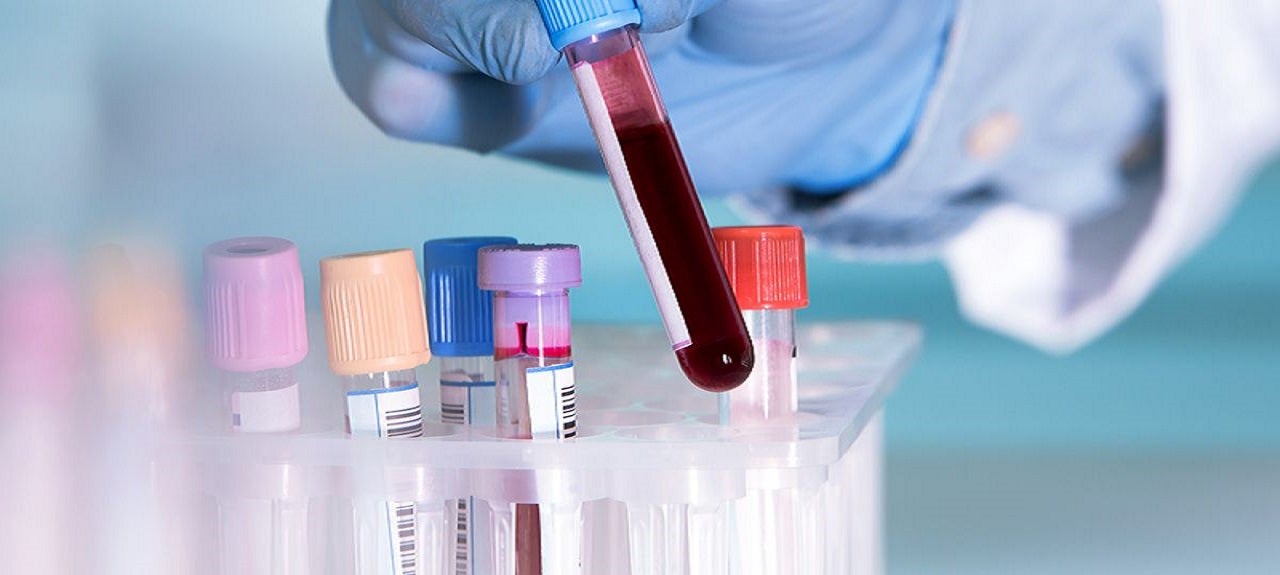
Researchers at the University of Oxford in the UK have developed a new type of blood test, which can be used to identify various cancers.
The minimally invasive and inexpensive new blood test can also detect whether the cancers have metastasised in the body as well as identify the disease in patients with non-specific symptoms.
Go deeper with GlobalData


Discover B2B Marketing That Performs
Combine business intelligence and editorial excellence to reach engaged professionals across 36 leading media platforms.
Published in Clinical Cancer Research, the study analysed samples obtained from 300 patients with non-specific but potentially worrying cancer symptoms, such as weight loss and fatigue.
Findings showed that cancer was accurately detected in 19 out of every 20 patients. The test also identified metastatic disease with an overall accuracy of 94%.
The test uses nuclear magnetic resonance (NMR) metabolomics technique, which can identify biomarkers called metabolites in the blood.
This helps to identify different types of cancers within a mixed population that include healthy people, localised cancer patients and those with metastatic cancer.
The new test can help in the early detection of cancer, mainly in patients with non-specific symptoms, as well as help clinicians assess the cancer stage.
University of Oxford study lead researcher Dr Fay Probert said: “This work describes a new way of identifying cancer. The goal is to produce a test for cancer that any GP can request.
“We envisage that metabolomic analysis of the blood will allow accurate, timely and cost-effective triaging of patients with suspected cancer, and could allow better prioritisation of patients based on the additional early information this test provides on their disease.”
In future studies, researchers will further study the new technique with larger patient cohorts for the earlier detection of new cancers as well as for potential clinical applications.
In December 2018, University of Queensland researchers created a new diagnostic test for identifying the presence of tumours in the body based on a DNA nanostructure that appears to be common to all cancer types.



