
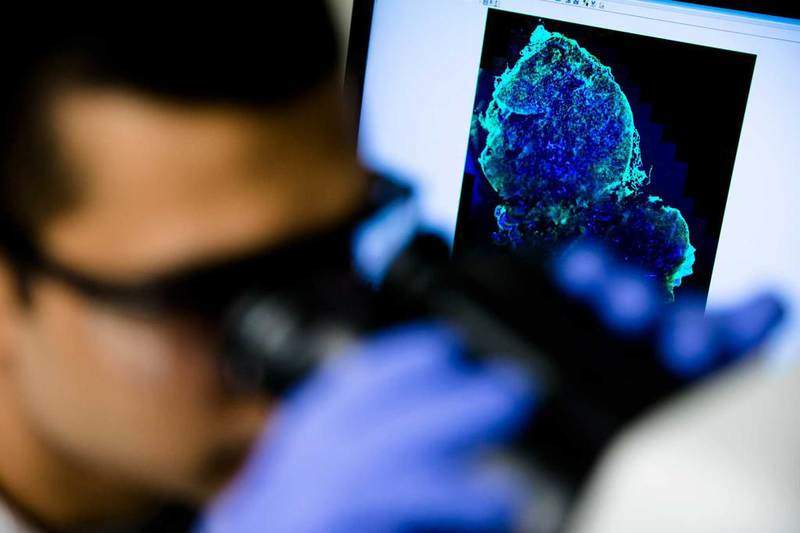
US-based researchers at the University of Michigan have developed a pill that carries a dye to ‘light up’ tumours upon exposure to infrared light, helping with diagnosis of breast cancer.
The team expects that the new approach will provide an alternative for mammography, which is considered imprecise and uncomfortable.
Go deeper with GlobalData


Discover B2B Marketing That Performs
Combine business intelligence and editorial excellence to reach engaged professionals across 36 leading media platforms.
According to the university, mammograms fail to identify benign tumours that do not need surgery or chemotherapy, and detect those present in dense tissue.
In order to address these concerns, researchers turned to molecular imaging and used a dye that tags a molecule found on cancer cells, in the blood vessels that feed tumours and also in inflamed tissue.
Information on the types of molecules on the tumour surface facilitates better differentiation between malignant cancer and a benign tumour.
The team attached the dye to one of Merck’s cancer-targeting molecule that failed in clinical trials but could travel through the bloodstream. The drug candidate was found to be safe yet ineffective against cancer.

US Tariffs are shifting - will you react or anticipate?
Don’t let policy changes catch you off guard. Stay proactive with real-time data and expert analysis.
By GlobalDataUniversity of Michigan assistant professor Greg Thurber said: “It’s actually based on a failed drug. It binds to the target, but it doesn’t do anything, which makes it perfect for imaging.”
The pill formulation of the dye allows oral delivery instead of intravenous administration that is known to cause severe reactions in certain patients. The oral route makes the imaging agent safer.
Furthermore, it allows detection of tumours that are otherwise difficult to identify with conventional methods because infrared light penetrates the body easily and can reach deep breast tissue.
This also eliminates the need for X-ray that may cause DNA disruption, leading to seeding of a new tumour.
When tested in mice with breast cancer, the new pill is reported to have demonstrated the ability to fluoresce the tumours using infrared light.



