
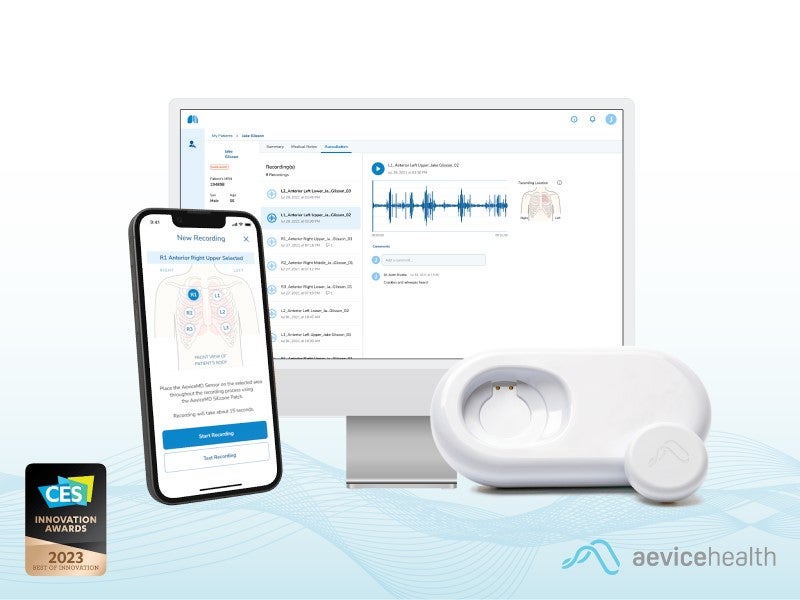

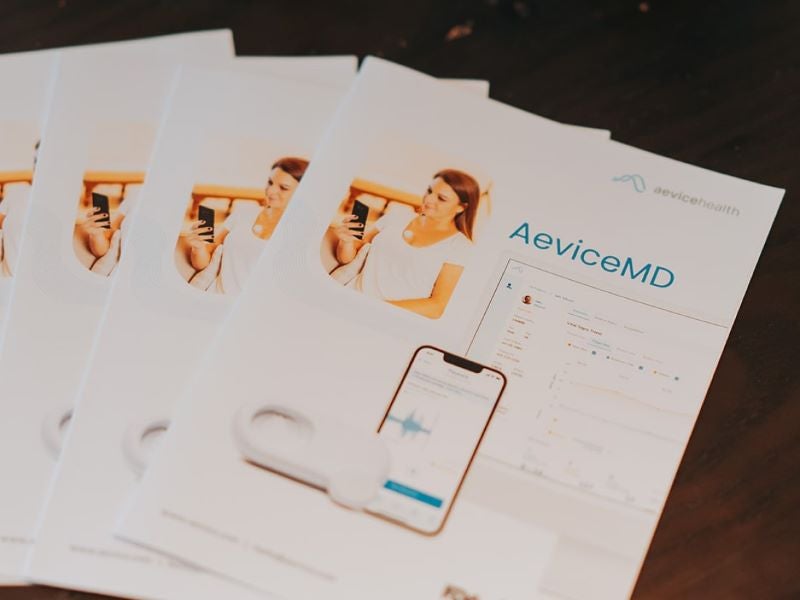
The AeviceMD remote respiratory monitoring system is a wearable stethoscope designed by Aevice Health to detect abnormal breath sounds such as wheezing, as well as monitor vital signs, including heart rate and respiratory rate.
Designed for use in both clinical and home settings, the device provides healthcare professionals with real-time, actionable data to facilitate more proactive and individualised patient management.
Recommended Buyers Guides

AeviceMD is among the smallest devices worldwide and features a distinctive design that enables continuous and comfortable monitoring across various age groups, from young children to older adults, where respiratory conditions are more commonly observed.
The device is approved for use in individuals aged three years and older.
Regulatory approvals
The AeviceMD system received approval from the Health Sciences Authority (HSA) of Singapore in March 2023. It was the first platform of its kind to be introduced in Singapore.
In July 2023, AeviceMD was granted clearance by the US Food and Drug Administration (FDA) as a Class II medical device via the 510(k) pathway. This clearance enabled Aevice Health to offer its remote monitoring platform to healthcare providers throughout the US, increasing access to a convenient solution for lung health assessment in both clinical and home environments.
AeviceMD obtained 510(k) clearance from the US FDA in May 2025 for use in paediatric patients aged three years and above.
In June 2025, the Japan Patent Office granted a patent for the AeviceMD, enhancing the company’s international intellectual property portfolio and affirming the originality of its Internet-of-Medical-Things respiratory care technology in accordance with Japanese patent regulations.
Aevice Health achieved Therapeutic Goods Administration approval in Australia for AeviceMD in December 2025 as a Class IIa medical device for use in children aged three and above. This approval represents the first instance in Australia where a wearable stethoscope designed specifically for paediatric applications obtained regulatory clearance.
In January 2026, the Intellectual Property Office of Singapore awarded Aevice Health a patent for AeviceMD, reinforcing the core architecture behind the device and safeguarding its technical base.
AeviceMD monitoring system design and features
The AeviceMD is a battery-powered, non-invasive wearable electronic stethoscope. It does not feature an alarm system and is not intended for emergency situations.
Compact in size and weighing under 10g, the AeviceMD offers a comfortable, child-friendly design combined with precise, longitudinal patient data, supporting advancements in remote patient monitoring.
The recorded data can be accessed by clinicians for playback, review and comparison with previous recordings from the same patient.
By enabling remote monitoring and earlier intervention, AeviceMD supports timely diagnosis and helps reduce readmissions.
The device comprises both hardware and embedded software, forming a system that includes the AeviceMD Sensor, AeviceMD Silicone Patch, AeviceMD Docking Station, AeviceMD App for patients, AeviceMD HCP Web App for clinicians and the AeviceMD Cloud Platform.
AeviceMD component details
The AeviceMD Sensor is an integrated electronic wearable that captures and logs lung sounds, then sends the data to an electronic gateway via Bluetooth.
The AeviceMD Silicone Patch is a silicone adhesive wearable patch that holds the Sensor in place and secures it to the wearer’s chest. The patch is biocompatibility tested, enabling the AeviceMD Sensor to be worn directly on the skin.
The AeviceMD Docking Station is a gateway unit that acts as the processing hub and connection between the Sensor and the Cloud Platform and also recharges the Sensor.
The AeviceMD App patient-facing mobile app retrieves post-processed results from the Cloud Platform and displays recorded lung sounds from the auscultation sites, which patients can share with their healthcare professional at their next appointment.
The AeviceMD HCP Web App is a separate, clinician-focused interface designed for reviewing patient data in a clinical environment.
The AeviceMD Cloud Platform is a secure cloud-based server that receives data from the gateway devices and analyses it to generate clinically meaningful outputs.
Materials used
Aevice Health partnered with DuPont™ Liveo™ to support the development of the silicone adhesive patch for paediatric use.
The company was exploring an attachment method that did not rely on strips or acrylic adhesives and was safe, comfortable and durable, while significantly improving children’s overall experience and encouraging better comfort and adherence.
Conventional acrylic-based, double-sided adhesive tapes were found to be unsuitable as they could be abrasive and irritating to the skin.
DuPont Liveo technical and commercial teams worked with Aevice Health to identify suitable products from the Liveo Silicone Skin Adhesives portfolio, which includes a wide selection of soft skin adhesives (SSAs) and medical‑grade pressure‑sensitive adhesives.
The teams ultimately determined that Liveo SSA products, commonly used in advanced wound care, were the most appropriate choice for children’s sensitive skin.
Clinical studies
In October 2021, Aevice Health and the National University Health System (NUHS) launched a study utilising AeviceMD to identify abnormalities in lung sounds.
The research, organised by the NUHS Centre for Innovation in Healthcare, aimed to evaluate the effectiveness of AeviceMD in detecting wheezing among paediatric patients experiencing respiratory difficulties at the National University Hospital.
The safety and efficacy of AeviceMD is being evaluated in an ongoing study entitled Remote Patient Monitoring Solution for Chronic Respiratory Disease Management by SingHealth Polyclinics in Singapore.
The clinical trial (NCT06377345) is designed to assess the impact of the AeviceMD monitoring system on reducing acute asthma exacerbations.
Employing a two-group randomised controlled trial methodology, the trial will evaluate the effectiveness of AeviceMD in improving patient outcomes, including a reduction in exacerbations and healthcare utilisation, as well as enhancements in quality of life, self-efficacy and cost-effectiveness.
The study involves 180 participants, comprising 124 adults and 56 paediatric patients above the age of seven, and 120 clinicians. Additionally, the trial aims to assess the usability of the device from the perspectives of both patients and healthcare professionals.
A separate pilot study, titled AeviceMD for Pediatric Asthma Management, focusing on paediatric asthma management using AeviceMD, is under way in collaboration with Cedars-Sinai Medical Center Guerin Children’s.
The study (NCT06321471) involves 20 paediatric participants, aged between three and 18 years, who have been diagnosed with poorly controlled asthma at Cedars-Sinai Medical Centre Guerin Children’s. Participants are enrolled to utilise the AeviceMD device during overnight sleep periods.
