
The AVEIR™ Dual Chamber (DR) leadless pacing system was designed and developed by Abbott, a US-based medical device company, to treat abnormal or slow heart rhythms.
The pacemaker received US Food and Drug Administration (FDA) approval in July 2023 and is recommended for the management of one or more chronic conditions, including syncope, pre-syncope, fatigue and disorientation.
Recommended White Papers

Recommended Buyers Guides

Abbott received the CE mark for the pacemaker in Europe in June 2024. The device was launched in Canada in August 2024, followed by the UK in November 2024 and India in October 2025.
The pacemaker is conditionally safe for use in the magnetic resonance imaging (MRI) environment when used according to the directions in the MRI-ready leadless system manual.
AVEIR DR leadless pacemaker design and details
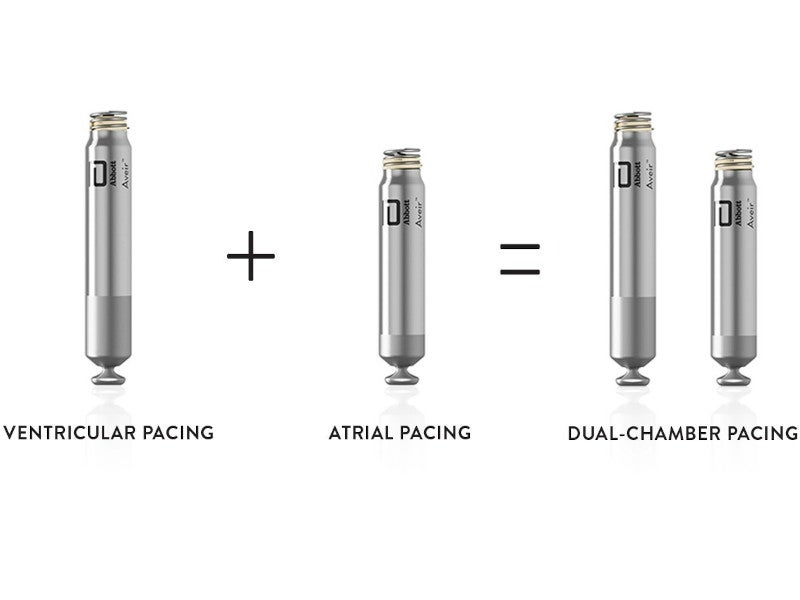
The AVEIR DR leadless pacemaker comprises two approved single chamber devices, namely the AVEIR ventricular (VR), which paces the right ventricle, and the AVEIR atrial (AR), which paces the right atrium.
It is attached to the heart’s interior surface using a screw-in mechanism called a helix. The mechanism allows the system to be retrieved in the future, or if the therapy requirements evolve or the device needs to be replaced.
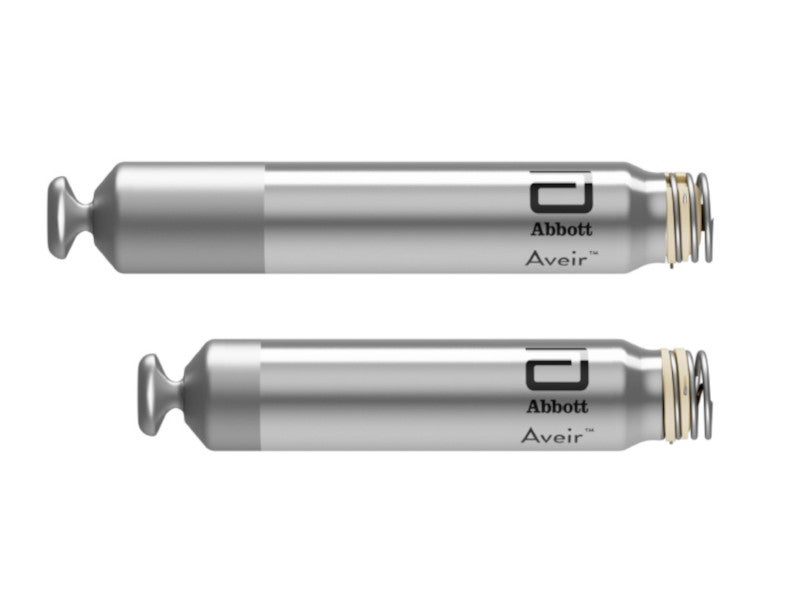
The AVEIR VR device is 38mm (0.12ft) long and has a diameter of 6.5mm. It comprises a docking button, a fixation helix and a distal dome tip electrode.
The AVEIR AR device is 32.2mm long and has a diameter of 6.5mm. It includes a docking button, outer fixation helix and an inner helix top electrode, which functions as the pacing and sensing electrode, and is engineered to enhance anchorage and improve stability within the atrium.
Abbott’s first-of-its-kind proprietary implant-to-implant (i2i™) technology in the system allows beat-to-beat communication and synchronisation between the two leadless pacemakers, according to the patient’s clinical requirement, offering them dual-chamber leadless pacing therapy.
The devices are inserted into the vein using steerable catheters incorporating an integrated deflection system. The introducer sheaths feature a hydrophilic coating and are available in 30cm or 50cm lengths.
Offsetting or bringing the tether ends of the delivery catheter into line enables the pacemaker to be loaded into the system and subsequently deployed.
A full-length protective sleeve encloses the helix during catheter manoeuvring, helping to minimise the chance of helix damage or trauma to cardiovascular anatomy.
The retrieval catheter features a tri-loop snare design for device recapture.
AVEIR DR leadless pacemaker features
The AVEIR DR pacemaker, integrated with battery and electrodes for implantation in the right ventricle and/or right atrium, provides bradycardia pacing as a pulse generator within the implanted chamber after sensing intrinsic cardiac signals.
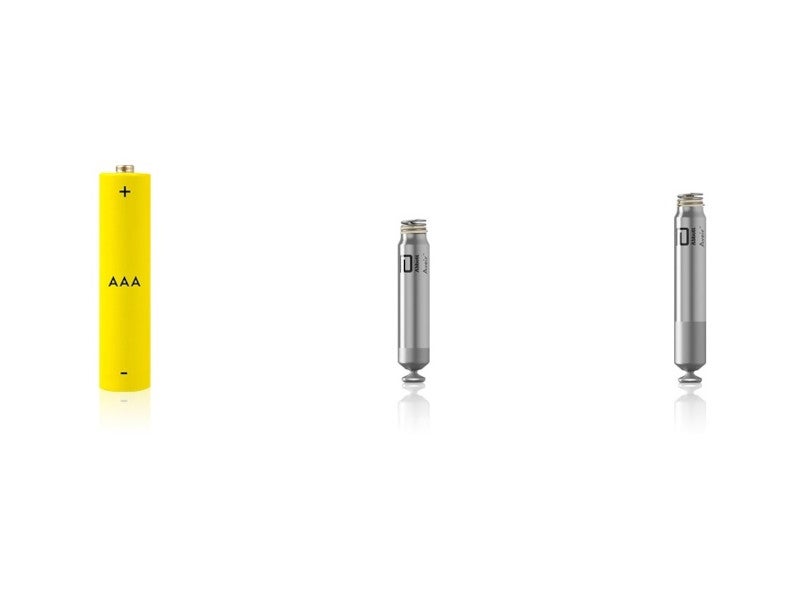
It can also be used in combination with a different co-implanted leadless pacemaker to offer dual chamber pacing treatment. The pacemaker is slimmer and smaller than a AAA battery.
The system is also designed to analyse the pacing in real time, enabling physicians to assess the correct placement of the device inside the heart chamber during the procedure.
Technology details of the AVEIR DR
Abbott’s i2i communication technology makes use of high-frequency pulses to transmit messages through the natural conductive properties of the bloodstream, connecting each leadless pacemaker.
Each implant communicates with a paired, co-implanted device in a coordinated manner to support dual-chamber therapy.
Conductive communication is crucial because it uses much less battery current than inductive, radio frequency or Bluetooth communications, the other options used in conventional pacemakers or other implantable medical devices.
Clinical trials of AVEIR
FDA approval of the AVEIR DR leadless pacemaker device was based on the results of a prospective, multi-centre, international, single-arm and pivotal AVEIR DR i2i Investigational Device Exemption (IDE) clinical trial.
The clinical trial evaluated the safety and performance of the pacemaker with three predetermined primary endpoints.
The first 300 patients were enrolled in the trial across 55 locations in the US, Canada and Europe. The design objectives of AVEIR DR include technologies that enable true dual-chamber leadless pacing by regulating the heart rate simultaneously and continuously between both chambers.
The AVEIR DR i2i IDE study results showed a 98.3% implant success rate, while more than 97% of patients had successful atrioventricular (AV) synchrony through three months post-implantation.
AV synchrony occurs when the heart’s upper and lower chambers beat normally, regardless of the underlying slow heart rhythms.
In each of the seven different postures and walking speeds, patients exhibited an average AV synchrony of more than 95%, indicating the pacemaker’s suitability for performing effectively during daily life activities.
Benefits of leadless pacemakers
Unlike conventional pacemakers, leadless pacemakers are inserted directly into the heart via a minimally invasive procedure and do not require cardiac leads and a pulse generator under the skin.
Leadless pacemakers, therefore, lower people’s exposure to potential lead and infection-related issues while also providing a less constrained and shorter post-implantation recovery time.
Abbott’s AVEIR DR leadless pacemaker system, which is approximately one-tenth the size of a conventional pacemaker, offers a new minimally invasive alternative to treat people with slow or aberrant heart rhythms.
