
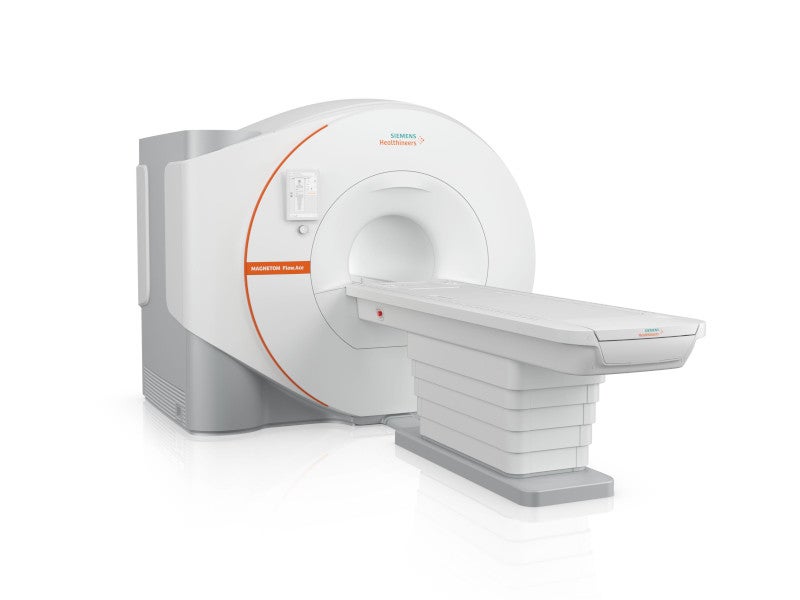
Siemens Healthineers’ Magnetom Flow.Ace is a 1.5-Tesla (T) magnetic resonance imaging (MRI) system that operates without helium.
The system is part of the company’s Magnetom Flow platform and is the second MRI platform designed to run with no helium, following the 0.55T Magnetom Free platform.
Recommended White Papers
Recommended Buyers Guides

The MRI system incorporates AI to organise and automate elements of the examination process, support image production and reduce scan duration.
Magnetom Flow.Ace received clearance from the US Food and Drug Administration (FDA) in June 2025.
Magnetom Flow.Ace design and features
Magnetom Flow.Ace features a 60cm bore MRI scanner with revised hardware and software components compared to previous versions.
The system includes a redesigned magnet, gradient coil, radio frequency chain, local coils, patient table and computing units.
Patient registration, positioning and scan start can be managed directly at the patient’s side, which can simplify workflow for the operator.
Options are available to modify the gradient performance, table configuration and bore dimensions.
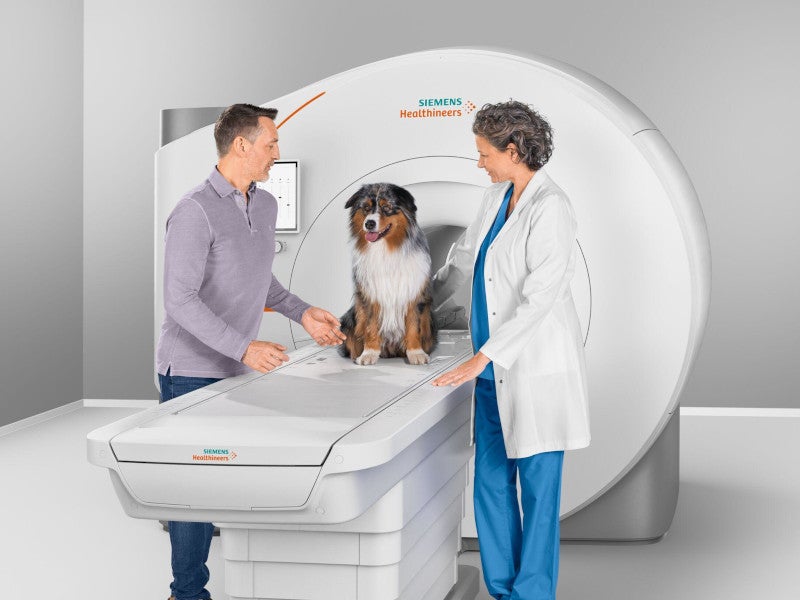
The system can also be used for animal imaging. It employs flexible, high‑density BioMatrix Contour coils in three sizes, which can be adjusted to accommodate varying anatomies.
The BioMatrix Contour coils with built‑in sensors allow the scanner to adapt imaging to the individual patient and simplify procedure handling.
For cooling, the scanner uses 0.7 litres of liquid helium in a closed circuit, whereas traditional MRI units typically rely on quantities exceeding 1,000 litres.
The design also eliminates the requirement for a quench pipe, through which earlier platforms used to discharge helium gas into the atmosphere during an emergency stop.
The lack of a quench pipe, along with the smaller 24m² footprint, helps in reducing installation requirements and related expenses compared to other 1.5T MRI systems.
Magnetom Flow.Ace can also be upgraded and adjusted to accommodate different clinical applications.
Magnetom Flow.Ace technology details
Magnetom Flow.Ace uses a high‑field MRI platform together with the company’s DryCool superconductive magnet design.
DryCool technology was originally cleared with the 0.55T Magnetom Free.Max system (K231617) and is now implemented across systems from 0.55T up to the new 1.5T models.
The DryCool magnet is a sealed, dry system intended to limit helium use and associated servicing requirements, supporting consistent system operation.
Magnetom Flow.Ace also features the myExam Companion function, which utilises AI to guide users with varying experience levels through the examination process in a step-by-step manner.
AI functions are used to assist with automated workflow steps, image reconstruction and shortening of scan duration.
The Deep Resolve AI tool assists in image reconstruction and is designed to speed up data collection, reduce image noise and improve visibility of fine anatomical details.
Magnetom Flow.Ace uses and benefits
Magnetom Flow.Ace is intended for use across a broad spectrum of clinical and medical imaging, from basic to more complex examinations including whole‑body studies, as well as cardiac and oncology applications, and can be configured for different diagnostic tasks.
Relative to the manufacturer’s earlier MRI models, the system is specified to lower yearly energy use by more than 30%.
Eco Power Mode turns off components with high energy demand when they are not in active use. This includes periodically stopping the cold head compressor when the system is in standby or powered down.
Used together with DryCool technology, this arrangement reduces energy consumption and limits helium usage.
The scanner is also built to connect with different healthcare environments and employs software tools that support consistent operation across multiple systems in the same network.
