
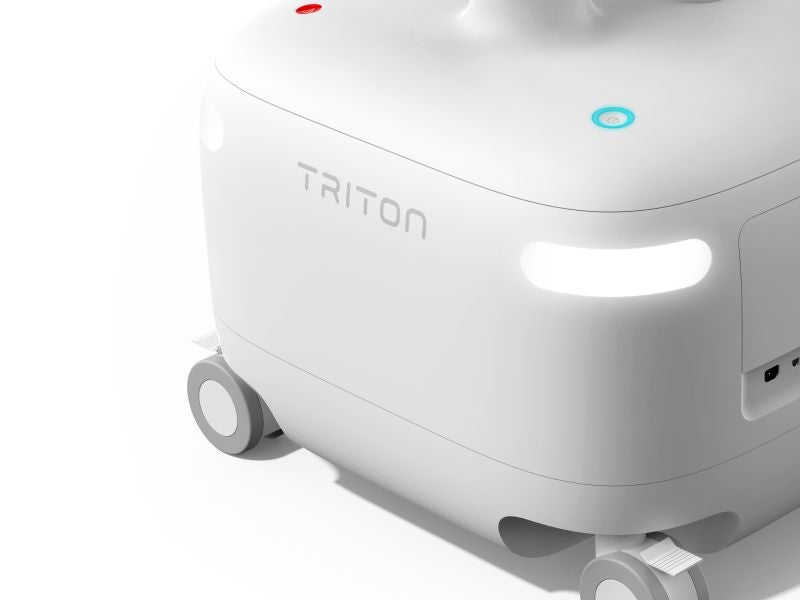
The Triton 1 robotic endoscopy system is a robotic gastrointestinal (GI) endoscopy platform developed by US-based venture-backed medical device company Neptune Medical.
The system is designed to improve navigation, precision, visualisation, and control during diagnostic or therapeutic procedures throughout the colon. It is intended for routine screening, surveillance and diagnostic colonoscopies, as well as advanced colonic intervention, including endoscopic mucosal resection (EMR) and endoscopic submucosal dissection (ESD).
Recommended Buyers Guides

The system received 510(k) pre-market approval from the US Food and Drug Administration (FDA) in August 2026.
Triton 1 robotic endoscopy system design and features
The Triton 1 system is a physician-operated, electromechanically controlled endoscopy platform comprising a rigidisable endoscope and rigidisable overtube.
The system is indicated for both diagnostic endoscopy and endoscopic surgery from the rectum to the ileocecal valve. The indicated anatomy includes the anus, rectum, sigmoid colon, colon, caecum and ileocecal valve.
Built on Neptune Medical’s Dynamic Rigidization platform technology, the system uses a flexible endoscope positioned within a flexible overtube, forming a nested configuration. A physician controls the independent electromechanical advancement and retraction of each component using a handheld controller.
Both the endoscope and overtube can be selectively rigidised to temporarily maintain their shape within the anatomy. The endoscope’s distal tip is electromechanically actuated to enable steering and torque.
Alternating the rigidisation of the endoscope and overtube is intended to support navigation through colonic curves while maintaining the device’s selected shape. This approach is designed to increase control and stability and to reduce looping.
The system provides forward viewing, with a 130° field of view and a depth of view ranging between 5mm and 10mm. Its vision components include software, a robot cart, LED light engine, camera control unit, endoscope, camera, and integrated fibre-optic illumination. The sterilisation of the device is done using ethylene oxide.
Triton 1 system clinical study
The FDA clearance of the Triton 1 system was backed by data from the CARE I trial, a prospective, single-centre, single-arm, non-randomised, first-in-human study conducted in two phases across a combined cohort of 50 adult patients aged 22 and older.
The patient population comprised individuals of both sexes indicated for screening, surveillance or diagnostic colonoscopy. Phase A evaluated procedural safety across ten participants while Phase B examined safety and efficacy across 40 participants. Both phases incorporated a 14-day follow-up period.
The study met its primary endpoints, reporting a 100% caecal intubation rate and no adverse events. The reported adenoma detection rate (ADR) was 54.2%, against an industry benchmark of 35%.
Evaluated using the NASA Task Load Index (NASA-TLX), the average procedural workload for endoscopists was 67% lower than that recorded for manual colonoscopy. In addition, no cases required patient repositioning, manual abdominal pressure, or conversion to conventional manual colonoscopy.
Neptune Medical is also collaborating with Cleveland Clinic Abu Dhabi on a clinical trial in Abu Dhabi, United Arab Emirates (UAE) to assess robotic colonoscopy incorporating AI-assisted polyp detection and treatment.
The CARE-UAE study is supported by the Department of Health – Abu Dhabi (DoH), the Emirate’s healthcare regulator. The study will evaluate the system’s navigation and shape-tracking functionality, which is intended to assist clinicians in steering the endoscope through the colonic anatomy.
Triton 1 robotic endoscopy system benefits
Colorectal cancer is the second leading cause of cancer-related death in the US, with incidence also increasing among adults under 50.
Colonoscopy is regarded as the standard procedure for the diagnosis, prevention and treatment of colorectal cancer because it enables clinicians to identify and remove precancerous lesions during the same examination.
Existing endoscopes have design limitations that can make them difficult to control, despite the specialist training received by gastroenterologists. Instability during a procedure may result in incomplete visualisation of the colon and missed adenomas, which are precancerous lesions. Manual endoscopy can also place considerable physical strain on clinicians. The Triton 1 system is designed to support colonoscopy by providing greater stability and precision using robotics and AI.
