
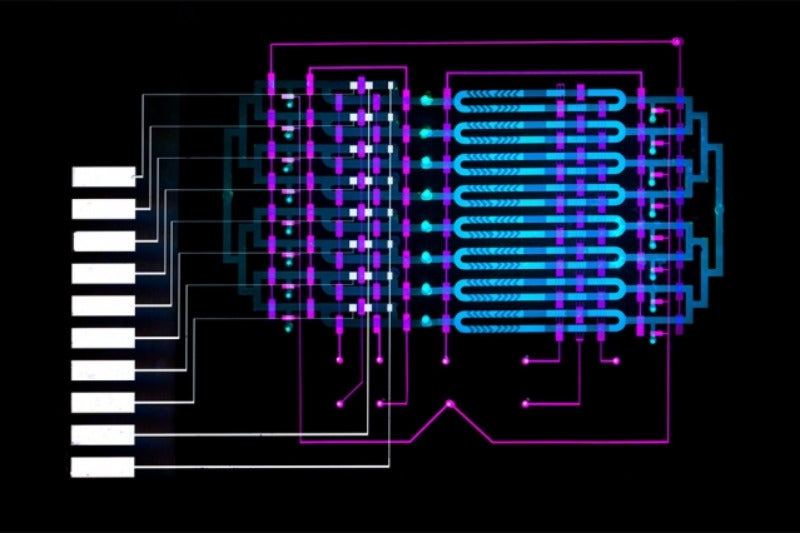
Researchers from the Massachusetts Institute of Technology (MIT) in the US have developed an automated, microfluidics device to detect sepsis within approximately 25 minutes.
Sepsis is characterised by an inflammation chain reaction caused by the body’s immune response to infection. The condition could lead to septic shock and organ shut down.
Go deeper with GlobalData


Discover B2B Marketing That Performs
Combine business intelligence and editorial excellence to reach engaged professionals across 36 leading media platforms.
Sepsis is currently diagnosed using a variety of approaches, including blood, imaging, and lab tests.
Previous research revealed that protein biomarkers in the blood could help detect the condition early. It was observed that a protein called interleukin-6 (IL-6) increases hours before other symptoms appear.
The MIT team noted that standard assay devices cannot quickly detect the blood levels of this protein.
To address this challenge, researchers created a microfluidics device that could automatically identify clinically significant levels of IL-6 for the diagnosis of sepsis.
The system is said to require less than a finger prick of blood and delivers results in around 25 minutes.
MIT Department of Mechanical Engineering PhD student Dan Wu said: “For an acute disease, such as sepsis, which progresses very rapidly and can be life-threatening, it’s helpful to have a system that rapidly measures these non-abundant biomarkers. You can also frequently monitor the disease as it progresses.”
Conventional assay tests to identify protein biomarkers are bulky, expensive, require a millilitre of blood, and take hours to provide results, according to researchers.
Portable point-of-care systems, which require microlitres of blood and provide results in 30 minutes, are costly and capture only a small amount of proteins.
To develop the new device, researchers shrank components of the commonly used magnetic-bead-based assay onto an automated microfluidics device and coated the beads with an antibody that attracts IL-6.
The device requires approximately five microliters of blood and can capture IL-6 concentrations as low as 16 picograms per millilitre, which is said to be lower than the concentrations that indicate sepsis.
It features eight separate microfluidic channels to allow the simultaneous analysis of different biomarkers or blood samples.
The team intends to create a sepsis biomarkers panel for the device. They noted that the device can measure several different biomarkers of any disease.


