
ISO 10993-10: The Role of IATA Approach in Sensitization Assessment
This February ISO/TC 194 published the long-anticipated draft of ISO 10993-10 standard, named: “Biological evaluation of medical devices – Part 10: Tests for skin sensitization”.

QualiMetrix provides integrated analytical development services for the medical device and pharmaceutical industries.

You have successfully submitted your enquiry. Someone from our company will respond ASAP

QualiMetrix provides integrated analytical development services for the medical device and pharmaceutical industries.
The company offers support throughout device development, product registration and post-marketing stages, while its analytical offerings include quality control (QC) testing and research and development (R&D) studies. The company’s studies are performed using state-of-the-art instrumentation that is consistently updated.
QualiMetrix’s contract laboratory meets the stringent regulatory requirements of the healthcare industry, performing consistently to good manufacturing practice (GMP) and good laboratory practice (GLP) standards.
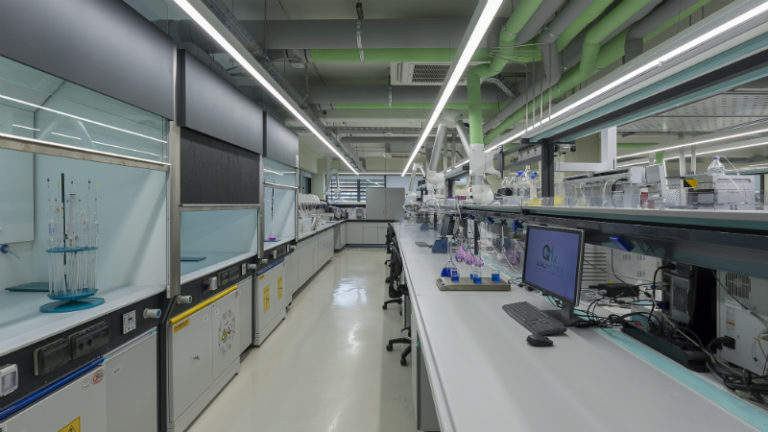

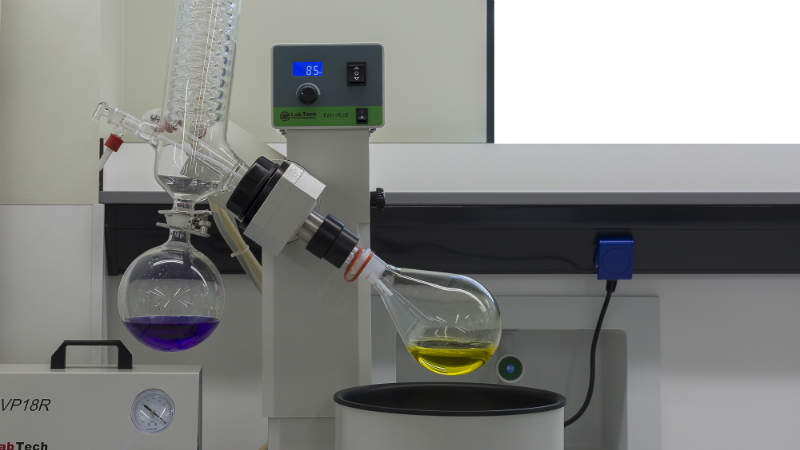

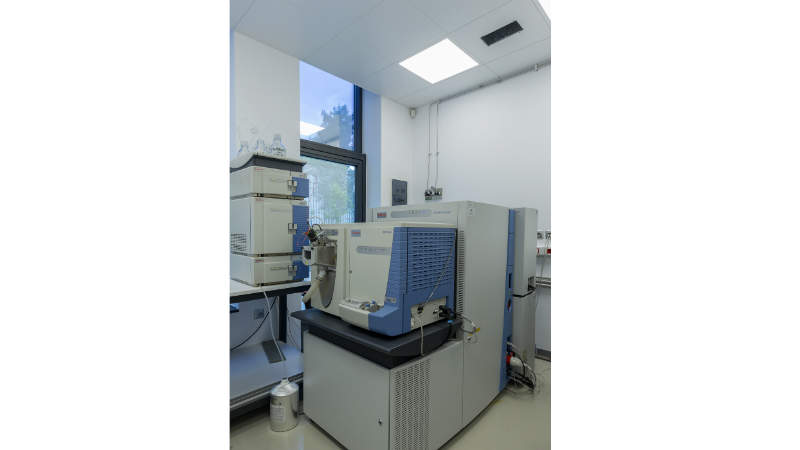
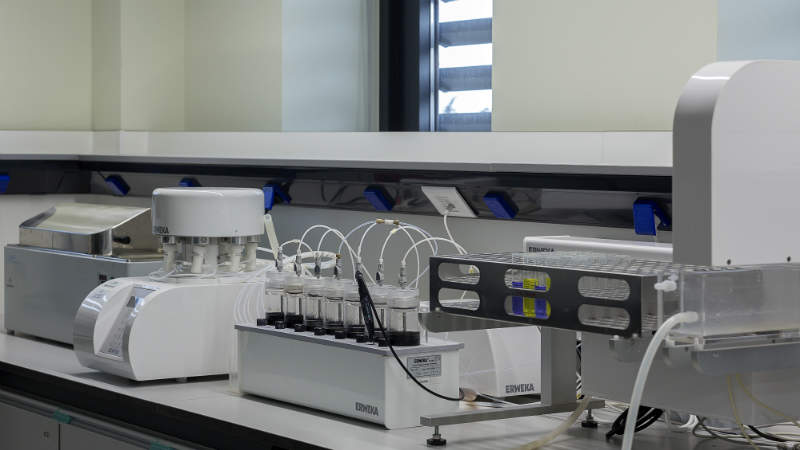
Chemical characterisation comprises a variety of analytical techniques to identify and quantify materials with the potential to migrate from the product contact material into the solution of interest.
The purpose of this testing is to determine a baseline to the extractable amount of chemical compounds present in and on a medical device and utilise extraction conditions similar to those employed during the biocompatibility assessment of similar devices.
Through state-of-the-art equipment and scientific expertise, QualiMetrix provides analytical services regarding:
Structure elucidation of unknowns and toxicological risk assessment are also included in the company’s service portfolio. QualiMetrix provides structural elucidation of unknown compounds using accurate mass measurements through high-resolution mass analysers (HRMS) that leads to the highest confidence of the proposed structure.
The toxicological evaluation is performed by combining in-silico methodologies such as DEREK and SARAH NEXUS software, literature search and expert assessment. In the case of equivocal or doubtful results in terms of a compound’s mutagenic potential, the study is augmented by bacterial reverse mutation tests.
Polymeric and elastomeric materials are commonly encountered during the manufacturing process of medical products and components of the packaging / container closure system.
During the product’s expected shelf-life and use, the constant contact and stressing may bring about a change in the composition of the product stored through interactions with its packaging.
Product packaging interaction studies focus on establishing this change in the product composition brought about by the interplay of packaging and stored content through means of molecular exchange. This exchange involves the solubilisation of compounds within the polymeric or metal matrix and their subsequent migration into the bulk of the stored product.
Following the ICH Q3D Guideline related to the control of elemental impurities,
QualiMetrix can provide a complete risk assessment, method development, validation and sample analysis for the determination of elemental impurities in final products and APIs by ICP-MS.
The biological evaluation of any medical device is performed as a part of the biological risk assessment process. A necessary biological evaluation plan (BEP) must be established and a series of properly justified and documented steps should be performed in order to evaluate the data that could be generated from any available source.
At the end of this thoroughly planned investigation, appropriate biocompatibility tests are selected and performed, and all results and data are documented in the biological evaluation report (BER).
The evaluation of the biocompatibility should be appropriate to the intended use of the component material of the finished product. In its well-equipped testing facilities, the company offers an extensive range of biocompatibility studies under GLP environment that are framed by a biological risk assessment under 10993-1. QualiMetrix offers in vitro and in vivo studies, as well as alternative non-animal in vitro screening studies.
In accordance with the Parenteral Drug Association (PDA) technical report No 26/2008, QualiMetrix undertakes filterability, compatibility and filter extractables tests, as well as bacterial viability and challenge tests as part of the filter validation activity.
QualiMetrix performs in-vitro release (IVR) testing for semisolid preparations according to the provisions of USP General Chapter <1724> Semisolid Drug Products Performance Tests by using the Franz diffusion cell, as well as in-vitro permeation (IVP) studies with human / animal skin by following robust and discriminating analytical methodologies.
QualiMetrix’s reverse engineering / deformulation studies determine the composition of a reference product with the aim to facilitate the process of developing an essentially similar product.
Reliable and accurate determination of excipients is performed and a quantitative product composition is provided.
QualiMetrix supports the development and optimization of medical device composition, manufacturing processes and specifications.
The company provides an integrated package of development and analytical method validation.
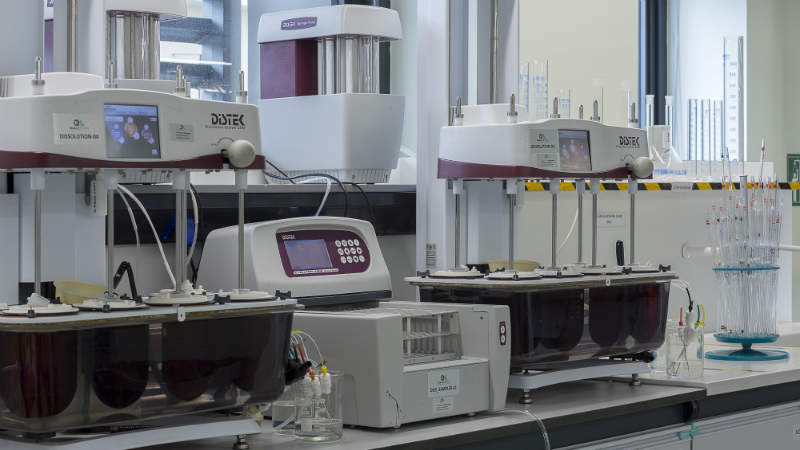
It offers a wide range of analytical instrumentation, which covers various compendial and non-compendial testing, including high-performance liquid chromatography (HPLC), ultra-high-performance liquid chromatography (UPLC), headspace gas chromatography (GC), dissolution apparatus I-IV, tandem mass spectrometry (MS/MS) triple quadrupole, ion trap-orbitrap and inductively coupled plasma mass spectrometry (ICP-MS).
QualiMetrix is a customer-driven laboratory that employs the Six Sigma philosophy to design and implement optimised processes with the aim of transforming customer inputs and requirements into customer value.
The company provides high-quality reports, regulatory consultations, data gap analysis, scientific advice relating to the European Medicines Agency (EMA), national competent authorities or Notified Bodies (NB).
The first and probably the most critical factor for a successful project is its proper definition in terms of both customer and technical requirements. To this end, a comprehensive study request form is provided to the customer with the following objectives:
This February ISO/TC 194 published the long-anticipated draft of ISO 10993-10 standard, named: “Biological evaluation of medical devices – Part 10: Tests for skin sensitization”.
On 15 January 2020, the long-awaited new ISO standard 10993-18 was released. Following the release of the major standard of 10993 series on 2018, the new standard for Chemical Characterization picked up the torch towards the transition to the stricter MDR requirements.