
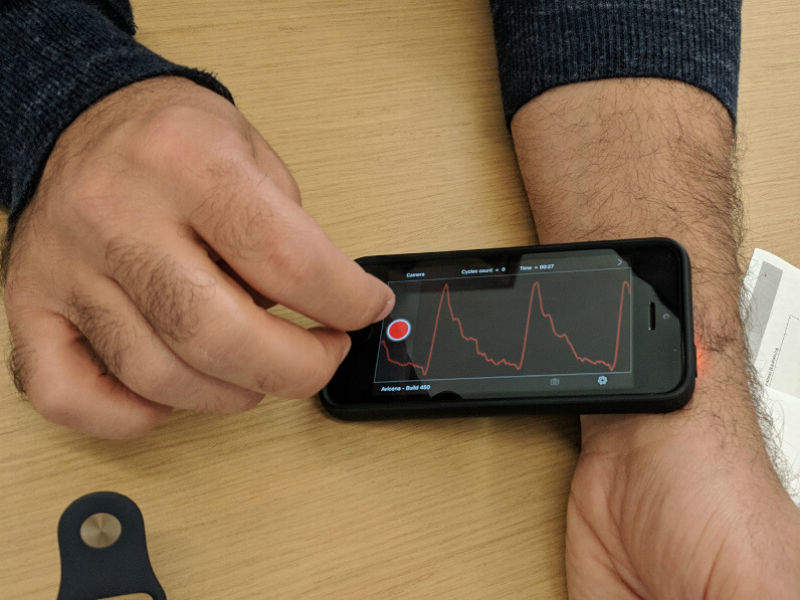
Researchers from Viterbi School of Engineering at the University of Southern California (USC) in the US have developed an artificial intelligence (AI) based technique to detect cardiovascular disease.
The new approach is intended to offer an alternative for existing diagnostics and monitoring methods that are costly, invasive and indefinite.
Go deeper with GlobalData


Discover B2B Marketing That Performs
Combine business intelligence and editorial excellence to reach engaged professionals across 36 leading media platforms.
Designed as a machine learning model called intrinsic frequency, the technique only requires a smartphone to capture a patient’s pulse data and analyse it for changes associated with the heart disease.
The model looks for arterial stiffening that leads to high blood and pulse pressure and is a symptom of cardiovascular, diabetes and renal failure conditions.
USC Viterbi aerospace and mechanical engineering and medicine assistant professor Niema Pahlevan said: “If the aorta is stiff, then when it transfers the pulse energy all the way to the peripheral vasculature – to small vessels – it can cause end-organ damage.
“So, if the kidneys are sitting at the end, the kidneys get hurt; if the brain is sitting at the end, the brain gets hurt.”
The AI model determines the arterial stiffness through measurement of pulse wave velocity (PMV) using a single, uncalibrated pressure wave from the carotid artery. The wave can be captured with a smartphone camera.
This approach is similar to the team’s prior invention where the same technology was used to develop an iPhone app to detect heart failure via the minute perturbations of the pulse beneath the skin to record a pulse wave.
Pahlevan added: “An uncalibrated, single waveform, that means that you eliminated two steps. That’s how you go from an $18,000 tonometry device and intrusive procedure to an iPhone app.”
The researchers found that their algorithm’s PWV measurements are as predictive as those from the tonometry for cardiovascular disease.
When tested in 4,798 patients, the PWV measurements were observed to be significantly linked to the onset of the diseases over a ten-year follow-up period.


