
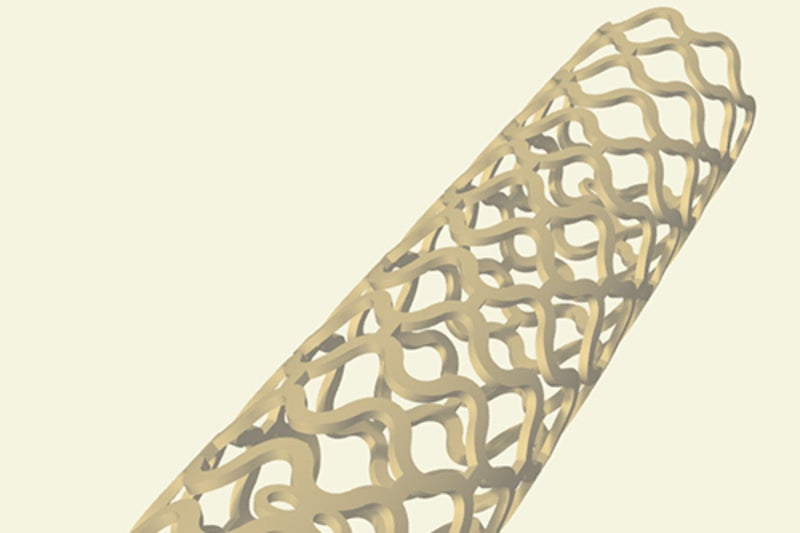
Arterius has partnered with the University of Bristol’s Translational Biomedical Research Centre (TBRC) to develop a smart bioresorbable stent for severe peripheral vascular disease (PVD).
The two-year project has secured £1.1m in funding from Innovate UK.
Go deeper with GlobalData


Discover B2B Marketing That Performs
Combine business intelligence and editorial excellence to reach engaged professionals across 36 leading media platforms.
Featuring mechanical and biocompatible properties, the stent will be designed to treat blockages associated with PVD and be absorbed into the body within 18-24 months.
PVD is currently treated with metal stents, which are permanently inserted into a blocked artery. These devices may cause blood clotting and long-term chronic inflammation at the site, which often cause blockages to reoccur within one to two years and lead to readmissions, repeated revascularisation and increased hospital costs.
The new stent is designed to avoid the life-long presence of metal stents and their related complications.
TBRC director Raimondo Ascione said: “There is a huge need for innovation based on rigorous preclinical development and testing in the area of severe peripheral vascular disease. We are delighted to join forces with Arterius to form a unique UK-based biomedical consortium with the potential to be a global player in this field.”
The partners intend to develop a prototype of the smart bioresorbable stent and assess its safety and efficacy using clinical and imaging technologies available at TBRC’s preclinical facility.
They plan to begin first-in-human clinical trials within three to four years.
Ascione and Arterius CEO Kadem Al-Lamee added: “Our primary goal of this consortium is to develop bioresorbable smart stents for pre-clinical assessment in carotid and iliac-femoral arteries, as well as a platform technology, which we plan to use to tackle in the future other areas of peripheral vascular disease such as below the knee, given the high level of biomedical innovation.”
Severe PVD is known to affect approximately 20% of people aged 55–80 years in the UK, and 200 million people worldwide.


