
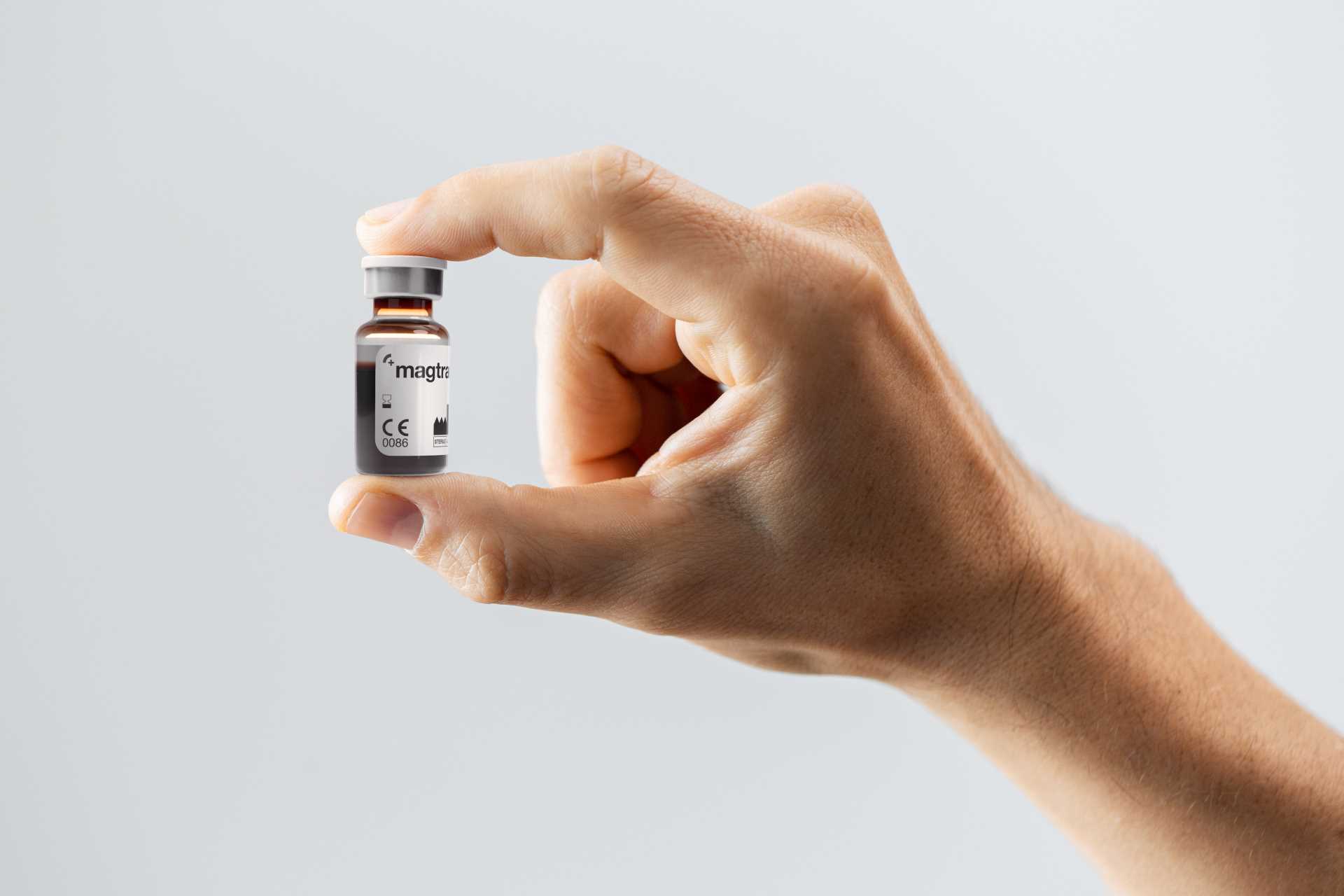
Endomag has received a positive Medtech Innovation Briefing (MIB) from the UK National Institute for Health and Care Excellence (NICE) for its breast cancer lymphatic tracer, Magtrace, to detect sentinel lymph nodes.
The magnetic liquid tracer provides patients and hospitals with the highest standard for breast cancer staging, without requiring nuclear facilities or radioisotopes.
Go deeper with GlobalData


Discover B2B Marketing That Performs
Combine business intelligence and editorial excellence to reach engaged professionals across 36 leading media platforms.
Endomag noted that Magtrace is the first-ever tracer to obtain positive endorsement from NICE.
A positive review from the UK’s medicines watchdog is a national mark of excellence, aiding in local National Health Service (NHS) planning and helping decision-makers offer improved patient care.
To check breast cancer spread, doctors assess the sentinel, or nearest, lymph nodes to a tumour for cancerous cells.
Magtrace aids doctors in marking these sentinel nodes by releasing a magnetic signal to direct them to the node site.
The tiny magnetic particles of Magtrace rapidly pass through the lymphatic system and follow the path a spreading cancer cell would take, Endomag added.
Furthermore, it can be injected between 20 minutes and 30 days before a sentinel lymph node biopsy, lowering the time patients spend in the hospital and facilitating the enhanced use of NHS resources.
Endomag CEO Eric Mayes said: “Breast cancer is better understood than any other cancer today. And yet, the need for innovation has never been greater, as so many patients have been missed during the pandemic.
“We feel more determined than ever to make a difference after this NICE positive review, which confirms that innovative UK technologies like the Magtrace marker can play a role to help the health system continue staging breast cancer.”
Usually, a radioactive isotope called technetium-99m and blue dye is utilised to mark sentinel lymph nodes for biopsy.
As part of Brexit, the UK left the commissioning body, Euratom, which oversees the usage and transport of radioactive materials, including technetium-99m.
Consequent delays resulted in some NHS hospitals staging breast cancer with only blue dye, which was linked to an increased false-negative rate of 13% and a risk of allergic reactions or anaphylaxis.
Compared with technetium-99m, the Magtrace lymphatic tracer is produced in the UK and needs no nuclear facilities for storage or usage.
The magnetic liquid is well-tolerated, without any risk of allergic reaction or anaphylaxis, and demonstrated non-inferiority to technetium-99m and blue dye in several clinical trials, which involved more than 5,000 patients.


