
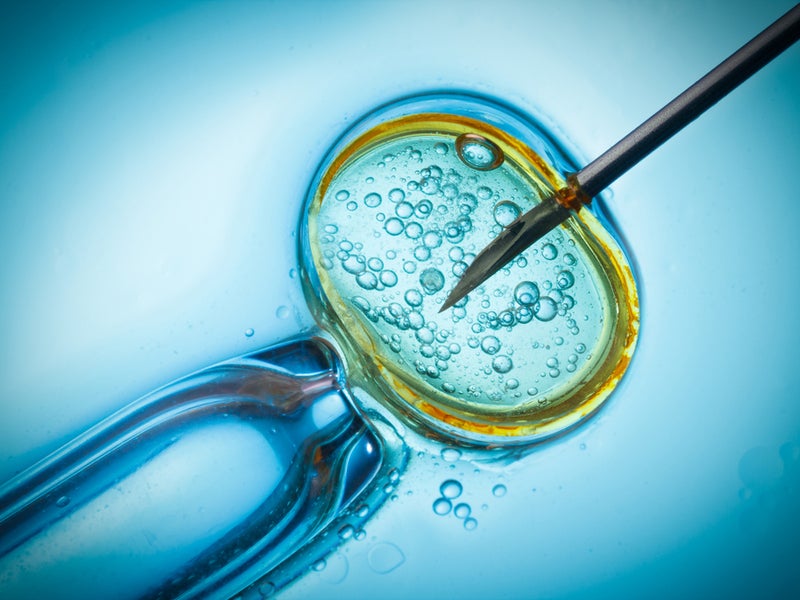
A large-scale European trial has indicated that frozen embryo transfers fail to deliver any improvement over fresh transfers during the in vitro fertilisation (IVF) process.
The researchers followed 460 patients at eight IVF clinics across Denmark, Sweden and Spain. The patients were randomly assigned either a freeze-all process with a frozen embryo transfer in a subsequent cycle, or fresh transfer.
Go deeper with GlobalData


Discover B2B Marketing That Performs
Combine business intelligence and editorial excellence to reach engaged professionals across 36 leading media platforms.
Conception in each patient after their transfers was similar in both groups – 26% in the freeze-all group and 29% in the fresh transfer group. The statistically non-significant difference suggests that a general freeze-all policy will bring no patient benefit in terms of pregnancy outcome. Fertility clinics often recommend patients freeze all their embryos after fertilisation and wait several weeks before implanting them. Theoretically this should increase a woman’s chances of pregnancy, because if an embryo is transferred immediately the uterus may be less receptive to implantation as a result of the ovarian stimulation medication patients take to produce multiple eggs.
The process of using frozen embryos for delayed IVF transfer was initially conceived as a safety measure for women who responded excessively to ovarian stimulation, but recent reports from registries in Japan and the US have suggested that there are now more frozen embryo transfers taking place than fresh.
Copenhagen University Hospital doctor Sacha Stormlund said: “The results of this trial were as we expected. Namely, to see similar pregnancy rates between the fresh and freeze-all treatment groups. So I think it can now plausibly be said that there is no indication for a general freeze-all strategy in women with regular menstrual cycles who are not at immediate risk of overstimulation in IVF.
“At present there is only sufficient evidence to recommend freeze-all for patients diagnosed with polycystic ovary syndrome. Otherwise, in women with regular cycles, we see no benefit.”


