
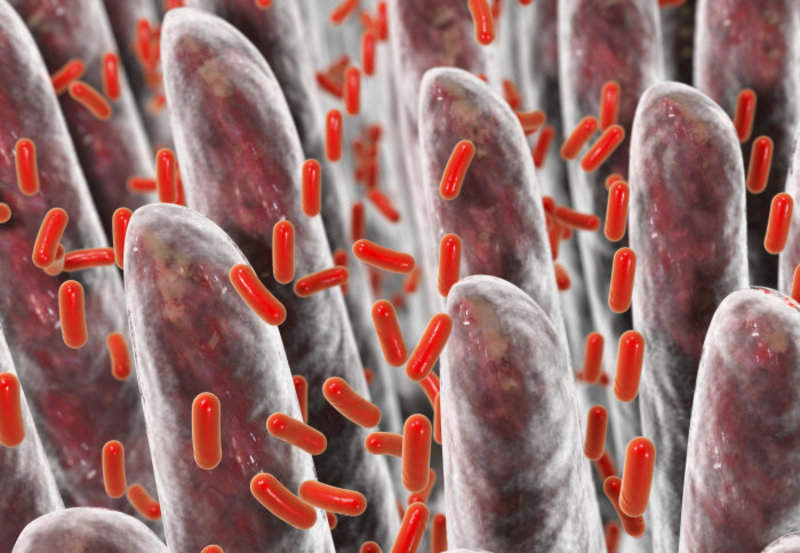
A new study by an international research team has revealed the potential role of the chemicals released by gut microbes as indicators of early stages of non-alcoholic fatty liver disease (NAFLD) and the possibility for a simple blood test to detect them.
The team was led by researchers from Imperial College London, UK; University of Girona, Spain; University of Rome Tor Vergata, Italy; and INSERM in Toulouse, France.
Go deeper with GlobalData


Discover B2B Marketing That Performs
Combine business intelligence and editorial excellence to reach engaged professionals across 36 leading media platforms.
Conducted to understand the link between NAFLD and the microbiome, the study resulted in the identification of the phenylacetic acid (PAA) compound produced by gut bacteria. This compound was found to be associated with the early onset of the liver disease.
Imperial College London Surgery & Cancer department researcher Dr Lesley Hoyles said: “Through this work we may have uncovered a biomarker for the disease itself. Overall, it demonstrates the microbiome is definitely having an effect on our health.”
During the study, biological data such as blood, urine, liver biopsy and faecal samples from 100 obese women with fatty livers was compared with that of healthy patients.
It was observed that increased levels of PAA were linked to the accumulation of fat in the liver. This observation was validated in animal testing.

US Tariffs are shifting - will you react or anticipate?
Don’t let policy changes catch you off guard. Stay proactive with real-time data and expert analysis.
By GlobalDataThe researchers further discovered a connection between the liver disease and subtle changes in the genetic makeup of the microbiome. The number of genes encoded by gut bacteria decreased with the progression of the disease.
Based on the results, the team concluded that PAA can potentially act as a biological marker in the clinic, where blood samples can be analysed for the compound in order to detect an increased risk of the disease.
However, further studies are required to confirm the role of the gut microbiome as a diagnostic indicator of fatty liver disease.



