

A new study carried out by the Chinese University of Hong Kong (CUHK) has indicated the possibility of using plasma Epstein-Barr virus (EBV) DNA analysis to detect early asymptomatic nasopharyngeal carcinoma (NPC).
Between 2013 and last year, researchers screened more than 20,000 middle-aged Chinese males without NPC symptoms in Hong Kong.
Go deeper with GlobalData


Discover B2B Marketing That Performs
Combine business intelligence and editorial excellence to reach engaged professionals across 36 leading media platforms.
Upon plasma EBV DNA analysis, 309 subjects showed positive results during both initial and follow-up tests, before being further tested using nasal endoscopic examination and magnetic resonance imaging (MRI).
Of the 300 patients tested, 34 were confirmed to have NPC, while three patients identified with MRI did not show any tumours with the initial endoscopic examination.
It is expected that the technology can be used to initially identify the cancer to improve chances of successful treatment.
CUHK faculty of medicine chemical pathology professor Allen Chan said: “This study suggests non-invasive DNA screening strategy could potentially result in better outcomes for patients with NPC.
“The patients identified by screening were at significantly earlier stages. They could receive more timely and effective treatments which may improve the progression-free survival and reduce treatment-associated morbidity.”
CUHKLi Ka Shing Institute of Health Sciences director professor Dennis Lo noted that even small tumours would release sufficient tumour DNA amounts into the blood to allow detection of cancers in the early stages.
EBV DNA analysis for NPC screening is expected to have the potential for significantly improve mortality and morbidity.
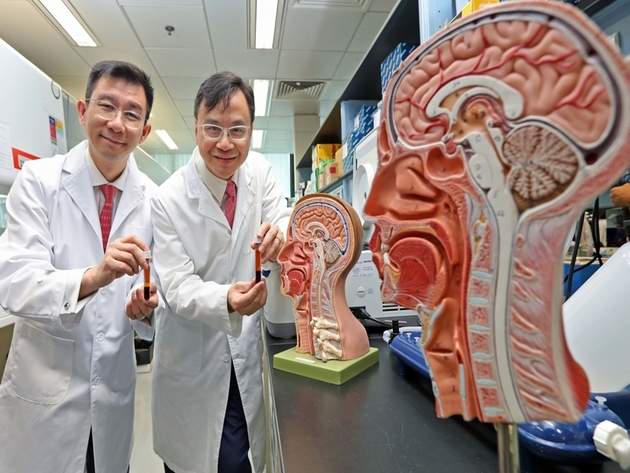
Image: Professor Dennis Lo (right) and Professor Allen Chan (left). Photo: courtesy of the Chinese University of Hong Kong.


