
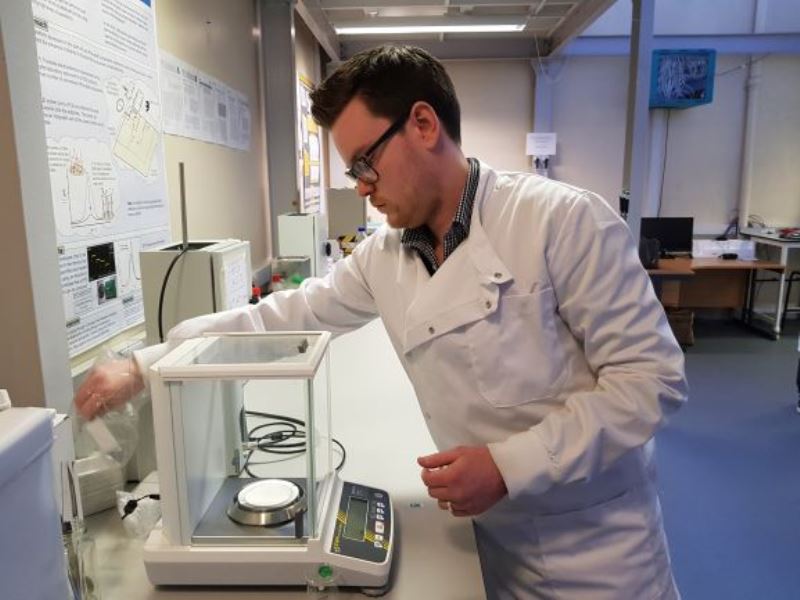
Scientists at the University of Strathclyde in the UK are developing a rapid diagnostic sensor test that can indicate the susceptibility of bacteria to antibiotics in less than 45 minutes.
The NHS laboratory testing of samples currently takes up to two days, but scientists aim to reduce this time with the low-cost test. This will enable doctors to quickly prescribe the right antibiotics to a patient for an infection.
Go deeper with GlobalData


Discover B2B Marketing That Performs
Combine business intelligence and editorial excellence to reach engaged professionals across 36 leading media platforms.
The scientists analysed the difference in growth profiles between the common hospital acquired bacterial infections, Staphylococcus aureus, and MRSA.
Most strains of Staphylococcus aureus are sensitive to antibiotics, while MRSA is drug resistant and can be harder to treat.
Both these strains were placed onto electrodes covered in a special hydrogel deposit and contained antibiotics. The team then monitored for bacterial growth.
Results indicated that the susceptible strain can grow on those electrodes altered with gel containing no antibiotic, however, the strain could not grow when the sensor was seeded with an antibiotic.
Given its antibiotic resistance, the MRSA strain could still grow on the electrodes that had relevant concentrations of antibiotics.
The paper’s lead author Dr Stuart Hannah said: “There is a small difference between what makes an organism susceptible to an antibiotic and what makes it resistant. In real terms, we were able to distinguish between the two strains in less than 45 minutes, which is a significant improvement on the current gold standard of up to two days.”
This technology uses a low-cost sensor that serves as a mini culture dish that can deal with any type of clinical sample.
The system is altered with a special gel deposit in order to identify the difference between susceptible and resistant forms of common bacteria.
“Rapid result detection means you could pinpoint bacterial versus viral infections straight away and would be able to start working on the correct treatment more quickly for patients, which is very important for particular infections. Antibiotic resistance is less likely to develop if you give a narrower spectrum antibiotic.”
The team now intends to develop the technology from a bespoke university laboratory approach into a generic prototype that can then be tested in clinical settings with real patient samples.
Dr Hannah added: “Everything we are using can be mass-manufactured, which means that it is cheap to produce a working test.”


