
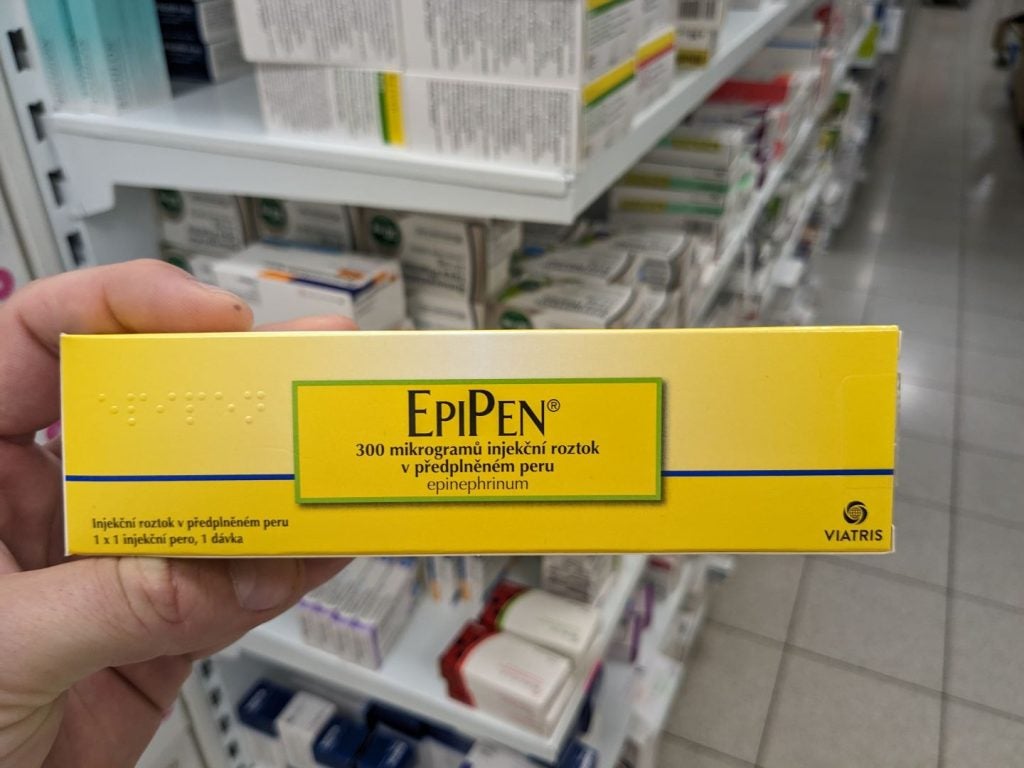
The upcoming EpiPen patent expiration on 11 September 2025 sets the stage for a pivotal shift in the epinephrine delivery market.
Mylan acquired the rights to the injector pen for treating anaphylactic reactions following the $6.7bn acquisition of Merck KGaA's generics business, Merck Generics, in 2007.
Mylan has since faced criticism for inflating the price of EpiPen and constraining patient access. The company has faced numerous lawsuits over the years in relation to overcharging drug wholesalers for access.
In 2020, Mylan merged with Upjohn, Pfizer's off-patent medicine division, to form Viatris.
In January 2025, Mylan reached a $73.5m settlement with KPH Healthcare Services following accusations that it conspired with Pfizer and Teva Pharmaceuticals to delay the release of generic EpiPens, thereby maintaining a monopoly and inflating prices for epinephrine autoinjectors.
The lawsuit contested that prices for a two-pack of EpiPens rose from around $100 in 2008 to $600 during the class period between March 2014 and February 2025.
The generics upswell and innovation rise
According to Dr Stuart Grant, principal consultant at UK-based medtech consultant Archetype MedTech, the patent expiration’s immediate effect will lead to a rise in generic competitors.
“An increase in generic options is likely to lower prices considerably, expanding choices for consumers and healthcare providers. Greater availability of affordable options could improve access for individuals and families who previously found it too expensive,” Grant said.
With the patent expiration, Grant foresees Viatris facing pressures to cut prices or introduce new financial support programmes to maintain its market share.
“The brand might also explore developing next-generation devices, improving user experience, or applying for secondary patents to stay competitive. These strategies, known as ‘evergreening’, could draw regulatory attention depending on their intent and market impact,” Grant explained.
Epinephrine injector competitors have previously had to develop their devices around EpiPen’s patented spring-loaded mechanism, a reality that limited their ability to replicate or improve upon the core delivery system.
“They will now be able to use the original design as a foundation, incorporating enhancements such as better ergonomics, child-friendly features, or smaller form factors,” Grant said.
“The removal of patent barriers also paves the way for innovative technologies – Bluetooth tracking, dose reminders, and digital health integrations can now be layered on top of the legacy design.
“Moreover, companies can explore alternative formulations and delivery methods while leveraging the expired EpiPen model for regulatory efficiency, potentially qualifying for accelerated approval pathways. This reduces both development time and cost, encouraging new entrants into the market.” Grant concluded.