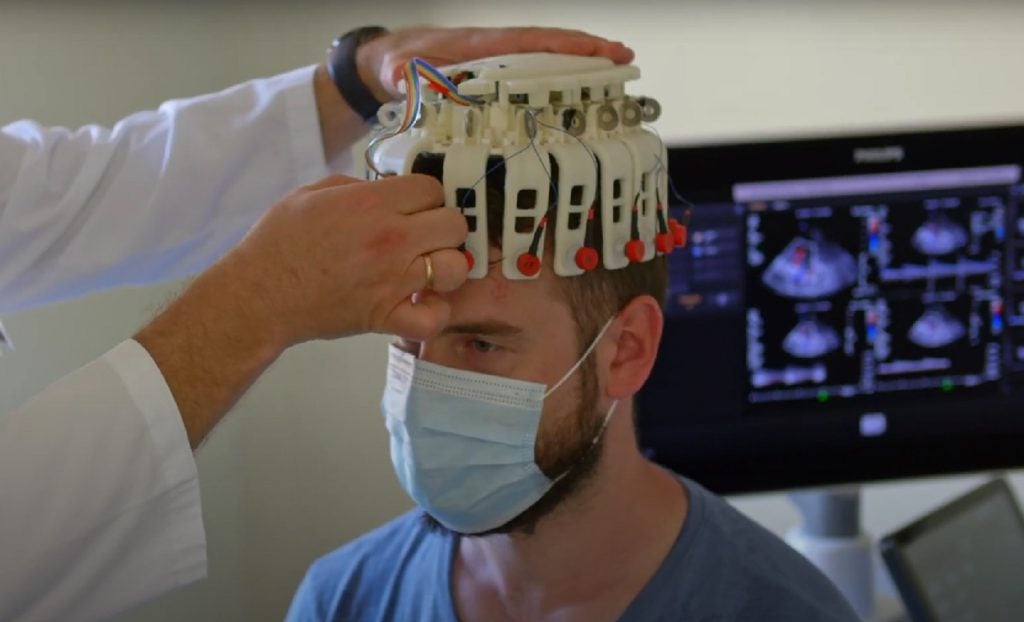
Scientists from Kaunas University of Technology (KTU), Lithuania, have developed a system for integrated post-stroke monitoring, which also concurrently measures pulse, heart activity, physical movement, and blood flow changes in the brain tissue.
The system can synchronously record various physiological signals, which mirror the whole circulatory system activity.
It uses an electrocardiogram (ECG) and a photoplethysmogram (FPG) to register cardiac activity, an inertial sensor for physical motion, and bioimpedance measurements to monitor changes in cerebral blood flow.
Its main feature is the application of bioimpedance, which indicates the resistance of a tissue to electrical current.
KTU noted that while it cannot yet predict strokes with absolute certainty, the system is instrumental in monitoring condition changes and detecting potential risks.
The system can be used for both short-term and long-term monitoring, including during rehabilitation.
Its cardiovascular and cerebral bioimpedance monitoring components can operate independently, but together, they claim to offer a complete set of physiological data.
Data collected by the system is processed leveraging a hybrid approach.
However, derivative parameters from ECG and FPG are conducted on the device directly.
An external computer or a remote server handles complex analyses like bioimpedance’s spatial distribution across the scalp.
KTU researcher Dr Darius Jegelevičius said: “Stroke is a critical condition where prompt diagnosis determines the success of treatment. Post-stroke monitoring is equally important, as the patient’s condition may worsen.
“An ECG reflects the heart’s electrical stimulation, which triggers muscle contraction. The FPG, which works by detecting how light is absorbed or reflected by tissue, shows the propagation of blood pulses throughout the body and reflects the biomechanics of the circulatory system.”
The technology is protected under a European patent held by KTU, the Lithuanian University of Health Sciences, and Gruppo Fos Lithuania.
It has potential applications beyond stroke monitoring, including the management of other cardiovascular and neurological conditions.
The KTU National Innovation and Entrepreneurship Centre facilitated the technology’s commercialisation.