
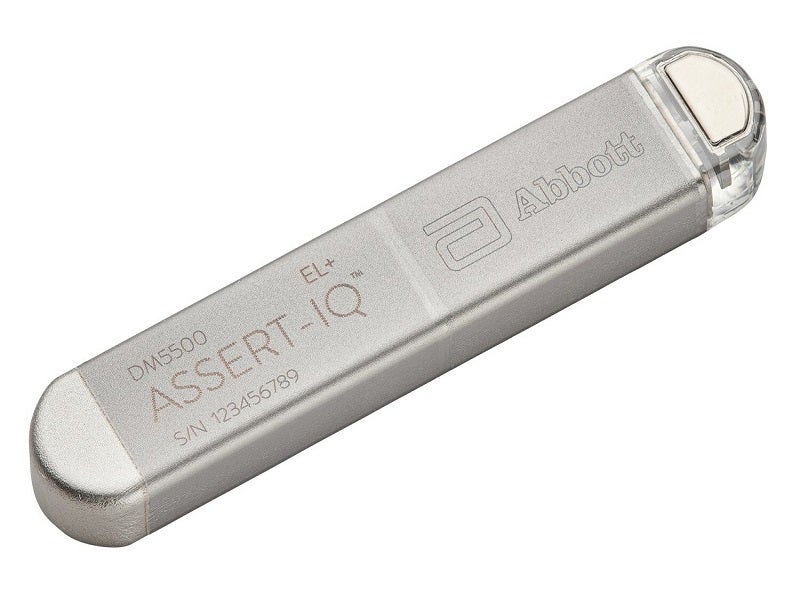
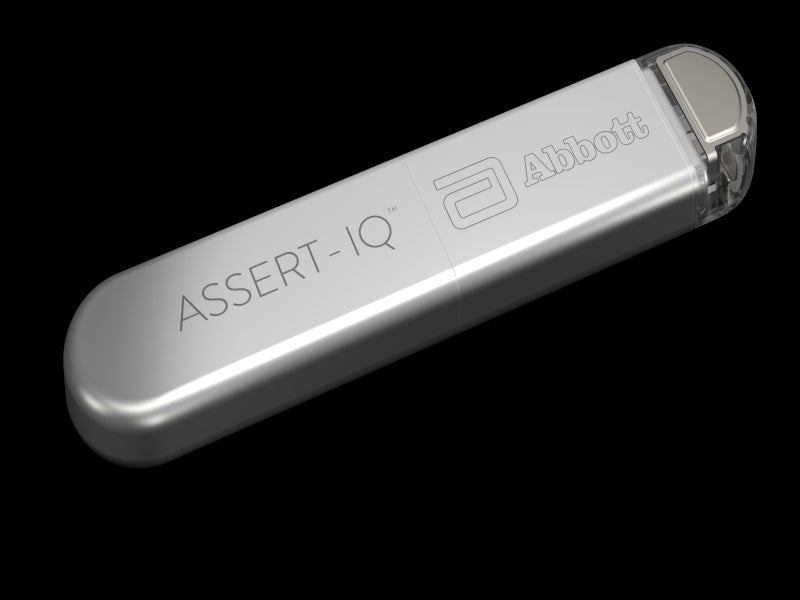
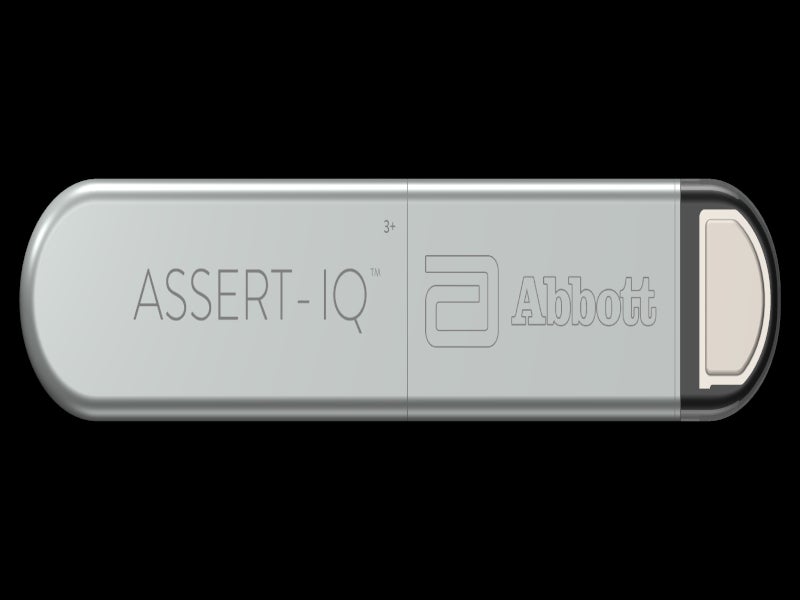
Assert-IQ™ is an innovative insertable cardiac monitoring (ICM) system developed by Abbott, a US-based medical devices and healthcare company.
The Assert-IQ system is indicated for monitoring and diagnosing patients who undergo unexplained symptoms associated with cardiac conditions such as dizziness, palpitations, chest pain, syncope and shortness of breath, as well as patients who are susceptible to developing cardiac arrhythmias that include bradycardia, tachycardia and sinus pauses. It is also indicated for patients previously diagnosed with atrial fibrillation (AF).
Recommended Buyers Guides

The Bluetooth-enabled ICM is a connected health device providing physicians with long-term monitoring and remote programming capability with enhanced connectivity for remote management and treatment of patients experiencing irregular heartbeats. It sets a new standard for continuous monitoring and automatic arrhythmia detection, allowing physicians to make more accurate and informed treatment decisions.
Regulatory approvals
The US Food and Drug Administration (FDA) cleared Assert-IQ for use in humans in May 2023. The device also secured CE Mark approval in Europe in March 2024.
The Australian Therapeutic Goods Administration approved the Assert-IQ™ EL+ ICM Model DM5500 in June 2024.
In September 2025, the Assert‑IQ ICM received US FDA 510(k) clearance for the integration of two AI algorithms based on machine learning techniques, becoming the only ICM to combine AI, Bluetooth® ICM and IQ insights.
Assert IQ ICM design and details
Abbott’s Assert-IQ system is a slim, intelligent and fast ICM that is inserted subcutaneously in the left anterior chest wall, also known as the pectoral region, of patients for monitoring and diagnostic evaluation. It checks the heartbeat every 20 seconds automatically.
The system captures and encrypts data and wirelessly transmits it to the myMerlin™ Mobile App and Merlin.net™ Patient Care Network portal for the patients at rest or in transit. It is available in three models, DM5000 and DM5300 with a battery life of three years each and DM5500 with six years of battery life.
The three-year option is designed for traditional monitoring, such as detecting fainting, heart palpitations or irregular heartbeats. A six-year battery life empowers physicians for long-term monitoring indicated for people undergoing therapy, who have recently undergone cardiac ablation procedures, or who are at risk of developing further stages of arrhythmias such as AF.
Both options include advanced algorithms to diagnose abnormal heart rhythms and provide clinical data that can help physicians to manage and treat their patients remotely.
Assert IQ ICM features
The system features Key Episode technology, which allows clinicians to investigate all episodes, or three key episodes, depending on the requirements of the patient or clinic. Remote programming enables physicians to adjust the settings of the connected device and optimise performance remotely.
The system features supplementary sensors that capture several diagnostics, including a leading premature ventricular contraction (PVC) detection algorithm and body position and posture. It provides clinicians with relevant information on the patient’s cardiac health.
The PVC detection algorithm offers the ability to capture consecutive events including couplets and triplets. As the PVC count varies every 24 hours, monitoring for a longer period has been shown to double the identification of patients with a PVC burden of less than 10%. The body position and posture at episode onset helps physicians to assess other factors of the patient while examining episodes.
Intelligent patient insight reports also include diagnostics such as elevated heart rate with and without activity, body position and a direct trend viewer.
The device’s clear and crisp electrograms (EGMs) provide improved visualisation of P-waves, which can help care providers make faster decisions. Apart from continuously monitoring irregular patients’ cardiac rhythms, the device also streamlines data management and workflow of the physician’s practice.
The system can also be used with 1.5 Tesla (T) and 3T MR Conditional devices.
Real-time heart monitoring technologies
Powered by state-of-the-art Bluetooth-enabled technology, featuring Assert-IQ EL+ and Assert-IQ™ 3+, the Assert-IQ ICM transmits real-time clinical data to the portal.
The system’s advanced algorithms reduce false detections by 98.7% for AF and pause events while preserving 97.7% of true events.
With advanced algorithms, the Assert-IQ ICM can detect even hard-to-spot abnormalities and help physicians make more informed decisions. The device’s five-step AF algorithm reduces the data burden by 21% compared to competitor devices, without compromising sensitivity.
The myMerlin Mobile App includes built-in activator functionality, enabling patients to confidentially capture and transmit EGMs while experiencing symptoms. The app’s notifications keep patients updated on daily device checks and scheduled transmissions to promote remote monitoring adherence without burdening the clinic. The myMerlin Mobile App comes with more than 35 languages to engage patients and provide a personalised experience.
The app is also connected to the Assert-IQ ICM by Bluetooth after the device is inserted into the patient’s chest. The downloaded app on the patient’s smartphone is explicitly designed to transmit the heartbeat information to the clinical portal, enabling the doctor to notice any inconsistencies in the patient’s cardiac health.
Assert-IQ ICM AI algorithms
In January 2026, the Assert-IQ ICM system was updated with AI algorithms to further improve the accuracy of cardiac monitoring. The AI-powered algorithms can better identify true pause and AF episodes, and remove false episodes, allowing clinicians to focus on the most important information.
The AI algorithms work behind the scenes in the cloud, requiring no in-person clinical adjustments to the device itself, making it a seamless upgrade for current and future patients using Assert-IQ ICM.
These algorithms are designed to evaluate AF and pause episodes within the device’s remote care platform, Merlin.net™.
Assert-IQ ICM post-market study
The post-market investigation of the Assert-IQ ICM was designed to assess the device’s AF detection capabilities and evaluate an AI algorithm intended to reduce false-positive AF episodes.
In this prospective, single-arm, multi-centre study (PMC12902218), 151 patients implanted with the Assert‑IQ ICM underwent up to seven days of Holter monitoring.
At the patient level, the Assert‑IQ ICM correctly identified all 39 patients with AF and 80 of 96 patients without AF, corresponding to a patient sensitivity of 100%, specificity of 83.3%, positive predictive value of 70.9% and negative predictive value of 100%.
Across the cohort, the system detected 1,004 true AF episodes, maintaining high episode‑level sensitivity with the AI algorithm in use.
According to the post‑market analysis, the Assert‑IQ ICM provided accurate AF detection and AF burden quantification during long‑term monitoring, while the AI‑based approach reduced false-positive detections without reducing sensitivity.
