
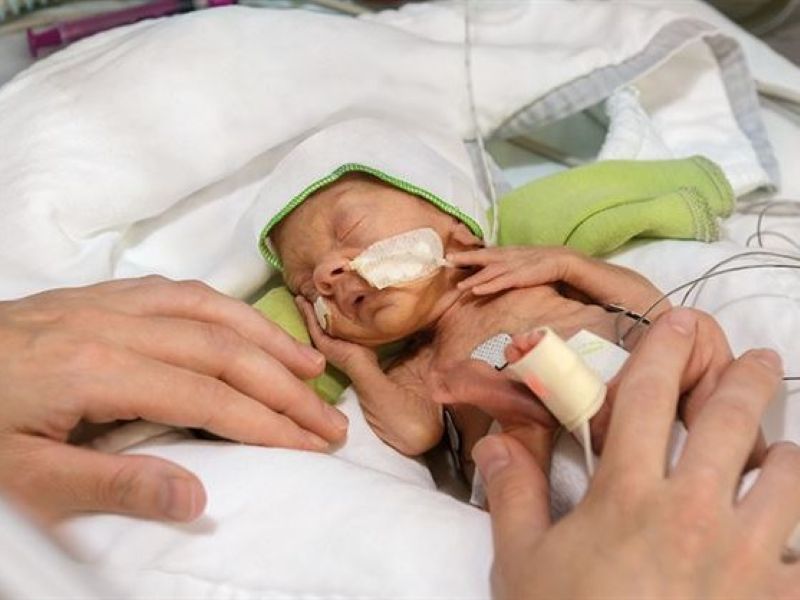

The Edi Catheter ENFit is a nasogastric feeding tube intended for patients requiring continuous monitoring of respiratory drive and patient-ventilator interaction. It is also indicated for delivering nutrition, fluids, and medication via the naso-gastroenteric or oro-gastroenteric route.
The catheter first received 510(k) clearance from the US Food and Drug Administration (FDA) in 2017. It is also certified under the EU Medical Devices Regulation (MDR) 2017/745 and has been available in markets outside the US since 2025.
Recommended Buyers Guides

In July 2026, the FDA granted 510(k) clearance for the shorter version, 6Fr/48cm Edi catheter, which is intended for premature patients. The 6Fr/48cm catheter was launched in the US in October 2026.
The FDA clearance enables the catheter to be supplied to hospitals in the US for use in the care of extremely premature infants. More than 350,000 babies are born prematurely in the US each year, including more than 22,000 infants classified as having an extremely low birth weight (ELBW).
Design and features of Edi catheter ENFit
The Edi catheter ENFit incorporates a medical-grade polyurethane gastric tube that is free from phthalates and polyvinyl chloride (PVC), together with a stainless-steel electrode.
For X-ray identification, the catheter includes a barium sulphate strip. It also contains ten electrodes, with inter-electrode distances ranging from 4mm to 16mm. The device is fitted with an ENFit enteral feeding connector and has between two and eight feeding ports.
The Edi catheter ENFit is available in different sizes and is intended for single use only. Gamma radiation is used for device sterilisation.
The standard catheter has a use period of up to five days and a shelf life of two years. For the new 6Fr/48cm Edi catheter, the use period has been extended to seven days and the shelf life to three years.
The 6Fr/48cm Edi catheter is designed to support positioning in the stomach of ELBW neonates weighing less than 1kg, particularly those weighing between 500g and 750g.
Applications of Edi catheter ENFit
The Edi catheter ENFit serves as a feeding tube and enables the administration of medication, fluids, and nutrition to patients who are unable to eat or drink. It is also utilised for gastric decompression and fluid aspiration.
The catheter records the diaphragm’s electrical activity (Edi signals) to support synchronisation between the patient and ventilator in both invasive and non-invasive neurally controlled ventilation modes such as neurally adjusted ventilatory assist (NAVA) and neural pressure support (NPS). It records measurements in microvolts (µV) per breath, which enables clinicians to monitor the patient’s respiratory drive.
NAVA and NPS synchronise ventilator support with the patient’s own neural respiratory drive. In both mechanical ventilation modes, microelectrodes embedded in an Edi catheter positioned in the oesophagus at the level of the diaphragm detect and monitor these neural signals.
The catheter is also used to transmit Edi signals to compatible Getinge Servo ventilators, including Servo-u and Servo-n systems, even in standby mode.
The Servo-u ventilator provides functions for personalised lung protection and weaning across patient groups. The Servo-n system combines ventilation, lung-protection, and weaning functions for neonatal care.
The smaller catheter allows NAVA therapy to be used in extremely premature and low-birth-weight patients receiving care in neonatal intensive care units.
Marketing commentary on Getinge
Getinge is a Swedish medical technology company that provides medical devices, equipment and systems for operating theatres, intensive care units, sterilisation departments, and life science organisations. The company employs around 12,000 people in 40 countries.
