
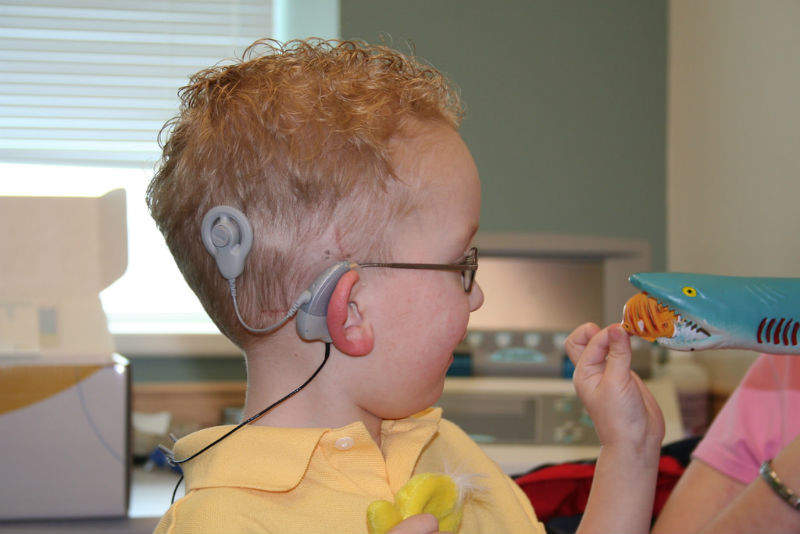
An international team of researchers has created a machine learning algorithm which uses brain scans to predict the future language capacities of deaf children. Researchers from the Chinese University of Hong Kong and Ann & Robert H. Lurie Children’s Hospital of Chicago have collaborated on a study aimed at better understanding the section of the human brain responsible for language development.



Young children who have recently received a cochlear implant were the main focus of the study and the findings will have a significant impact in improving the lives of those children who will face developmental challenges. Highlighting the importance of the project, co-senior author of the study Patrick C. M. Wong, PhD, explained: “The ability to predict language development is important because it allows clinicians and educators to intervene with therapy to maximize language learning for the child.”
Cognitive neuroscientist, professor and director of the Brain and Mind Institute at the Chinese University of Hong Kong added: “Since the brain underlies all human ability, the methods we have applied to children with hearing loss could have widespread use in predicting function and improving the lives of children with a broad range of disabilities.”
As being born deaf or developing drastic hearing loss in early life deprives the auditory areas of the brain of stimulation, this can result in a child’s brain developing abnormally. Therefore, early diagnosis and treatment can be crucial and the cochlear implant is currently viewed as the most effective treatment for children when hearing aids are not enough to help them develop age appropriate listening and language skills.
However, there is currently no accurate way to predict how a deaf child’s speech will improve once they have received a cochlear implant. The breakthrough findings of this study could eventually be used to check whether child would benefit from the invasive procedure or whether alternative measures should be taken.
For example, the brain scans could help doctors determine whether or not a child will have the mental capacity to develop language skills even if they have an implant fitted. Wong believes his study will help to draw therapies in this field away from “a one-size-fits-all intensive therapy approach” and instead start to tailor treatments based on each individual patient’s needs more effectively.
Although the study has purely focused on those with a cochlear implant, the team has said that research is also ongoing into how the machine learning algorithm could be used to help other paediatric patients with language development issues.


