
Artificial intelligence (AI) is making waves in medical imaging, but experts say the foundations are not always there to implement it.
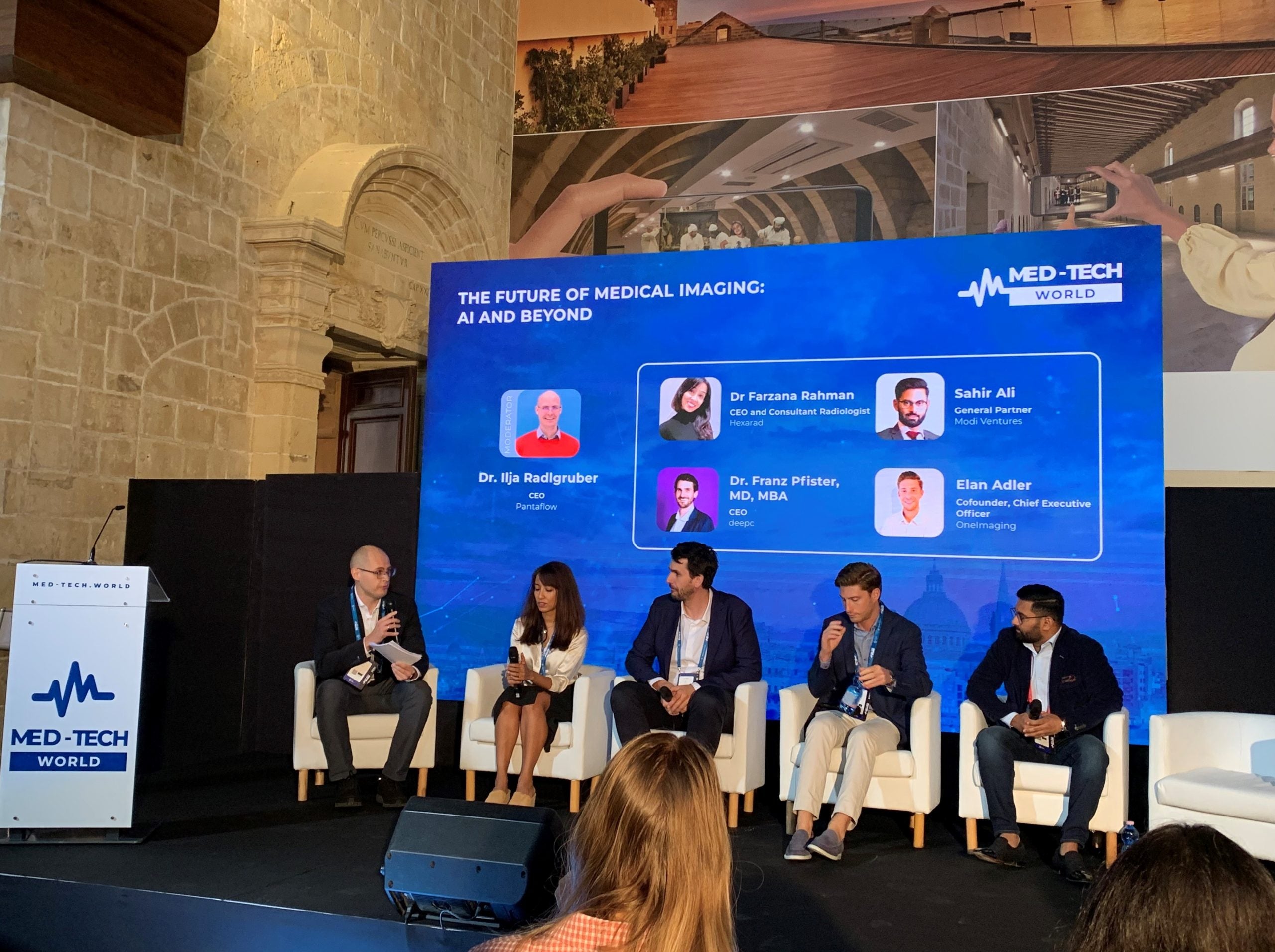
At the ongoing Med-Tech World 2023 summit in Valletta, Malta, industry experts discussed the future of AI in medical imaging.
Go deeper with GlobalData


Discover B2B Marketing That Performs
Combine business intelligence and editorial excellence to reach engaged professionals across 36 leading media platforms.
Consultant radiologist and UK radiology tech company Hexarad CEO Dr Farzana Rahman said that healthcare is still quite far behind in technological capabilities.
“It’s less attractive than AI but it’s an important thing to consider,” said Rahman.
She added that in some NHS hospitals in the UK, digital network infrastructure – even reliable wireless technology – sometimes comes up short. If this hinders the return of interest for a particular digital platform, then AI’s implementation is harder to justify.
Beyond digital infrastructure in hospitals, algorithms need to be continually trained with scans and images.
Sahir Ali, general partner at venture capital firm Modi Ventures, said the gap between AI implementation greatly varies between countries. He called for an integrated infrastructure of data sharing, where the millions of scans and images that are used to train algorithms for medical imaging software can be shared between countries.
US-based radiology service provider OneImaging co-founder and CEO Elan Adler added that integration to create a more solid infrastructure is needed. He pointed to the critical data aspect of algorithm training, saying that magnetic resonance scans, for example, take much longer than other imaging techniques, meaning training AI software that supports it could take longer.
The sentiment is shared more widely in the industry. A 2021 Organisation for Economic Cooperation and Development (OECD) forum concluded that: “the main barriers to building a twenty-first-century healthcare system are not technical, but can be found in the institutions, processes and workflows forged long before the digital era.”
Nevertheless, the future of AI in healthcare still looks bright. A 2023 report by GlobalData predicts that global revenue for AI platforms across healthcare will reach $18.8bn by 2027 – but funding into building a digital infrastructure is essential to support its long-term growth.


