
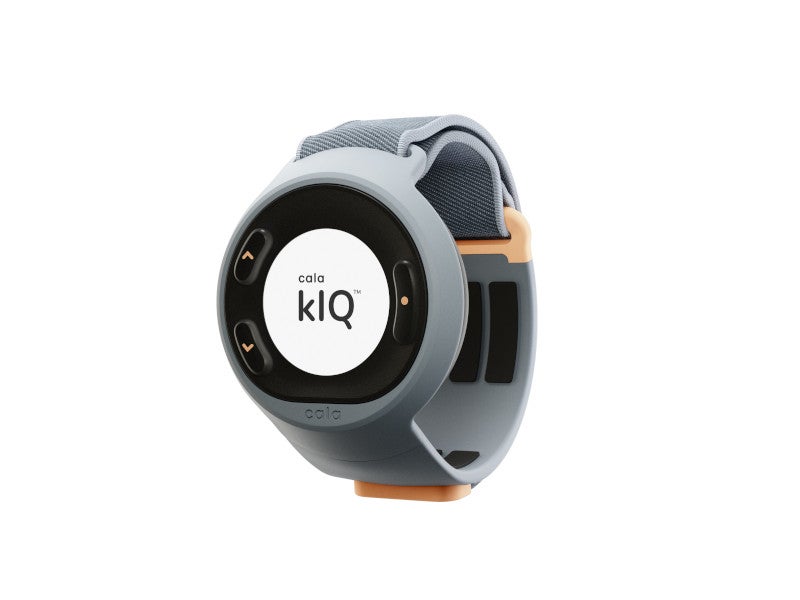
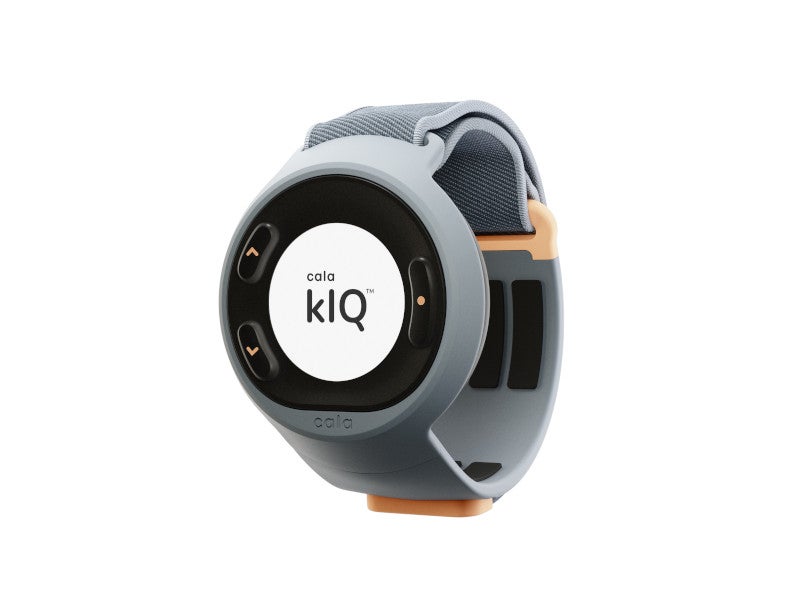
The Cala kIQ® system is a wearable neuromodulation device developed by Cala Health, a US-based medical technology company.
The device delivers effective bioelectronic therapy for relief from hand tremors in adult patients with essential tremor and Parkinson’s disease.
Recommended Buyers Guides
The Cala kIQ system provides a non-invasive, non-pharmacologic transcutaneous afferent patterned stimulation (TAPS™) therapy with minimal side effects to counteract different tremors with a customised approach to therapy.
Essential tremor is one of the most widespread neurological conditions in adults, representing the most prevalent form of tremor disorder. In the US, millions of people suffer from essential tremor or Parkinson’s disease, with the treatment options for the conditions historically being medications, or in severe cases, surgery.
Regulatory approvals for the Cala kIQ system
In October 2021, 510k clearance for the predicate device, Cala Trio, was granted by the US Food and Drug Administration (FDA), with the specified use to assist in providing temporary relief for hand tremors in the treated hand following stimulation in adults with essential tremor.
Subsequently, the FDA granted 510k clearance for the Cala kIQ system as a device deemed substantially equivalent in November 2022.
Cala Health commercially launched the Cala kIQ system in June 2023.
The FDA cleared the next-generation Cala kIQ® Plus system for essential tremor and Parkinson’s disease in April 2026. Cala Health commenced the US commercial rollout of the device in October of the same year.
Cala kIQ system design and details
The Cala kIQ system is a small, lightweight, wrist-worn stimulator device designed to apply a calibrated TAPS to the median and radial nerves of a patient’s wrist to aid in the relief of hand tremor.
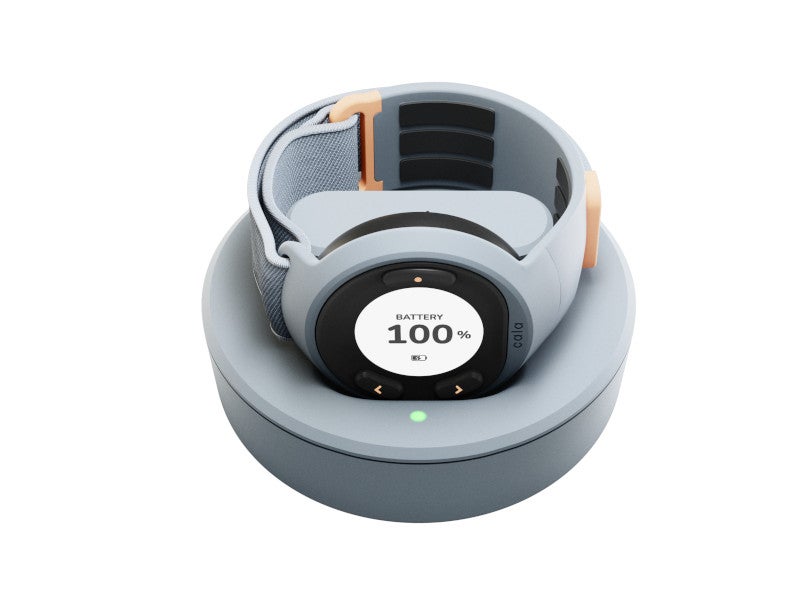
The system comprises a stimulator, a band and a base station. The stimulator is equipped with the necessary electronics, sensors and firmware to calibrate and administer TAPS therapy. The stimulator is affixed to the Cala kIQ band, featuring integrated electrodes strategically positioned to effectively target the median and radial nerves. The band is offered in three different sizes to cater to a diverse range of wrist sizes.
The charging function is offered by the base station, which also includes an indicator light to notify the user of operational status.
The Cala kIQ system offers a treatment time of 40 minutes and a wristband life of 90 days, with a Cala kIQ band shelf life of three months. The system prioritises patient comfort and usability, offering online data insights through the MyCala.com patient portal. Patients can review their therapy session results over time and share them with healthcare providers to adjust treatment plans as needed.
Technology details
The Cala kIQ system delivers calibrated TAPS through electrodes embedded in the wearable band. The TAPS output pattern is adjusted to match the unique tremor frequency of each patient.
In the device set-up process, the patient engages in a postural hold, allowing the onboard sensors to gauge the tremor frequency. The information is then utilised to tailor the TAPS output pattern, ensuring that therapy is administered to the median and radial nerves at the precise, patient-specific and optimal stimulation frequency.
Delivery of the Cala kIQ System
The Cala kIQ System senses the unique tremor signature of the patient and individualises a stimulation therapy.
The therapy is delivered noninvasively through the nerves on the wrist to the brain, which is the control centre of the hand tremor action, to treat the tremor.
Out of ten patients, nine experience tremor reduction with a complete 40-minute session. Some patients start experiencing relief during the stimulation session, and most of them maintain relief for more than an hour or so after the session.
The complete session can be conducted up to five times a day on a fully charged battery.
Cala kIQ Plus system
The Cala kIQ Plus wearable therapy system introduces three stimulation waveform modes, enabling users to select or switch between modes to identify the approach that best supports their tremor relief.
The system also calibrates before each therapy session, adapting treatment to the patient’s tremor fluctuations throughout the day. The device arrives fully assembled and includes on-device guidance to simplify set-up and onboarding.
Together, the new therapy modes and adaptive calibration are designed to support a more personalised treatment experience for people managing tremor.
Clinical trials on Cala kIQ System
The Prospective Study for Symptomatic Relief of ET with Cala Therapy (PROSPECT) study was a multicentre, single-arm, open-label clinical trial evaluating the safety and efficacy of TAPS therapy in adults with essential tremor across 26 US sites.
Over a three-month home-use period, repeated sessions of the non-invasive neuromodulation device provided hand tremor relief with an acceptable safety profile across the evaluated cohort.
In October 2025, Cala announced the results of a new study conducted by researchers at the University of Wisconsin-Madison in patients, showing that the TAPS therapy used by the device directly affects the ventral intermediate (VIM) nucleus of the thalamus. The VIM is a central hub in the brain’s tremor network and an established target for invasive treatments, including deep brain stimulation (DBS) and magnetic resonance (MR)-guided focused ultrasound.
The clinical study found that reductions in tremor associated with TAPS therapy were significantly correlated with changes in alpha and beta-band brain activity within the VIM. The relationship was strongest in the region considered optimal for DBS lead placement, supporting the view that non-invasive TAPS therapy acts on a recognised surgical treatment target.
A randomised, double-blind crossover trial evaluated the safety and efficacy of two investigational stimulation protocols, Therapy Mode B and Therapy Mode C, offered by the Cala kIQ plus system, against standard TAPS therapy offered by the Cala kIQ system in adults with essential tremor.
The six-week, home-use study enrolled 30 participants, who rotated through three consecutive two-week treatment periods to test each stimulation mode in a randomised sequence.
The primary endpoints of the study were change in Tremor Power Improvement Ratio (TPIR) and in-visit Bain & Findley ADL (BF-ADL) scores.
The study demonstrated that all three therapy modes reduced tremor across multiple clinical measures, including both primary effectiveness endpoints.
Median TPIR exceeded 1 for each therapy mode, indicating lower tremor power after stimulation than before treatment, while upper-limb BF-ADL scores improved from pre to post-stimulation across all three modes.
