

The onset of the Covid-19 pandemic stretched Europe’s medical device sector to the limit. During this time, the demand for medical devices such as ventilators along with personal protective equipment (PPE) skyrocketed.
For governments across Europe, the continent’s initial response to the pandemic was criticised for being fragmented, with studies highlighting that a lack of transparency and mixed messaging fuelled public distrust.
Go deeper with GlobalData


Discover B2B Marketing That Performs
Combine business intelligence and editorial excellence to reach engaged professionals across 36 leading media platforms.
In retrospect, Covid-19 felt like a dress rehearsal for what was to come; crises in Europe have seemingly only increased post-pandemic. War has been raging in Ukraine since Russia invaded the sovereign nation in 2022, while the fallout from the US-Israel war initiated in February 2026 against Iran has resulted in uncertainties regarding the medical device supply chain since Iran has responded by closing critical global maritime chokepoint the Strait of Hormuz.
At the MedTech Forum, which took place in Stockholm, Sweden between 11-13 May, a recurrent theme during the sessions centred on evaluating Europe’s healthcare resilience and ability to manage ongoing and future crises.
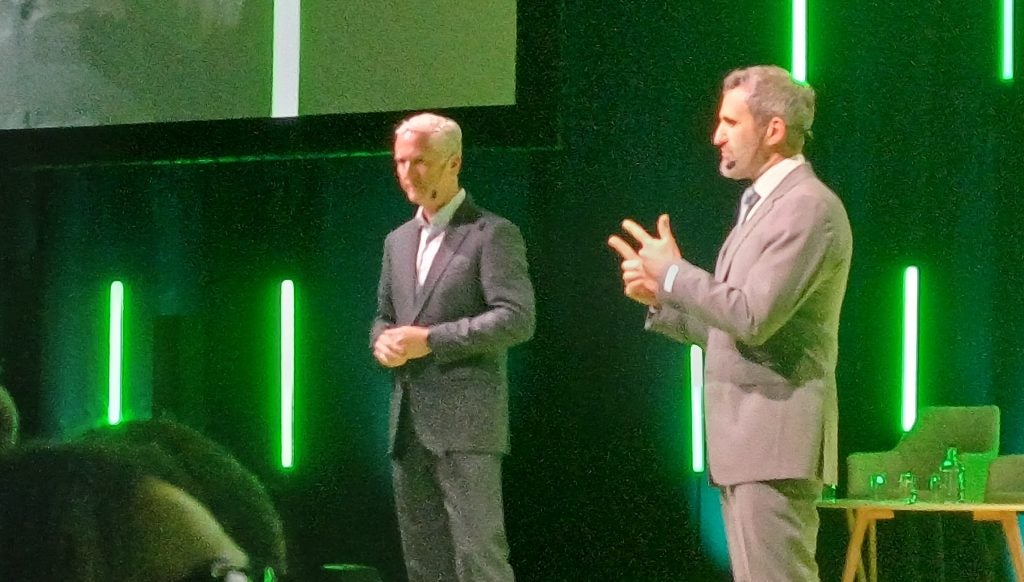
MedTech Europe CEO Oliver Bisazza opened Day 1 proceedings on the main stage, highlighting that the medtech industry in Europe is a key strategic pillar and driver of innovation, yet “one surrounded by storms”.
“We’re in a very turbulent world right now, and if I reflect back on the last year since the 2025 MedTech Forum, it feels like we’ve been in a washing machine of tariffs, supply chain, and other disruptions that make it hard to hold up the pillar, but we are holding it up,” said Bisazza.
Ukraine’s healthcare resilience under Russian military aggression
Since Russia invaded Ukraine, the nation’s health infrastructure has needed to evolve to ensure continuity of care. Regarding medical devices, Ukraine’s initiatives involve strategic stockpiling and approaches that protect equipment contained in critical healthcare infrastructure.
During a panel session on the mainstage, Dmytro Gusiev, deputy head of mission at the Ukraine embassy in Sweden, highlighted that the enemy systematically and deliberately targets civilian infrastructure, including healthcare facilities.
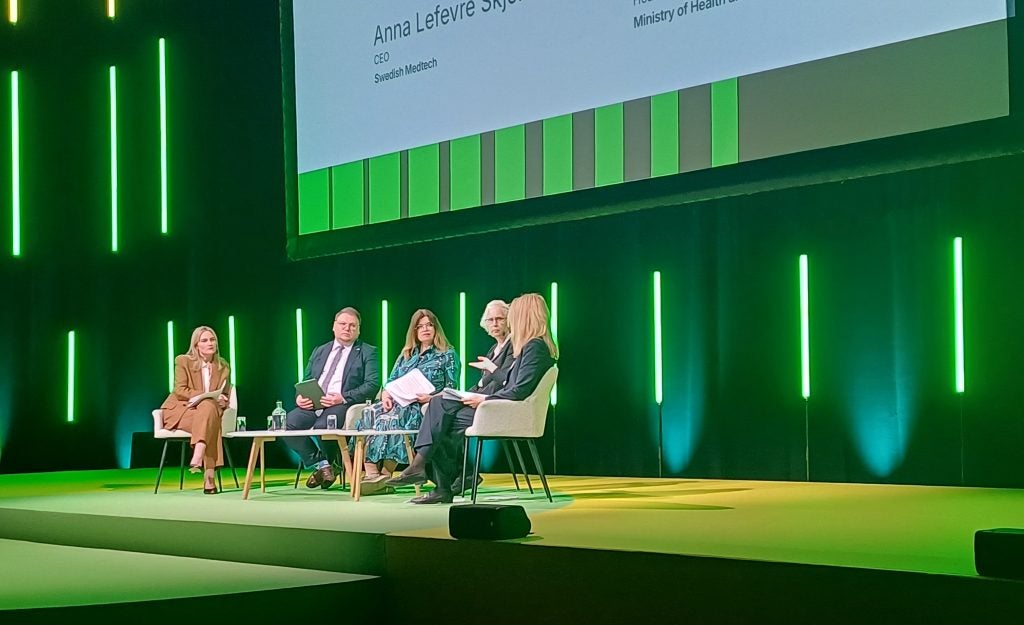
As of May 2026, more than 2,600 healthcare infrastructure facilities have been damaged or destroyed by Russian attacks. Despite this, Gusiev said that full medical services continue to be provided at more than 1500 facilities in Ukraine, with around 200 more operating in a partial capacity.
In maintaining continuity of care in healthcare facilities, Gusiev shared that medical equipment is being protected with tools such as voltage stabilisers to protect it from power surges. Meanwhile, Ukraine’s 100-facility capable healthcare network, a tiered hospital system designed by the Ministry of Health to ensure wartime resilience and post-conflict recovery, uses generators for alternative power sources. The country has also established strategic fuel reserves sufficient for several days of stable operation of medical institutions.
Beyond protecting infrastructure, Ukraine has also taken steps to maintain people’s access to medicine. This has been achieved through a combination of simplifying registration and supply procedures, the Ministry of Health’s close attention to supply monitoring to prevent shortages, and the creation of specialised vehicular fleets along with the postal service for medication’s delivery.
“Our experience is one of maintaining a functioning healthcare system under constant threat, including the destruction of hospitals, attacks on energy infrastructure, prolonged blackouts, and large numbers of wounded patients,” Gusiev said.
“At the same time, it is also an experience of rapid decision-making, adaptation, and strengthening resilience.”
Sharing a border spanning over 1,300 kilometres with Russia, Finland has been strengthening and developing its healthcare resilience since the end of the Second World War.
Speaking on the same panel, Laura Rissanen, state secretary, minister for social security, Finland, emphasised that for Europe to be better prepared for future crises, improved cooperation will be of paramount importance. And for Finland, military aggression has become a priority, with the threat of armed conflict “also a health threat” given that the “status of healthcare does not protect against attacks,” she added.
Rissanen continued: “Finland does not have separate military hospitals, but now we are conducting intensive preparedness planning in collaboration between health and defence sectors, and this is directly what we’ve seen happening in Ukraine.”
Alongside the threat potential and reality of ongoing military aggression in Ukraine, Michaela Hollis, state secretary to the Swedish Minister for Health Care at Sweden’s Ministry of Health and Social Affairs, highlighted that Sweden is working on robust stockpiling for medical devices to account for the potential of future disruptions aside from the threat of war.
“Pandemic and natural disasters do not stop at national borders, and neither can our preparedness efforts,” Hollis said.
To be prepared for future crises, whatever form they may take, the Swedish government has entered into agreements with regional authorities to strengthen supply preparedness for healthcare, a matter that has become more pronounced due to supply chain issues driven by Iran’s closure of the Strait of Hormuz.
Hollis continued: “This capability provides strategic flexibility and reduces dependence on fragile international supply chains during crisis, as we can see now, it’s difficult with the crisis in the Middle East, and we are starting to create a national overview of medical devices supported by improved categorisation, product identification, and mapping of product production capacity.”
Rationalising what crisis preparedness for Europe means
A Day 2 session at the MedTech Forum explored how crisis preparedness itself can be proactively prepared for, and what determinants should guide well-established protocols such as device stockpiling.
Panellists agreed that there needs to be consensus across Europe around medical devices that are considered most critical. “We can’t stockpile everything at once,” said Véronique Tordoff, vice president, head of image guided therapy, Europe at Philips. Therefore, stockpiling, while a key step in crisis preparedness, needs to be considered from a judicious standpoint, with preparations made depending on the nature of an unfolding crisis.
Adding to this point, Ellen McMahon, preparedness specialist at Finland’s National Emergency Supply Agency (NESA), highlighted the need for a common understanding about what levels of preparedness, proportionate to potential futures crises, need to be in place, depending on whether a crisis is another pandemic or a war.

“In terms of stockpiling, are we talking about one, two, three months, or more?” McMahon said.
“When we look at pandemics, we cannot reflect on the normal day-to-day usage of PPE products. In this scenario, we are looking at a moderate- to severe situation, so the usage may be 10 times or more, so it’s all about deciding and having a common understanding of the levels, and this involves different parties, and cross-sectorial collaboration to ensure that stockpiles are going to be sufficient,” she continued.
To manage healthcare stockpiling protocols in Europe, Philips has been contracted by the Dutch Ministry of Health to manage part of these efforts.
“We have, for example, patient monitors that can be deployed, portable ultrasound, and they are stocked, managed and maintained over time and have been deployed in Ukraine and for natural disasters such as the recent earthquake in Türkiye,” Tordoff shared.
Post-deployment, equipment provided by Philips comes back and is reconditioned, ready to be sent out into the field again. Tordoff added that the right skillsets in terms of managing such contracts need to be in place, in order to deploy critical medical equipment efficiently to the locations across Europe in which it is needed most.
“We need to make sure that we have the right actors in the ecosystem that are able and ready to actually operate, to maximise the value of stockpiling in this way,” Tordoff concluded.
Several speakers throughout the MedTech Forum highlighted that due to factors such as the constrained economic landscape in Europe, many of the resolutions around crisis response that went into effect during the Covid-19 pandemic have not been sustained.
To make sure that Europe as a collective is adequately prepared for the next crisis, it seems clear that there is a greater need to manage preparedness approaches through close collaboration. And there is much to be learned from Ukraine’s enduring resilience and continuity of care protocols achieved throughout an unimaginably challenging time for the country.
For medical devices, stakeholders across Europe’s medtech ecosystem appear focused on accurately modelling which equipment will be most critical to keep in reserve, regardless of the nature of the next crisis, and on striking the right balance in doing so.


