
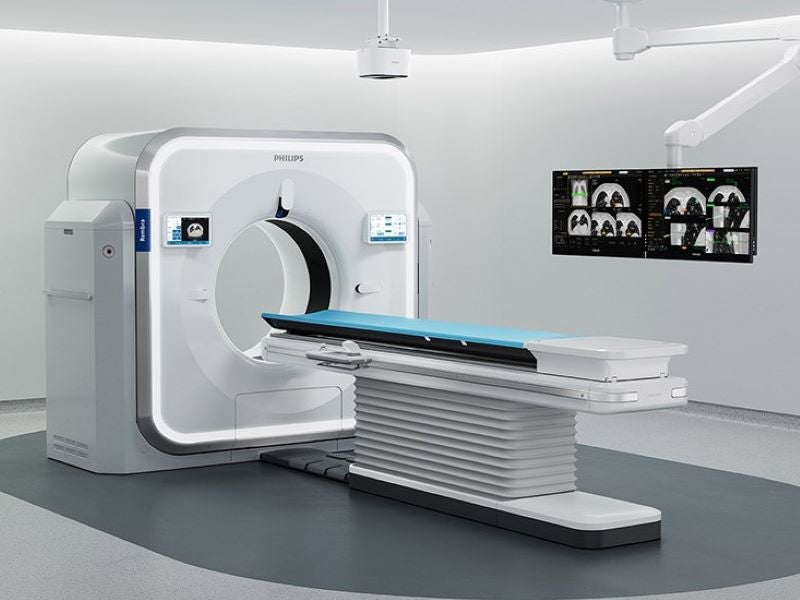
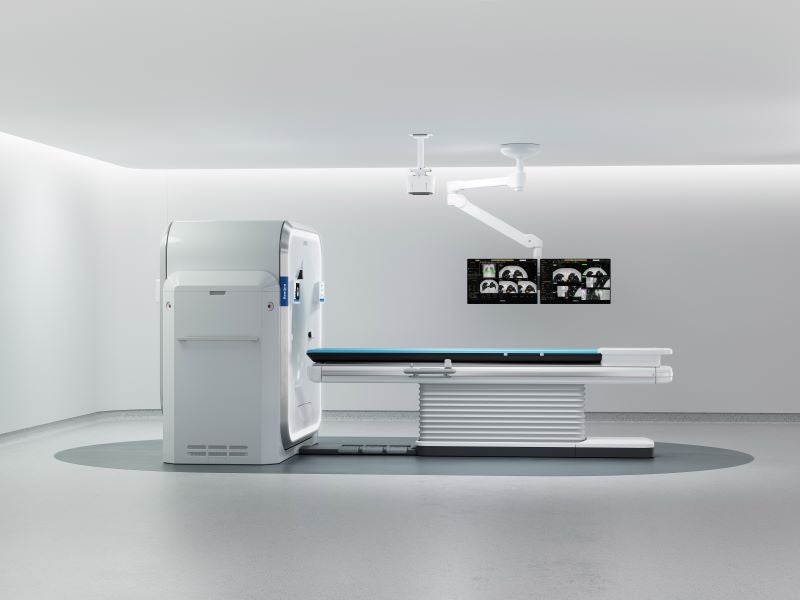
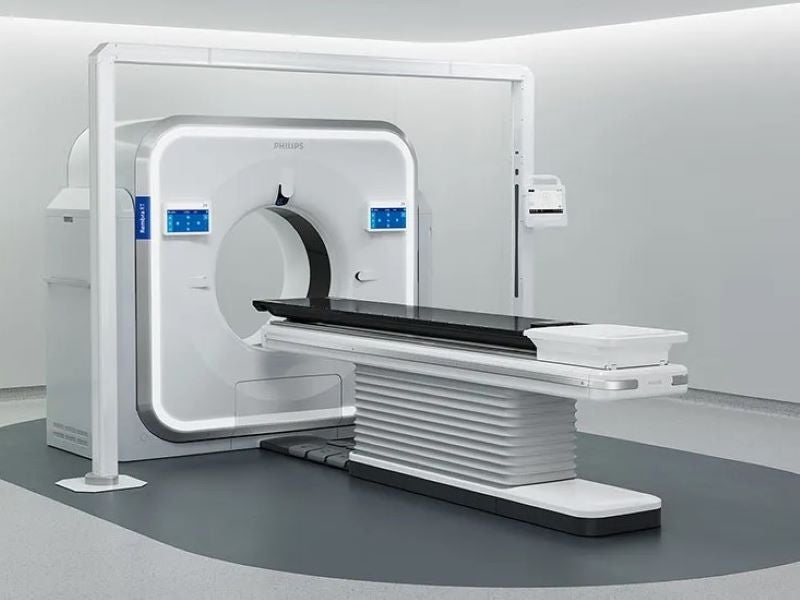
Rembra CT is a next-generation radiology computed tomography (CT) system developed by Royal Philips to support high patient throughput and manage acute trauma, bariatric and stroke cases in busy hospital settings.
The scanner is claimed to be the largest in its class and is designed for frontline care, enabling rapid imaging in a single scan in demanding clinical environments.
Recommended White Papers

Recommended Buyers Guides

The platform was publicly presented by Royal Philips for the first time at the European Congress of Radiology 2026, held in Vienna in March.
In April 2026, Royal Philips obtained 510(k) clearance from the US Food and Drug Administration for the Rembra CT system, as well as for other systems within the Rembra imaging platform, including Rembra RT and Areta RT.
The Rembra CT system has also been awarded the CE Mark for use in European markets.
Rembra CT system design and features
The Rembra CT has an 85cm bore and a detector that provides a 60cm standard field of view and an 85cm extended field of view.
The main components of the Rembra CT scanner include the gantry with a continuously rotating X‑ray tube, NanoPanel Precise 4cm XD detector array, a patient table, an operator console, and optional modules and accessories. The system’s patient table has a scan range of up to 2.3m (7.45ft).
Additional components include a high‑voltage generator, collimator, data measurement system and touch panels.
With a gantry-to-table space of 46cm, the system can accommodate a wide range of patient positions and support up to 270 examinations per day across a range of settings including emergency departments, critical care units and interventional suites.
The scanner’s NanoPanel Precise 4cm XD detector with integrated AI is designed for dose-efficient, high-resolution imaging to support clear visualisation and delineation of anatomical structures. The detector is specified to provide in-plane spatial resolution of 23 line pairs per centimetre, enabling detailed visualisation of fine structures down to 0.25mm.
A two-dimensional anti-scatter grid is incorporated to enhance scatter rejection and help maintain image clarity across different patient types and clinical scenarios.
These capabilities are intended to deliver the level of anatomical detail required for examinations such as musculoskeletal, inner ear, and thoracic imaging.
The transmission data captured during scanning is processed by a computer to generate cross‑sectional anatomical images across multiple planes and projection angles.
Rembra CT’s AI-enabled workflows
Rembra CT features an AI-enabled workflow, similar to Phillips’ Incisive CT Scanner, which is designed to maintain quick, consistent examinations, supporting high throughput and accelerated image reconstruction.
The Trauma Suite is intended to simplify and speed up assessment in acute settings, with tools such as Precise Rib, which is designed to support evaluation of rib fractures in critical patients.
The system’s Precise Spine is configured to automatically label vertebrae and generate an axial image series, aiming to reduce manual steps and save time, while the Precise Brain feature produces a symmetrical brain batch to help shorten image preparation time.
Additionally, Precise Intervention is intended to streamline interventional procedures and, according to the manufacturer, can reduce procedure duration by up to 16%.
The system’s OnPlan patient-side gantry controls are reported to enable up to seven additional examinations per day by allowing certain scan preparations and adjustments to be performed directly at the gantry.
Rembra CT’s image reconstruction capabilities
The Rembra CT’s acquisition and reconstruction technologies are designed to deliver improvements in image quality and dose management simultaneously, with the manufacturer reporting up to 60% better low-contrast detectability, up to 85% noise reduction and up to 80% lower radiation dose.
Reconstruction speeds are specified at up to 106 images per second, with zero-click post-processing designed to help imaging teams meet demand by enabling quick delivery of initial images to the picture archiving and communication systems, so radiologists can begin reviewing cases promptly.
The system is also configured for very short scan and reconstruction times in trauma workflows.
Rembra CT system benefits
The Rembra CT system is intended to support healthcare providers in managing increasing demand for diagnostic imaging and radiation therapy planning in urgent and complex cases by enhancing speed, operational efficiency and access to high-quality images.
As imaging volumes and case complexity rise, the platform helps clinicians work more efficiently while maintaining confidence in their diagnostic assessments.
The platform’s capabilities extend the role of CT across both diagnostic radiology and radiation therapy, supporting integrated workflows and a coordinated approach to patient management, from rapid evaluation in acute settings through to detailed planning for cancer treatment. Furthermore, Rembra is specified for use in high-altitude environments of up to 5,000m and is engineered for reliability, durability and long-term operation. With appropriate maintenance and upgrades, the system is designed for a service life of up to 20 years.
